The 12 Best Online Teaching Platforms for Creators in 2026
The 12 Best Online Teaching Platforms for Creators in 2026
The 12 Best Online Teaching Platforms for Creators in 2026
Feb 10, 2026
Feb 10, 2026
Feb 10, 2026

The creator economy has transformed expertise into a scalable business, empowering coaches, edupreneurs, and instructors to monetise their knowledge. However, selecting from the ever-growing list of online teaching platforms can feel overwhelming. Do you need an all-in-one solution with marketing automation, a simple WordPress plugin to integrate with your existing site, or a marketplace platform to find your first students? This decision is critical, as the right platform serves as the foundation for your entire digital education enterprise.
This guide is designed to cut through the noise and provide clarity. We will deliver an in-depth, practical analysis of the 12 best online teaching platforms available today. For each option, we'll go beyond surface-level descriptions to explore core features, ideal use cases, and crucial limitations you need to be aware of before committing. You’ll find direct links and screenshots to give you a real feel for the user experience.
We'll break down everything from course creation and delivery modes to white-label branding, content protection, and varied monetisation models. We’ll also touch upon how AI is shaping the industry; to further streamline your content development and enhance course quality, exploring the best AI tools for content creators can be a game-changer when monetising your expertise. Our goal is to equip you with the specific insights needed to select the perfect partner to build, launch, and successfully grow your digital academy.
1. Skolasti
Best For: White-label control and AI-powered student support
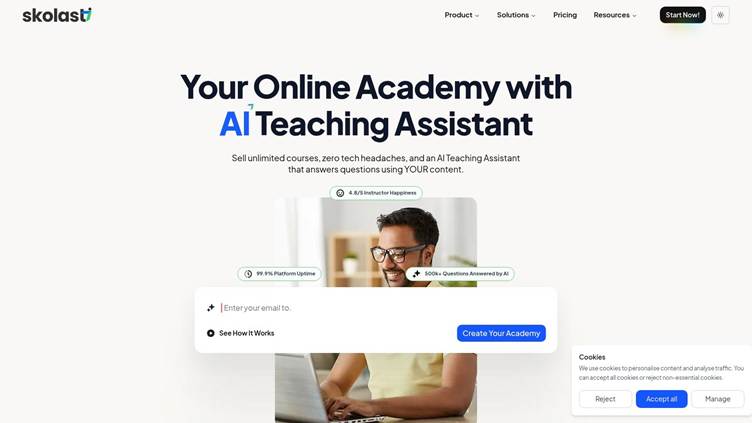
Skolasti positions itself as a premier all-in-one academy platform, making a strong case as one of the best online teaching platforms for creators focused on scalability and brand integrity. It is meticulously designed for independent coaches, edupreneurs, and multi-instructor organisations aiming to deliver a premium, fully branded learning experience without the heavy lifting of constant student support. The platform’s core philosophy centres on empowering instructors to teach smarter, not harder, by leveraging intelligent automation.
Its most compelling feature is the AI Teaching Assistant. This isn't a generic chatbot; it trains exclusively on your course materials, learning your specific teaching style and terminology. It then answers student questions 24/7, providing instant, accurate responses that sound like they came directly from you. Instructors report this single feature saves them up to 15 hours per week on support queries, allowing them to focus on content creation and business growth.
Key Strengths and Use Cases
Skolasti excels in providing a robust, secure, and customisable environment. Its full white-label capabilities allow you to remove all Skolasti branding and use your own domain, custom themes, and branded certificates, creating a seamless brand experience for your students. The platform supports a variety of delivery models, including self-paced courses, live cohorts, and blended learning, making it adaptable for fitness instructors, language tutors, and corporate trainers alike.
Content security is another major differentiator. Skolasti incorporates enterprise-grade protections like DRM, dynamic watermarking, and domain restrictions to safeguard your intellectual property from unauthorised sharing and piracy. This is a critical consideration for creators whose business relies on the value of their unique content.
Pricing and Plan Tiers
Skolasti offers scalable pricing based on the number of instructors, with a generous 30-day free trial on its Pro and Growth plans (no credit card required).
Basic: $49/coach per month
Pro: $69/coach per month
Growth: $149/coach per month
Higher-tier plans unlock advanced features such as SSO, in-depth analytics, and dedicated account management. You can explore a detailed comparison of all Skolasti platform features on their website.
Pros:
AI Teaching Assistant reduces instructor workload significantly.
Complete white-label customisation for a fully branded academy.
Robust content protection features (DRM, watermarking).
Unlimited courses and students on all plans.
Cons:
Per-coach pricing can become costly for larger teams.
Advanced features like SSO are restricted to higher-tier plans.
Website: https://www.skolasti.com
2. Thinkific
Thinkific positions itself as one of the best online teaching platforms for creators who prioritise brand control and a robust course-building experience. It empowers edupreneurs to design, market, and sell self-paced courses, live lessons, and membership communities all under their own custom domain. The platform’s strength lies in its comprehensive, yet user-friendly, course builder that supports a wide variety of lesson types, including video, text, quizzes, and assignments.
Its clear plan progression makes it ideal for creators at different stages. You can start on a free plan to test your course idea and then scale up to access advanced features like payment plans, bundles, and detailed analytics. The built-in community feature also allows you to foster student engagement directly within your course ecosystem, creating a more integrated learning environment.
Key Features & Pricing
Thinkific offers a tiered pricing structure that grows with your business needs.
Free Plan: Test the core features with one course and unlimited students.
Basic Plan: Starts at $49/month for unlimited courses and a custom domain.
Pro Plan: $99/month, adding features like memberships, payment plans, and certificates.
Branded Mobile App: Available as a paid add-on for a native mobile experience.
Pros:
Generous free plan to start without investment.
Native payment gateway (Thinkific Payments) with standard processing rates.
Strong support for B2B sales with group enrolment and progress tracking.
Cons:
Lacks native support for India-specific payment gateways like UPI or Razorpay.
The branded mobile app is a significant additional cost.
For a deeper dive into structuring your content effectively, explore these online course creation tips to maximise your impact.
Website: https://www.thinkific.com/pricing
3. Teachable
Teachable is a prominent name among the best online teaching platforms, particularly favoured by creators looking to sell a diverse range of digital products. It excels in offering straightforward tools to bundle and sell online courses, coaching services, and digital downloads. The platform is designed for simplicity, allowing edupreneurs to quickly set up a professional-looking storefront and start monetising their expertise with flexible pricing models like one-time payments, subscriptions, or payment plans.
Its built-in marketing tools, including upsells, cart recovery, and an affiliate program, provide creators with the necessary resources to boost sales without complex integrations. While the entry-level plan includes a transaction fee, higher-tier plans eliminate this, making it a scalable option as your business grows. The platform’s focus on sales and conversion is a key differentiator for instructors who prioritise revenue generation.
Key Features & Pricing
Teachable’s plans are structured to support creators from their first sale to a full-scale operation.
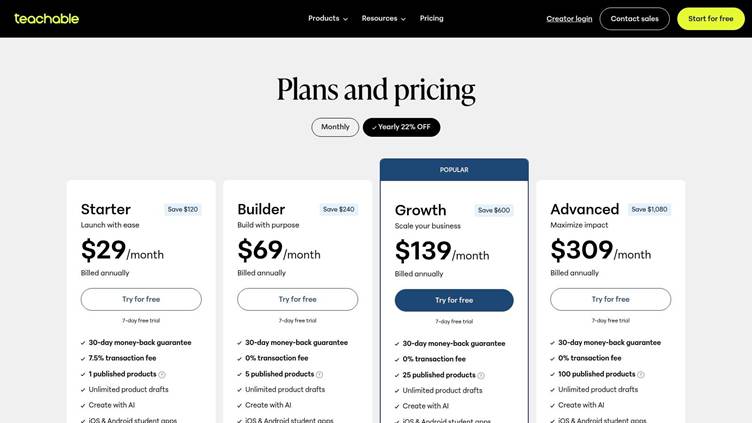
Starter Plan: Begins at $59/month with a 7.5% platform transaction fee.
Builder Plan: $119/month, removing platform fees and adding features like affiliates and custom domains.
Growth Plan: $199/month, offering advanced features like white-labelling and group coaching calls.
Advanced Plan: $299/month, for creators needing public API access and custom user roles.
Pros:
Simple setup process and user-friendly interface.
Broad monetisation options including courses, coaching, and downloads.
0% platform transaction fees on the Builder plan and above.
Cons:
The Starter plan’s 7.5% transaction fee can be costly for beginners.
Community feedback has noted evolving "fair use" bandwidth limits and occasional friction with Indian payment gateways.
Website: https://www.teachable.com/pricing
4. Kajabi
Kajabi is a premier all-in-one platform for serious creators who want to consolidate their entire digital business, from course creation to sophisticated marketing automation. It stands out by integrating powerful tools for building sales funnels, email marketing campaigns, and membership sites directly alongside its course hosting capabilities. This integrated approach makes it one of the best online teaching platforms for edupreneurs looking to scale without juggling multiple software subscriptions.
The platform is designed to manage the entire customer lifecycle, from lead capture with custom landing pages to nurturing prospects with automated email sequences and converting them into students. Kajabi's recent addition of AI features and a Creator Studio further streamlines content creation, helping users generate course outlines, lesson content, and promotional materials efficiently. Its comprehensive nature justifies its premium positioning in the market.
Key Features & Pricing
Kajabi’s pricing reflects its all-in-one value proposition, with plans scaling based on contacts and active students.
Basic Plan: Starts at $149/month for 3 products, 3 funnels, and 10,000 contacts.
Growth Plan: $199/month, increasing limits to 15 products, 15 funnels, and 25,000 contacts.
Pro Plan: $399/month for advanced users needing 100 products, 100 funnels, and 100,000 contacts.
Kajabi Payments: The native payment processor offers 0% transaction fees (standard card processing rates still apply).
Pros:
Powerful native marketing stack reduces the need for third-party tools like email services and funnel builders.
Robust analytics provide deep insights into marketing performance and student behaviour.
0% transaction fee when using the built-in Kajabi Payments gateway.
Cons:
Higher starting price point can be a barrier for new creators.
A 5% transaction fee is applied if you opt for third-party payment providers like Stripe or PayPal on the Basic plan.
Website: https://kajabi.com/pricing
5. LearnWorlds
LearnWorlds establishes itself as one of the best online teaching platforms for serious edupreneurs and corporate trainers aiming to build premium, interactive online academies. It excels by offering advanced features like interactive video, where you can add questions, pop-ups, and navigation directly into your content. This focus on engagement tools makes it a powerful choice for creating immersive and effective learning experiences under your own brand.
The platform is built for scale, supporting everything from self-paced courses to complex corporate training programmes with SCORM/xAPI compliance. Its powerful site builder, extensive integrations, and white-labelling options allow for the creation of a fully customised learning ecosystem. LearnWorlds is ideal for professionals who need robust assessment tools, detailed analytics, and the ability to foster a vibrant learning community.
Key Features & Pricing
LearnWorlds offers a feature-rich pricing model, though it does not have a free plan.
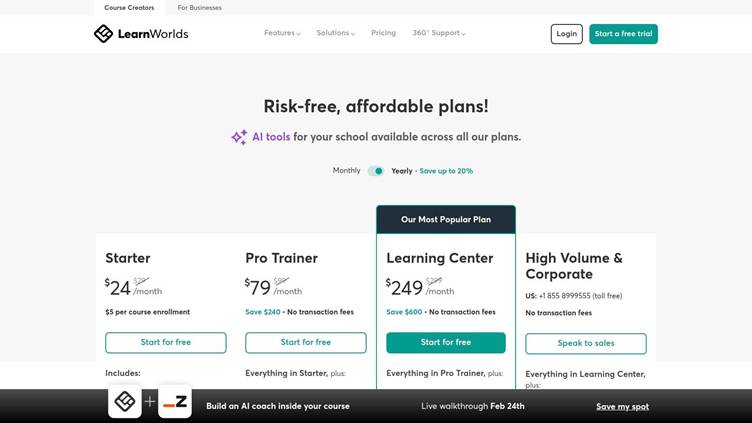
Starter Plan: Begins at $29/month, but includes a $5 fee per course sale.
Pro Trainer Plan: At $99/month, this plan removes transaction fees and adds unlimited courses, memberships, and instalment plans.
Learning Center Plan: $299/month, adding features like interactive video, auto-transcripts, and full white-labelling.
AI Assistant: An integrated AI tool to help generate course content, available on Pro plans and higher.
Pros:
Advanced interactive video and assessment tools for superior engagement.
Strong support for SCORM and corporate training requirements.
Comprehensive site builder and white-labelling capabilities.
Cons:
No free plan, making it difficult to test without a financial commitment.
The starter plan's per-sale transaction fee can add up quickly.
The platform's use of AI for generating captions and course outlines highlights the growing impact of artificial intelligence in education.
Website: https://www.learnworlds.com/pricing/
6. Podia
Podia is designed as an affordable, all-in-one solution, making it one of the best online teaching platforms for solo creators and small teams. It simplifies the creator’s toolkit by combining course hosting, digital downloads, webinars, coaching sessions, and community management into a single, cohesive dashboard. The platform's main appeal is its simplicity and predictable pricing, eliminating the need to stitch together multiple tools for email marketing, landing pages, and product sales.
Its straightforward interface allows creators to build a professional-looking storefront and website with minimal technical expertise. Podia handles the entire customer journey, from email capture and marketing broadcasts to payment processing and content delivery. This integrated approach is ideal for educators who want to focus on creating content rather than managing complex software stacks, offering a streamlined path to monetising their expertise.
Key Features & Pricing
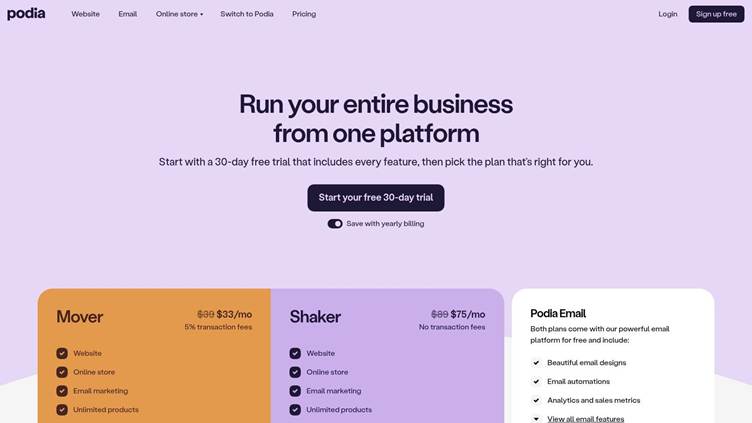
Podia’s pricing is built around a simple, two-plan model, with a free plan available to get started.
Free Plan: Includes one download and one coaching product, a full website, and community features, but with a 10% transaction fee.
Mover Plan: Starts at $39/month for unlimited courses and downloads, with a 5% transaction fee.
Shaker Plan: $89/month, adding features like unlimited webinars and affiliate marketing, plus a 0% transaction fee.
Built-in Tools: All paid plans include built-in email marketing, a website builder, and live chat support.
Pros:
Very straightforward and predictable pricing structure.
All-in-one platform includes email, website, and affiliate marketing.
Free migrations are offered to help you move from another platform.
Cons:
A 5% transaction fee applies to the entry-level Mover plan.
PayPal integration is only available on the more expensive Shaker plan.
For more information on getting your course online, consider these tips for launching an online course to ensure a successful start.
Website: https://www.podia.com/pricing
7. LearnDash (WordPress)
LearnDash stands out among the best online teaching platforms as the leading Learning Management System (LMS) plugin for WordPress. It provides creators with the ultimate control and ownership over their course environment, allowing them to build a fully customised teaching website directly on their self-hosted WordPress installation. The platform is renowned for its robust feature set and a massive ecosystem of add-ons, making it incredibly flexible for various use cases.
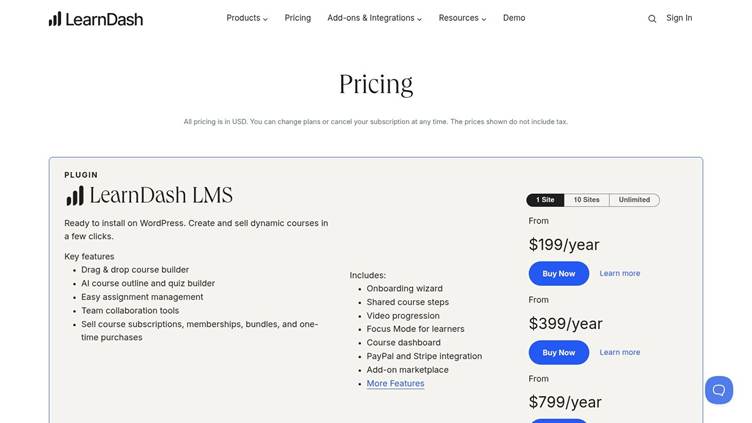
Its drag-and-drop course builder simplifies content creation, while features like advanced quizzing, assignments, and drip-feed lessons provide a structured learning path. For those who want the power of WordPress without the technical headache of managing servers and security, LearnDash also offers a hosted cloud solution. This bundle provides a pre-configured WordPress site with the LearnDash plugin, making it accessible to a wider range of edupreneurs.
Key Features & Pricing
LearnDash is sold as an annual licence for the plugin or as a monthly subscription for the hosted version.
LearnDash Plugin: Starts at $199/year for use on one site.
LearnDash Cloud: Starts at $29/month, including hosting, the ProPanel add-on, and daily backups.
Key Features: Includes a course builder with AI tools, video progression, certificates, and group management.
Integrations: Native integration with Stripe and PayPal, with hundreds more available through its add-on marketplace.
Pros
Maximum control and ownership over content and branding through WordPress.
A rich ecosystem of third-party add-ons for endless customisation.
A fully hosted plan is available to bypass technical setup and maintenance.
Cons:
The self-hosted version requires ongoing maintenance and security knowledge.
The initial setup can be more complex than all-in-one platforms if not using the cloud version.
Website: https://www.learndash.com/pricing-and-purchase/
8. Udemy
Udemy operates on a different model from most platforms on this list; it is a massive global course marketplace rather than a white-label course creation tool. For instructors, its primary value is immediate access to millions of potential students and a powerful, built-in marketing engine. You can publish free or paid courses without any hosting fees, leveraging Udemy’s brand recognition to attract learners.
The platform is ideal for educators who want to test course ideas or build a personal brand without the overhead of marketing and website management. Instructors can monetise their content through direct sales, promotional coupons, and inclusion in Udemy's subscription offerings. The platform’s Marketplace Insights tool provides valuable data on course demand and keyword relevance, helping you create content that sells.
Key Features & Pricing
Udemy’s pricing is based on a revenue share model, with no upfront monthly fees.
Instructor Promotion: You receive 97% of the revenue when a student purchases your course using your instructor coupon or referral link.
Udemy Organic Sales: For sales made through Udemy's marketing efforts (without your coupon), you receive 37% of the revenue.
Subscription Revenue: Instructors earn a share of the monthly subscription revenue from Udemy Business, calculated based on learner engagement.
Pros:
No hosting fees and instant access to a vast, global student base.
Robust analytics and promotional tools to drive enrolments.
High conversion potential during site-wide sales and promotions.
Cons:
The revenue share model for organic sales (37%) is less favourable than direct sales.
Limited control over branding, pricing, and student data.
Subscription pool share for Udemy Business is set to decrease over time.
Website: https://www.udemy.com/teaching
9. Skillshare
Skillshare operates on a marketplace model, positioning itself as a community-focused learning platform where instructors are compensated from a shared royalty pool. Unlike platforms where you sell courses directly, here you publish project-based classes and earn based on the total minutes watched by Skillshare's paying members. This makes it one of the best online teaching platforms for creators in creative fields like design, illustration, and photography who want to reach an existing, engaged audience without managing their own marketing and sales funnels.
The platform’s core is its emphasis on community and project-based learning. Each class encourages students to create and share a project, fostering interaction and peer-to-peer feedback. To earn, teachers must meet monthly eligibility thresholds, such as maintaining a minimum number of followers and achieving a certain amount of watch time across their classes, ensuring a focus on quality and engagement. This model rewards ongoing viewership, providing a potential passive income stream from your entire catalogue of classes.
Key Features & Earning Model
Skillshare's model is based on membership revenue, not direct course sales.
Royalty Pool Payouts: Instructors earn a share of Skillshare's monthly revenue based on their proportion of total minutes watched.
Referral Bonuses: Earn additional income for referring new paying members to the platform.
Eligibility Thresholds: To qualify for royalties, teachers must maintain at least 50 followers and have their classes accumulate a minimum number of watched minutes each month.
Community Projects: Built-in features for students to upload and share class projects, driving engagement.
Pros:
Low barrier to entry for publishing classes with no upfront hosting costs.
Access to a large, built-in audience of motivated creative learners.
Potential for ongoing passive income as your catalogue gains watch time.
Cons:
Earnings are variable and directly tied to monthly royalty allocations and platform-wide viewership.
No direct control over pricing or student data.
Must consistently meet follower and watch-time minimums to qualify for payment.
Website: https://www.skillshare.com/teach
10. Maven
Maven carves a unique niche in the world of online teaching platforms by focusing exclusively on live, cohort-based courses. It is purpose-built for instructors who want to deliver high-touch, interactive learning experiences that foster community and drive tangible outcomes. Unlike platforms geared towards self-paced video courses, Maven's entire ecosystem is optimised for premium, scheduled programmes that include live sessions, collaborative projects, and direct student-instructor engagement.
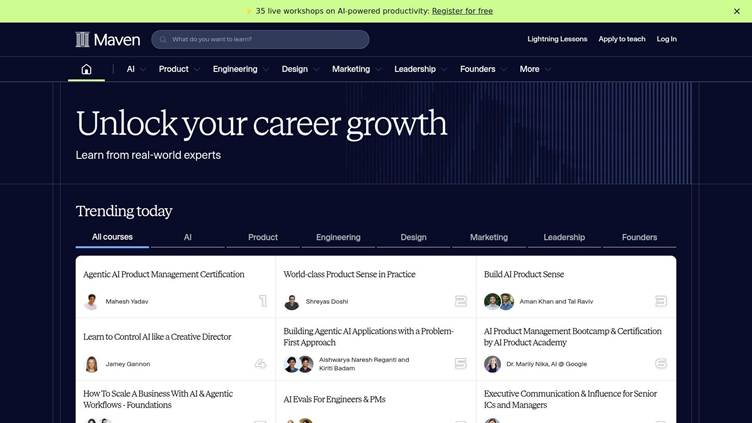
The platform also acts as a curated marketplace, giving top-tier instructors a chance to be discovered by a motivated audience actively seeking premium cohort experiences. Its structure guides creators on course pricing and curriculum design, making it an excellent choice for experts looking to transition their knowledge into a highly engaging, community-driven format. The emphasis is on transformation, not just information consumption.
Key Features & Pricing
Maven operates on a straightforward revenue-share model rather than monthly subscriptions, making it an accessible platform for launching premium courses.
Revenue Share: Instructors keep 90% of all enrolment revenue, while Maven retains a 10% platform fee.
Payment Handling: Integrated Stripe payouts to handle all student payments, refunds, and disbursements.
Marketing Tools: Built-in features for creating coupons, scholarships, discounts, and affiliate codes to drive enrolments.
Marketplace Discovery: Opportunity for high-quality courses to be featured on the Maven marketplace, increasing visibility.
Pros:
Generous 90/10 revenue split is highly favourable for instructors.
The marketplace model provides a powerful, built-in discovery engine.
Strong focus and support for the cohort-based course model, a rapidly growing segment.
Cons:
Instructors are responsible for handling their own taxes and business compliance.
Reliance on Stripe means payment availability and processing fees can vary significantly by country.
Website: https://maven.com
11. Graphy (by Unacademy)
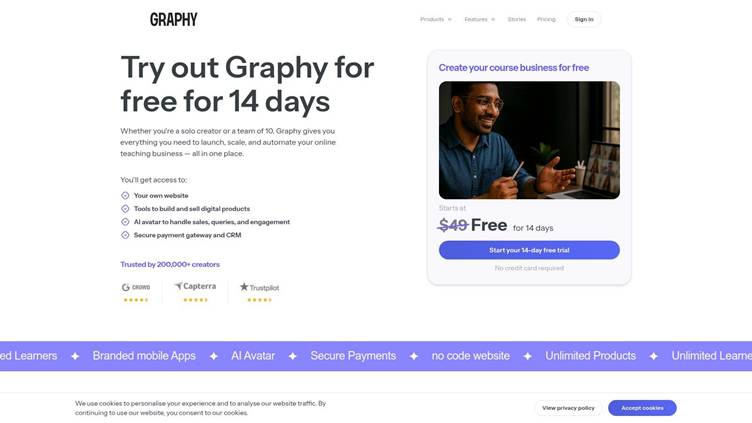
Graphy, a venture by Unacademy, presents itself as one of the best online teaching platforms specifically tailored for the Indian creator economy. It provides an all-in-one solution for edupreneurs to create, market, and sell courses, digital products, webinars, and memberships. Its standout feature is the deep integration with the Indian market, offering native payment gateways and pricing models that resonate with local creators and learners.
The platform empowers users with tools like branded mobile apps for both Android and iOS, advanced DRM content protection, and AI-powered features for engagement and support. This makes it a strong contender for creators who want to build a scalable teaching business with a robust, white-label mobile presence, especially when targeting an Indian audience.
Key Features & Pricing
Graphy offers plans designed for creators at various scales, with a focus on unlimited learners.
Launch Plan: Starts at ₹2,499/month (billed annually), includes a branded website, unlimited courses, and core marketing tools. A 5% platform fee per sale applies.
Rise Plan: From ₹4,582/month (billed annually), adds a branded Android app and removes the platform fee on web sales.
Advanced Features: Higher-tier plans unlock the branded iOS app, advanced integrations, and dedicated account management.
India-Specific Payments: Full integration with Razorpay and other local gateways, supporting UPI, wallets, and net banking.
Pros:
Built for Indian creators with local payment options and INR pricing.
Provides white-label Android and iOS apps for a seamless brand experience.
No hard cap on learners or courses, allowing for significant scale.
Cons:
The base plan includes a percentage-based transaction fee on top of the subscription.
The fully branded iOS app is typically reserved for higher-priced plans.
Website: https://graphy.com/pricing
12. Classplus
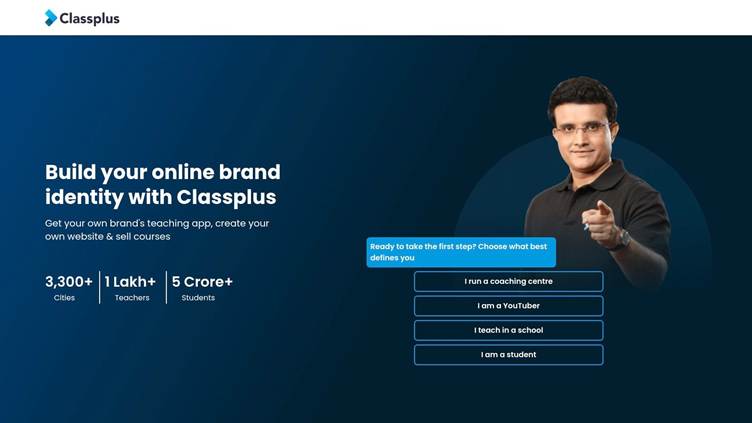
Classplus is a dominant force among online teaching platforms in India, offering a rapid, mobile-first solution for educators. Its core value proposition is enabling coaching institutes and individual creators to launch their own branded Android app and website without needing any technical skills. This focus on a white-label app allows teachers to sell recorded courses, conduct live classes, offer test series, and manage memberships directly to their student base.
The platform is purpose-built for the Indian market, incorporating features like strong anti-piracy measures to prevent screen recording and seamless integration with local payment gateways. For educators targeting a mobile-savvy audience in India, Classplus provides a powerful, all-in-one ecosystem to build and scale their online teaching business with a professional, app-centric presence.
Key Features & Pricing
Classplus operates on a customised pricing model based on the educator's specific needs and scale. You typically need to contact their sales team for a personalised quote.
White-Label Apps: Get your own branded Android app published on the Google Play Store.
Live & Recorded Classes: Host unlimited live sessions and sell pre-recorded video courses.
India-Optimised Payments: Native integration with Razorpay supports UPI, wallets, and other local payment methods.
Content Security: Features AI-powered security to prevent unauthorised content sharing and screen recording.
Marketing & Engagement: Includes tools for push notifications, AI-powered lead generation, and student management.
Pros:
Strong market fit for India with integrated local payment gateways like Razorpay and UPI.
Fast go-to-market strategy with a fully branded app launched in a short time.
Scales effectively from solo edupreneurs to large, multi-teacher coaching centres.
Cons:
iOS app is often a separate, additional cost, which can be a significant limitation.
The platform-based approach offers less customisation compared to building a solution from scratch.
Pricing is not transparent and requires a sales consultation.
Website: https://classplusapp.com/new-web
Top 12 Online Teaching Platforms — Core Comparison
Platform | Core features | UX / Quality (★) | Value / Pricing (💰) | Target audience (👥) | Unique selling points (✨) |
Skolasti 🏆 | AI Teaching Assistant (24/7, context-aware); white‑label themes; self‑paced/cohort/blended; DRM & access controls | ★ 4.8/5 Instructor Happiness; 99.9% uptime; 500k+ AI answers | 💰 Basic $49 / Pro $69 / Growth $149 per coach; 30‑day Pro/Growth trial | 👥 Independent coaches, creators, multi‑instructor orgs | ✨ AI TA that preserves your voice; enterprise‑grade content protection; advanced analytics |
Thinkific | Unlimited courses, Zoom/cohort support, bundles, certificates, API/webhooks | ★ Strong creator UX; clear plan progression | 💰 Tiered plans; native payments; mobile app add‑on extra | 👥 Edupreneurs, small teams, B2B course sellers | ✨ Advanced sales tools (bundles, upsells, payment plans) |
Teachable | Multiple pricing models, mobile apps, certificates, affiliates, white‑label options | ★ Simple setup; broad monetization | 💰 0% platform fees on Builder+; Starter has 7.5% fee | 👥 Course sellers, coaches, creators wanting simple monetization | ✨ Flexible pricing per product; wide currency support |
Kajabi | Courses + memberships + funnels + email automation; Creator Studio | ★ Marketing‑first UX, polished builder | 💰 Higher base price but reduces need for multiple tools | 👥 Creators who want built‑in marketing & funnels | ✨ Native funnels, broadcasts, and automation stack |
LearnWorlds | Interactive video, AI captions, SCORM support, deep integrations | ★ Premium learning experience; enterprise features | 💰 Higher price point for pro features | 👥 Professional/enterprise academies | ✨ Interactive video & AI‑assisted learning tools |
Podia | Courses, downloads, webinars, coaching, built‑in email & site | ★ Simple, friendly UX for solopreneurs | 💰 Low‑cost entry; 0% platform fee on higher plan; 30‑day trial | 👥 Solo creators and small teams | ✨ Straightforward pricing, free migrations |
LearnDash (WordPress) | Drag‑drop builder, AI course/quiz tools, add‑on marketplace, optional hosted bundle | ★ Maximum control (self‑hosted) | 💰 License or hosted bundle; costs vary by plan | 👥 WordPress owners, DIYers, agencies | ✨ Full ownership + vast add‑on ecosystem |
Udemy | Marketplace marketing, built‑in audience, course quality standards | ★ Massive reach; variable instructor control | 💰 No hosting fees; revenue share varies (37–97%) | 👥 Instructors seeking large audience & discoverability | ✨ Instant global visibility & promotional boosts |
Skillshare | Royalty pool paid by watch time; project & community features | ★ Community‑oriented UX; variable earnings | 💰 Earnings via royalty pool; require thresholds | 👥 Creative instructors, project‑based teachers | ✨ Strong community & project focus |
Maven | Live cohort platform with applications, projects, high‑touch facilitation | ★ High‑touch cohort experience | 💰 Instructors keep ~90% revenue (Maven 10%) | 👥 Premium cohort instructors, facilitators | ✨ Marketplace discovery for premium live programs |
Graphy (Unacademy) | Unlimited courses, AI sales/support avatars, DRM, Razorpay & INR pricing | ★ India‑optimized UX, mobile app options | 💰 INR plans; some % per‑sale fees on certain plans | 👥 Indian creators & educators | ✨ Razorpay/UPI support, white‑label apps, AI agents |
Classplus | Branded Android apps & sites, unlimited classes/tests, AI lead gen, Razorpay | ★ Fast go‑to‑market for coaching centers | 💰 India‑optimized pricing; iOS app may cost extra | 👥 Coaching institutes, solo educators in India | ✨ Branded app delivery + anti‑piracy features |
Making Your Final Choice: Which Platform Will Power Your Growth?
Navigating the expansive landscape of online teaching platforms can feel overwhelming. We have journeyed through a dozen of the industry's top contenders, from comprehensive all-in-one solutions like Kajabi to marketplace giants like Udemy and specialised WordPress plugins like LearnDash. Each platform presents a unique combination of features, pricing structures, and philosophies, underscoring a crucial truth: the "best" platform is not a one-size-fits-all label. Your ideal choice is deeply personal, tied directly to your business model, technical comfort, and long-term aspirations.
The selection process is a strategic decision that will shape your brand, your student experience, and ultimately, your profitability. It is a commitment that extends beyond a simple feature-for-feature comparison. It is about finding a partner in growth, a technological foundation that not only supports your current offerings but also anticipates and facilitates your future ambitions.
Distilling Your Decision: Key Factors to Reconsider
As you move from analysis to action, it is vital to filter the myriad options through the lens of your most critical priorities. Let's revisit the core decision-making pillars that will help you choose with clarity and confidence from the best online teaching platforms available.
1. Control vs. Convenience: This is the fundamental trade-off. Marketplaces like Udemy and Skillshare offer unparalleled convenience and access to a pre-existing audience but at the cost of brand control, pricing freedom, and direct student relationships. Conversely, self-hosted platforms like Teachable, Thinkific, and LearnWorlds provide the autonomy to build your brand and own your audience, demanding a greater investment in marketing and setup.
2. Simplicity vs. Scalability: Platforms such as Podia are celebrated for their user-friendly, all-in-one simplicity, making them excellent for creators who are just starting out. However, as your business grows, you might find their features limiting. In contrast, powerhouses like Kajabi and LearnWorlds offer deep functionality, from advanced marketing automation to intricate course pathways, but their complexity can present a steeper learning curve for beginners.
3. The All-in-One Ecosystem vs. A Best-in-Class Stack: Consider whether you prefer a single, integrated environment or the flexibility to assemble your own technology stack. Kajabi is the quintessential all-in-one, bundling course hosting, email marketing, websites, and funnels. Alternatively, using a platform like LearnDash on WordPress allows you to hand-pick your favourite tools for email, e-commerce, and community management, offering infinite customisation at the expense of simplicity.
The Modern Educator's Edge: AI, Branding, and Security
For serious coaches, edupreneurs, and training organisations aiming for market leadership, three factors are becoming increasingly non-negotiable: deep branding, robust security, and intelligent automation. Your ability to offer a seamless, secure, and supportive learning environment is what differentiates a standard online course from a premium educational experience.
This is where a solution like Skolasti carves its unique niche. It is engineered for creators who have moved beyond the basics and are now focused on scaling efficiently without sacrificing quality. The commitment to full white-labelling means your brand is the hero of the student journey, not the platform's. Advanced content protection measures like dynamic watermarking and screen recording prevention are not just features; they are a declaration that you value your intellectual property.
Most significantly, the integration of an AI Teaching Assistant addresses a primary bottleneck for growth: your time. By automating responses to common student queries, this technology allows you to focus on high-impact activities like creating new content and fostering deeper community engagement, rather than being mired in repetitive administrative tasks. This unique blend of control, security, and AI-driven efficiency makes it a compelling choice for those building a sustainable, scalable learning business.
As you stand at this crossroads, remember that your choice of platform is one of the most impactful decisions you will make for your online education venture. We encourage you to use this comprehensive guide as your map. Shortlist two or three platforms that align with your vision. Sign up for their free trials, test the user interface, and experience the student-facing environment firsthand. The platform you choose today will be the engine that powers your growth tomorrow. Choose wisely, build boldly, and embark on the next chapter of your teaching journey with confidence.
Ready to build a premium, secure, and AI-powered learning business without sacrificing your brand? Explore how Skolasti provides the white-label control and intelligent automation you need to scale efficiently. Start your free trial of Skolasti today and discover a smarter way to teach online.
The creator economy has transformed expertise into a scalable business, empowering coaches, edupreneurs, and instructors to monetise their knowledge. However, selecting from the ever-growing list of online teaching platforms can feel overwhelming. Do you need an all-in-one solution with marketing automation, a simple WordPress plugin to integrate with your existing site, or a marketplace platform to find your first students? This decision is critical, as the right platform serves as the foundation for your entire digital education enterprise.
This guide is designed to cut through the noise and provide clarity. We will deliver an in-depth, practical analysis of the 12 best online teaching platforms available today. For each option, we'll go beyond surface-level descriptions to explore core features, ideal use cases, and crucial limitations you need to be aware of before committing. You’ll find direct links and screenshots to give you a real feel for the user experience.
We'll break down everything from course creation and delivery modes to white-label branding, content protection, and varied monetisation models. We’ll also touch upon how AI is shaping the industry; to further streamline your content development and enhance course quality, exploring the best AI tools for content creators can be a game-changer when monetising your expertise. Our goal is to equip you with the specific insights needed to select the perfect partner to build, launch, and successfully grow your digital academy.
1. Skolasti
Best For: White-label control and AI-powered student support
Skolasti positions itself as a premier all-in-one academy platform, making a strong case as one of the best online teaching platforms for creators focused on scalability and brand integrity. It is meticulously designed for independent coaches, edupreneurs, and multi-instructor organisations aiming to deliver a premium, fully branded learning experience without the heavy lifting of constant student support. The platform’s core philosophy centres on empowering instructors to teach smarter, not harder, by leveraging intelligent automation.
Its most compelling feature is the AI Teaching Assistant. This isn't a generic chatbot; it trains exclusively on your course materials, learning your specific teaching style and terminology. It then answers student questions 24/7, providing instant, accurate responses that sound like they came directly from you. Instructors report this single feature saves them up to 15 hours per week on support queries, allowing them to focus on content creation and business growth.
Key Strengths and Use Cases
Skolasti excels in providing a robust, secure, and customisable environment. Its full white-label capabilities allow you to remove all Skolasti branding and use your own domain, custom themes, and branded certificates, creating a seamless brand experience for your students. The platform supports a variety of delivery models, including self-paced courses, live cohorts, and blended learning, making it adaptable for fitness instructors, language tutors, and corporate trainers alike.
Content security is another major differentiator. Skolasti incorporates enterprise-grade protections like DRM, dynamic watermarking, and domain restrictions to safeguard your intellectual property from unauthorised sharing and piracy. This is a critical consideration for creators whose business relies on the value of their unique content.
Pricing and Plan Tiers
Skolasti offers scalable pricing based on the number of instructors, with a generous 30-day free trial on its Pro and Growth plans (no credit card required).
Basic: $49/coach per month
Pro: $69/coach per month
Growth: $149/coach per month
Higher-tier plans unlock advanced features such as SSO, in-depth analytics, and dedicated account management. You can explore a detailed comparison of all Skolasti platform features on their website.
Pros:
AI Teaching Assistant reduces instructor workload significantly.
Complete white-label customisation for a fully branded academy.
Robust content protection features (DRM, watermarking).
Unlimited courses and students on all plans.
Cons:
Per-coach pricing can become costly for larger teams.
Advanced features like SSO are restricted to higher-tier plans.
Website: https://www.skolasti.com
2. Thinkific
Thinkific positions itself as one of the best online teaching platforms for creators who prioritise brand control and a robust course-building experience. It empowers edupreneurs to design, market, and sell self-paced courses, live lessons, and membership communities all under their own custom domain. The platform’s strength lies in its comprehensive, yet user-friendly, course builder that supports a wide variety of lesson types, including video, text, quizzes, and assignments.
Its clear plan progression makes it ideal for creators at different stages. You can start on a free plan to test your course idea and then scale up to access advanced features like payment plans, bundles, and detailed analytics. The built-in community feature also allows you to foster student engagement directly within your course ecosystem, creating a more integrated learning environment.
Key Features & Pricing
Thinkific offers a tiered pricing structure that grows with your business needs.
Free Plan: Test the core features with one course and unlimited students.
Basic Plan: Starts at $49/month for unlimited courses and a custom domain.
Pro Plan: $99/month, adding features like memberships, payment plans, and certificates.
Branded Mobile App: Available as a paid add-on for a native mobile experience.
Pros:
Generous free plan to start without investment.
Native payment gateway (Thinkific Payments) with standard processing rates.
Strong support for B2B sales with group enrolment and progress tracking.
Cons:
Lacks native support for India-specific payment gateways like UPI or Razorpay.
The branded mobile app is a significant additional cost.
For a deeper dive into structuring your content effectively, explore these online course creation tips to maximise your impact.
Website: https://www.thinkific.com/pricing
3. Teachable
Teachable is a prominent name among the best online teaching platforms, particularly favoured by creators looking to sell a diverse range of digital products. It excels in offering straightforward tools to bundle and sell online courses, coaching services, and digital downloads. The platform is designed for simplicity, allowing edupreneurs to quickly set up a professional-looking storefront and start monetising their expertise with flexible pricing models like one-time payments, subscriptions, or payment plans.
Its built-in marketing tools, including upsells, cart recovery, and an affiliate program, provide creators with the necessary resources to boost sales without complex integrations. While the entry-level plan includes a transaction fee, higher-tier plans eliminate this, making it a scalable option as your business grows. The platform’s focus on sales and conversion is a key differentiator for instructors who prioritise revenue generation.
Key Features & Pricing
Teachable’s plans are structured to support creators from their first sale to a full-scale operation.
Starter Plan: Begins at $59/month with a 7.5% platform transaction fee.
Builder Plan: $119/month, removing platform fees and adding features like affiliates and custom domains.
Growth Plan: $199/month, offering advanced features like white-labelling and group coaching calls.
Advanced Plan: $299/month, for creators needing public API access and custom user roles.
Pros:
Simple setup process and user-friendly interface.
Broad monetisation options including courses, coaching, and downloads.
0% platform transaction fees on the Builder plan and above.
Cons:
The Starter plan’s 7.5% transaction fee can be costly for beginners.
Community feedback has noted evolving "fair use" bandwidth limits and occasional friction with Indian payment gateways.
Website: https://www.teachable.com/pricing
4. Kajabi
Kajabi is a premier all-in-one platform for serious creators who want to consolidate their entire digital business, from course creation to sophisticated marketing automation. It stands out by integrating powerful tools for building sales funnels, email marketing campaigns, and membership sites directly alongside its course hosting capabilities. This integrated approach makes it one of the best online teaching platforms for edupreneurs looking to scale without juggling multiple software subscriptions.
The platform is designed to manage the entire customer lifecycle, from lead capture with custom landing pages to nurturing prospects with automated email sequences and converting them into students. Kajabi's recent addition of AI features and a Creator Studio further streamlines content creation, helping users generate course outlines, lesson content, and promotional materials efficiently. Its comprehensive nature justifies its premium positioning in the market.
Key Features & Pricing
Kajabi’s pricing reflects its all-in-one value proposition, with plans scaling based on contacts and active students.
Basic Plan: Starts at $149/month for 3 products, 3 funnels, and 10,000 contacts.
Growth Plan: $199/month, increasing limits to 15 products, 15 funnels, and 25,000 contacts.
Pro Plan: $399/month for advanced users needing 100 products, 100 funnels, and 100,000 contacts.
Kajabi Payments: The native payment processor offers 0% transaction fees (standard card processing rates still apply).
Pros:
Powerful native marketing stack reduces the need for third-party tools like email services and funnel builders.
Robust analytics provide deep insights into marketing performance and student behaviour.
0% transaction fee when using the built-in Kajabi Payments gateway.
Cons:
Higher starting price point can be a barrier for new creators.
A 5% transaction fee is applied if you opt for third-party payment providers like Stripe or PayPal on the Basic plan.
Website: https://kajabi.com/pricing
5. LearnWorlds
LearnWorlds establishes itself as one of the best online teaching platforms for serious edupreneurs and corporate trainers aiming to build premium, interactive online academies. It excels by offering advanced features like interactive video, where you can add questions, pop-ups, and navigation directly into your content. This focus on engagement tools makes it a powerful choice for creating immersive and effective learning experiences under your own brand.
The platform is built for scale, supporting everything from self-paced courses to complex corporate training programmes with SCORM/xAPI compliance. Its powerful site builder, extensive integrations, and white-labelling options allow for the creation of a fully customised learning ecosystem. LearnWorlds is ideal for professionals who need robust assessment tools, detailed analytics, and the ability to foster a vibrant learning community.
Key Features & Pricing
LearnWorlds offers a feature-rich pricing model, though it does not have a free plan.
Starter Plan: Begins at $29/month, but includes a $5 fee per course sale.
Pro Trainer Plan: At $99/month, this plan removes transaction fees and adds unlimited courses, memberships, and instalment plans.
Learning Center Plan: $299/month, adding features like interactive video, auto-transcripts, and full white-labelling.
AI Assistant: An integrated AI tool to help generate course content, available on Pro plans and higher.
Pros:
Advanced interactive video and assessment tools for superior engagement.
Strong support for SCORM and corporate training requirements.
Comprehensive site builder and white-labelling capabilities.
Cons:
No free plan, making it difficult to test without a financial commitment.
The starter plan's per-sale transaction fee can add up quickly.
The platform's use of AI for generating captions and course outlines highlights the growing impact of artificial intelligence in education.
Website: https://www.learnworlds.com/pricing/
6. Podia
Podia is designed as an affordable, all-in-one solution, making it one of the best online teaching platforms for solo creators and small teams. It simplifies the creator’s toolkit by combining course hosting, digital downloads, webinars, coaching sessions, and community management into a single, cohesive dashboard. The platform's main appeal is its simplicity and predictable pricing, eliminating the need to stitch together multiple tools for email marketing, landing pages, and product sales.
Its straightforward interface allows creators to build a professional-looking storefront and website with minimal technical expertise. Podia handles the entire customer journey, from email capture and marketing broadcasts to payment processing and content delivery. This integrated approach is ideal for educators who want to focus on creating content rather than managing complex software stacks, offering a streamlined path to monetising their expertise.
Key Features & Pricing
Podia’s pricing is built around a simple, two-plan model, with a free plan available to get started.
Free Plan: Includes one download and one coaching product, a full website, and community features, but with a 10% transaction fee.
Mover Plan: Starts at $39/month for unlimited courses and downloads, with a 5% transaction fee.
Shaker Plan: $89/month, adding features like unlimited webinars and affiliate marketing, plus a 0% transaction fee.
Built-in Tools: All paid plans include built-in email marketing, a website builder, and live chat support.
Pros:
Very straightforward and predictable pricing structure.
All-in-one platform includes email, website, and affiliate marketing.
Free migrations are offered to help you move from another platform.
Cons:
A 5% transaction fee applies to the entry-level Mover plan.
PayPal integration is only available on the more expensive Shaker plan.
For more information on getting your course online, consider these tips for launching an online course to ensure a successful start.
Website: https://www.podia.com/pricing
7. LearnDash (WordPress)
LearnDash stands out among the best online teaching platforms as the leading Learning Management System (LMS) plugin for WordPress. It provides creators with the ultimate control and ownership over their course environment, allowing them to build a fully customised teaching website directly on their self-hosted WordPress installation. The platform is renowned for its robust feature set and a massive ecosystem of add-ons, making it incredibly flexible for various use cases.
Its drag-and-drop course builder simplifies content creation, while features like advanced quizzing, assignments, and drip-feed lessons provide a structured learning path. For those who want the power of WordPress without the technical headache of managing servers and security, LearnDash also offers a hosted cloud solution. This bundle provides a pre-configured WordPress site with the LearnDash plugin, making it accessible to a wider range of edupreneurs.
Key Features & Pricing
LearnDash is sold as an annual licence for the plugin or as a monthly subscription for the hosted version.
LearnDash Plugin: Starts at $199/year for use on one site.
LearnDash Cloud: Starts at $29/month, including hosting, the ProPanel add-on, and daily backups.
Key Features: Includes a course builder with AI tools, video progression, certificates, and group management.
Integrations: Native integration with Stripe and PayPal, with hundreds more available through its add-on marketplace.
Pros
Maximum control and ownership over content and branding through WordPress.
A rich ecosystem of third-party add-ons for endless customisation.
A fully hosted plan is available to bypass technical setup and maintenance.
Cons:
The self-hosted version requires ongoing maintenance and security knowledge.
The initial setup can be more complex than all-in-one platforms if not using the cloud version.
Website: https://www.learndash.com/pricing-and-purchase/
8. Udemy
Udemy operates on a different model from most platforms on this list; it is a massive global course marketplace rather than a white-label course creation tool. For instructors, its primary value is immediate access to millions of potential students and a powerful, built-in marketing engine. You can publish free or paid courses without any hosting fees, leveraging Udemy’s brand recognition to attract learners.
The platform is ideal for educators who want to test course ideas or build a personal brand without the overhead of marketing and website management. Instructors can monetise their content through direct sales, promotional coupons, and inclusion in Udemy's subscription offerings. The platform’s Marketplace Insights tool provides valuable data on course demand and keyword relevance, helping you create content that sells.
Key Features & Pricing
Udemy’s pricing is based on a revenue share model, with no upfront monthly fees.
Instructor Promotion: You receive 97% of the revenue when a student purchases your course using your instructor coupon or referral link.
Udemy Organic Sales: For sales made through Udemy's marketing efforts (without your coupon), you receive 37% of the revenue.
Subscription Revenue: Instructors earn a share of the monthly subscription revenue from Udemy Business, calculated based on learner engagement.
Pros:
No hosting fees and instant access to a vast, global student base.
Robust analytics and promotional tools to drive enrolments.
High conversion potential during site-wide sales and promotions.
Cons:
The revenue share model for organic sales (37%) is less favourable than direct sales.
Limited control over branding, pricing, and student data.
Subscription pool share for Udemy Business is set to decrease over time.
Website: https://www.udemy.com/teaching
9. Skillshare
Skillshare operates on a marketplace model, positioning itself as a community-focused learning platform where instructors are compensated from a shared royalty pool. Unlike platforms where you sell courses directly, here you publish project-based classes and earn based on the total minutes watched by Skillshare's paying members. This makes it one of the best online teaching platforms for creators in creative fields like design, illustration, and photography who want to reach an existing, engaged audience without managing their own marketing and sales funnels.
The platform’s core is its emphasis on community and project-based learning. Each class encourages students to create and share a project, fostering interaction and peer-to-peer feedback. To earn, teachers must meet monthly eligibility thresholds, such as maintaining a minimum number of followers and achieving a certain amount of watch time across their classes, ensuring a focus on quality and engagement. This model rewards ongoing viewership, providing a potential passive income stream from your entire catalogue of classes.
Key Features & Earning Model
Skillshare's model is based on membership revenue, not direct course sales.
Royalty Pool Payouts: Instructors earn a share of Skillshare's monthly revenue based on their proportion of total minutes watched.
Referral Bonuses: Earn additional income for referring new paying members to the platform.
Eligibility Thresholds: To qualify for royalties, teachers must maintain at least 50 followers and have their classes accumulate a minimum number of watched minutes each month.
Community Projects: Built-in features for students to upload and share class projects, driving engagement.
Pros:
Low barrier to entry for publishing classes with no upfront hosting costs.
Access to a large, built-in audience of motivated creative learners.
Potential for ongoing passive income as your catalogue gains watch time.
Cons:
Earnings are variable and directly tied to monthly royalty allocations and platform-wide viewership.
No direct control over pricing or student data.
Must consistently meet follower and watch-time minimums to qualify for payment.
Website: https://www.skillshare.com/teach
10. Maven
Maven carves a unique niche in the world of online teaching platforms by focusing exclusively on live, cohort-based courses. It is purpose-built for instructors who want to deliver high-touch, interactive learning experiences that foster community and drive tangible outcomes. Unlike platforms geared towards self-paced video courses, Maven's entire ecosystem is optimised for premium, scheduled programmes that include live sessions, collaborative projects, and direct student-instructor engagement.
The platform also acts as a curated marketplace, giving top-tier instructors a chance to be discovered by a motivated audience actively seeking premium cohort experiences. Its structure guides creators on course pricing and curriculum design, making it an excellent choice for experts looking to transition their knowledge into a highly engaging, community-driven format. The emphasis is on transformation, not just information consumption.
Key Features & Pricing
Maven operates on a straightforward revenue-share model rather than monthly subscriptions, making it an accessible platform for launching premium courses.
Revenue Share: Instructors keep 90% of all enrolment revenue, while Maven retains a 10% platform fee.
Payment Handling: Integrated Stripe payouts to handle all student payments, refunds, and disbursements.
Marketing Tools: Built-in features for creating coupons, scholarships, discounts, and affiliate codes to drive enrolments.
Marketplace Discovery: Opportunity for high-quality courses to be featured on the Maven marketplace, increasing visibility.
Pros:
Generous 90/10 revenue split is highly favourable for instructors.
The marketplace model provides a powerful, built-in discovery engine.
Strong focus and support for the cohort-based course model, a rapidly growing segment.
Cons:
Instructors are responsible for handling their own taxes and business compliance.
Reliance on Stripe means payment availability and processing fees can vary significantly by country.
Website: https://maven.com
11. Graphy (by Unacademy)
Graphy, a venture by Unacademy, presents itself as one of the best online teaching platforms specifically tailored for the Indian creator economy. It provides an all-in-one solution for edupreneurs to create, market, and sell courses, digital products, webinars, and memberships. Its standout feature is the deep integration with the Indian market, offering native payment gateways and pricing models that resonate with local creators and learners.
The platform empowers users with tools like branded mobile apps for both Android and iOS, advanced DRM content protection, and AI-powered features for engagement and support. This makes it a strong contender for creators who want to build a scalable teaching business with a robust, white-label mobile presence, especially when targeting an Indian audience.
Key Features & Pricing
Graphy offers plans designed for creators at various scales, with a focus on unlimited learners.
Launch Plan: Starts at ₹2,499/month (billed annually), includes a branded website, unlimited courses, and core marketing tools. A 5% platform fee per sale applies.
Rise Plan: From ₹4,582/month (billed annually), adds a branded Android app and removes the platform fee on web sales.
Advanced Features: Higher-tier plans unlock the branded iOS app, advanced integrations, and dedicated account management.
India-Specific Payments: Full integration with Razorpay and other local gateways, supporting UPI, wallets, and net banking.
Pros:
Built for Indian creators with local payment options and INR pricing.
Provides white-label Android and iOS apps for a seamless brand experience.
No hard cap on learners or courses, allowing for significant scale.
Cons:
The base plan includes a percentage-based transaction fee on top of the subscription.
The fully branded iOS app is typically reserved for higher-priced plans.
Website: https://graphy.com/pricing
12. Classplus
Classplus is a dominant force among online teaching platforms in India, offering a rapid, mobile-first solution for educators. Its core value proposition is enabling coaching institutes and individual creators to launch their own branded Android app and website without needing any technical skills. This focus on a white-label app allows teachers to sell recorded courses, conduct live classes, offer test series, and manage memberships directly to their student base.
The platform is purpose-built for the Indian market, incorporating features like strong anti-piracy measures to prevent screen recording and seamless integration with local payment gateways. For educators targeting a mobile-savvy audience in India, Classplus provides a powerful, all-in-one ecosystem to build and scale their online teaching business with a professional, app-centric presence.
Key Features & Pricing
Classplus operates on a customised pricing model based on the educator's specific needs and scale. You typically need to contact their sales team for a personalised quote.
White-Label Apps: Get your own branded Android app published on the Google Play Store.
Live & Recorded Classes: Host unlimited live sessions and sell pre-recorded video courses.
India-Optimised Payments: Native integration with Razorpay supports UPI, wallets, and other local payment methods.
Content Security: Features AI-powered security to prevent unauthorised content sharing and screen recording.
Marketing & Engagement: Includes tools for push notifications, AI-powered lead generation, and student management.
Pros:
Strong market fit for India with integrated local payment gateways like Razorpay and UPI.
Fast go-to-market strategy with a fully branded app launched in a short time.
Scales effectively from solo edupreneurs to large, multi-teacher coaching centres.
Cons:
iOS app is often a separate, additional cost, which can be a significant limitation.
The platform-based approach offers less customisation compared to building a solution from scratch.
Pricing is not transparent and requires a sales consultation.
Website: https://classplusapp.com/new-web
Top 12 Online Teaching Platforms — Core Comparison
Platform | Core features | UX / Quality (★) | Value / Pricing (💰) | Target audience (👥) | Unique selling points (✨) |
Skolasti 🏆 | AI Teaching Assistant (24/7, context-aware); white‑label themes; self‑paced/cohort/blended; DRM & access controls | ★ 4.8/5 Instructor Happiness; 99.9% uptime; 500k+ AI answers | 💰 Basic $49 / Pro $69 / Growth $149 per coach; 30‑day Pro/Growth trial | 👥 Independent coaches, creators, multi‑instructor orgs | ✨ AI TA that preserves your voice; enterprise‑grade content protection; advanced analytics |
Thinkific | Unlimited courses, Zoom/cohort support, bundles, certificates, API/webhooks | ★ Strong creator UX; clear plan progression | 💰 Tiered plans; native payments; mobile app add‑on extra | 👥 Edupreneurs, small teams, B2B course sellers | ✨ Advanced sales tools (bundles, upsells, payment plans) |
Teachable | Multiple pricing models, mobile apps, certificates, affiliates, white‑label options | ★ Simple setup; broad monetization | 💰 0% platform fees on Builder+; Starter has 7.5% fee | 👥 Course sellers, coaches, creators wanting simple monetization | ✨ Flexible pricing per product; wide currency support |
Kajabi | Courses + memberships + funnels + email automation; Creator Studio | ★ Marketing‑first UX, polished builder | 💰 Higher base price but reduces need for multiple tools | 👥 Creators who want built‑in marketing & funnels | ✨ Native funnels, broadcasts, and automation stack |
LearnWorlds | Interactive video, AI captions, SCORM support, deep integrations | ★ Premium learning experience; enterprise features | 💰 Higher price point for pro features | 👥 Professional/enterprise academies | ✨ Interactive video & AI‑assisted learning tools |
Podia | Courses, downloads, webinars, coaching, built‑in email & site | ★ Simple, friendly UX for solopreneurs | 💰 Low‑cost entry; 0% platform fee on higher plan; 30‑day trial | 👥 Solo creators and small teams | ✨ Straightforward pricing, free migrations |
LearnDash (WordPress) | Drag‑drop builder, AI course/quiz tools, add‑on marketplace, optional hosted bundle | ★ Maximum control (self‑hosted) | 💰 License or hosted bundle; costs vary by plan | 👥 WordPress owners, DIYers, agencies | ✨ Full ownership + vast add‑on ecosystem |
Udemy | Marketplace marketing, built‑in audience, course quality standards | ★ Massive reach; variable instructor control | 💰 No hosting fees; revenue share varies (37–97%) | 👥 Instructors seeking large audience & discoverability | ✨ Instant global visibility & promotional boosts |
Skillshare | Royalty pool paid by watch time; project & community features | ★ Community‑oriented UX; variable earnings | 💰 Earnings via royalty pool; require thresholds | 👥 Creative instructors, project‑based teachers | ✨ Strong community & project focus |
Maven | Live cohort platform with applications, projects, high‑touch facilitation | ★ High‑touch cohort experience | 💰 Instructors keep ~90% revenue (Maven 10%) | 👥 Premium cohort instructors, facilitators | ✨ Marketplace discovery for premium live programs |
Graphy (Unacademy) | Unlimited courses, AI sales/support avatars, DRM, Razorpay & INR pricing | ★ India‑optimized UX, mobile app options | 💰 INR plans; some % per‑sale fees on certain plans | 👥 Indian creators & educators | ✨ Razorpay/UPI support, white‑label apps, AI agents |
Classplus | Branded Android apps & sites, unlimited classes/tests, AI lead gen, Razorpay | ★ Fast go‑to‑market for coaching centers | 💰 India‑optimized pricing; iOS app may cost extra | 👥 Coaching institutes, solo educators in India | ✨ Branded app delivery + anti‑piracy features |
Making Your Final Choice: Which Platform Will Power Your Growth?
Navigating the expansive landscape of online teaching platforms can feel overwhelming. We have journeyed through a dozen of the industry's top contenders, from comprehensive all-in-one solutions like Kajabi to marketplace giants like Udemy and specialised WordPress plugins like LearnDash. Each platform presents a unique combination of features, pricing structures, and philosophies, underscoring a crucial truth: the "best" platform is not a one-size-fits-all label. Your ideal choice is deeply personal, tied directly to your business model, technical comfort, and long-term aspirations.
The selection process is a strategic decision that will shape your brand, your student experience, and ultimately, your profitability. It is a commitment that extends beyond a simple feature-for-feature comparison. It is about finding a partner in growth, a technological foundation that not only supports your current offerings but also anticipates and facilitates your future ambitions.
Distilling Your Decision: Key Factors to Reconsider
As you move from analysis to action, it is vital to filter the myriad options through the lens of your most critical priorities. Let's revisit the core decision-making pillars that will help you choose with clarity and confidence from the best online teaching platforms available.
1. Control vs. Convenience: This is the fundamental trade-off. Marketplaces like Udemy and Skillshare offer unparalleled convenience and access to a pre-existing audience but at the cost of brand control, pricing freedom, and direct student relationships. Conversely, self-hosted platforms like Teachable, Thinkific, and LearnWorlds provide the autonomy to build your brand and own your audience, demanding a greater investment in marketing and setup.
2. Simplicity vs. Scalability: Platforms such as Podia are celebrated for their user-friendly, all-in-one simplicity, making them excellent for creators who are just starting out. However, as your business grows, you might find their features limiting. In contrast, powerhouses like Kajabi and LearnWorlds offer deep functionality, from advanced marketing automation to intricate course pathways, but their complexity can present a steeper learning curve for beginners.
3. The All-in-One Ecosystem vs. A Best-in-Class Stack: Consider whether you prefer a single, integrated environment or the flexibility to assemble your own technology stack. Kajabi is the quintessential all-in-one, bundling course hosting, email marketing, websites, and funnels. Alternatively, using a platform like LearnDash on WordPress allows you to hand-pick your favourite tools for email, e-commerce, and community management, offering infinite customisation at the expense of simplicity.
The Modern Educator's Edge: AI, Branding, and Security
For serious coaches, edupreneurs, and training organisations aiming for market leadership, three factors are becoming increasingly non-negotiable: deep branding, robust security, and intelligent automation. Your ability to offer a seamless, secure, and supportive learning environment is what differentiates a standard online course from a premium educational experience.
This is where a solution like Skolasti carves its unique niche. It is engineered for creators who have moved beyond the basics and are now focused on scaling efficiently without sacrificing quality. The commitment to full white-labelling means your brand is the hero of the student journey, not the platform's. Advanced content protection measures like dynamic watermarking and screen recording prevention are not just features; they are a declaration that you value your intellectual property.
Most significantly, the integration of an AI Teaching Assistant addresses a primary bottleneck for growth: your time. By automating responses to common student queries, this technology allows you to focus on high-impact activities like creating new content and fostering deeper community engagement, rather than being mired in repetitive administrative tasks. This unique blend of control, security, and AI-driven efficiency makes it a compelling choice for those building a sustainable, scalable learning business.
As you stand at this crossroads, remember that your choice of platform is one of the most impactful decisions you will make for your online education venture. We encourage you to use this comprehensive guide as your map. Shortlist two or three platforms that align with your vision. Sign up for their free trials, test the user interface, and experience the student-facing environment firsthand. The platform you choose today will be the engine that powers your growth tomorrow. Choose wisely, build boldly, and embark on the next chapter of your teaching journey with confidence.
Ready to build a premium, secure, and AI-powered learning business without sacrificing your brand? Explore how Skolasti provides the white-label control and intelligent automation you need to scale efficiently. Start your free trial of Skolasti today and discover a smarter way to teach online.
The creator economy has transformed expertise into a scalable business, empowering coaches, edupreneurs, and instructors to monetise their knowledge. However, selecting from the ever-growing list of online teaching platforms can feel overwhelming. Do you need an all-in-one solution with marketing automation, a simple WordPress plugin to integrate with your existing site, or a marketplace platform to find your first students? This decision is critical, as the right platform serves as the foundation for your entire digital education enterprise.
This guide is designed to cut through the noise and provide clarity. We will deliver an in-depth, practical analysis of the 12 best online teaching platforms available today. For each option, we'll go beyond surface-level descriptions to explore core features, ideal use cases, and crucial limitations you need to be aware of before committing. You’ll find direct links and screenshots to give you a real feel for the user experience.
We'll break down everything from course creation and delivery modes to white-label branding, content protection, and varied monetisation models. We’ll also touch upon how AI is shaping the industry; to further streamline your content development and enhance course quality, exploring the best AI tools for content creators can be a game-changer when monetising your expertise. Our goal is to equip you with the specific insights needed to select the perfect partner to build, launch, and successfully grow your digital academy.
1. Skolasti
Best For: White-label control and AI-powered student support
Skolasti positions itself as a premier all-in-one academy platform, making a strong case as one of the best online teaching platforms for creators focused on scalability and brand integrity. It is meticulously designed for independent coaches, edupreneurs, and multi-instructor organisations aiming to deliver a premium, fully branded learning experience without the heavy lifting of constant student support. The platform’s core philosophy centres on empowering instructors to teach smarter, not harder, by leveraging intelligent automation.
Its most compelling feature is the AI Teaching Assistant. This isn't a generic chatbot; it trains exclusively on your course materials, learning your specific teaching style and terminology. It then answers student questions 24/7, providing instant, accurate responses that sound like they came directly from you. Instructors report this single feature saves them up to 15 hours per week on support queries, allowing them to focus on content creation and business growth.
Key Strengths and Use Cases
Skolasti excels in providing a robust, secure, and customisable environment. Its full white-label capabilities allow you to remove all Skolasti branding and use your own domain, custom themes, and branded certificates, creating a seamless brand experience for your students. The platform supports a variety of delivery models, including self-paced courses, live cohorts, and blended learning, making it adaptable for fitness instructors, language tutors, and corporate trainers alike.
Content security is another major differentiator. Skolasti incorporates enterprise-grade protections like DRM, dynamic watermarking, and domain restrictions to safeguard your intellectual property from unauthorised sharing and piracy. This is a critical consideration for creators whose business relies on the value of their unique content.
Pricing and Plan Tiers
Skolasti offers scalable pricing based on the number of instructors, with a generous 30-day free trial on its Pro and Growth plans (no credit card required).
Basic: $49/coach per month
Pro: $69/coach per month
Growth: $149/coach per month
Higher-tier plans unlock advanced features such as SSO, in-depth analytics, and dedicated account management. You can explore a detailed comparison of all Skolasti platform features on their website.
Pros:
AI Teaching Assistant reduces instructor workload significantly.
Complete white-label customisation for a fully branded academy.
Robust content protection features (DRM, watermarking).
Unlimited courses and students on all plans.
Cons:
Per-coach pricing can become costly for larger teams.
Advanced features like SSO are restricted to higher-tier plans.
Website: https://www.skolasti.com
2. Thinkific
Thinkific positions itself as one of the best online teaching platforms for creators who prioritise brand control and a robust course-building experience. It empowers edupreneurs to design, market, and sell self-paced courses, live lessons, and membership communities all under their own custom domain. The platform’s strength lies in its comprehensive, yet user-friendly, course builder that supports a wide variety of lesson types, including video, text, quizzes, and assignments.
Its clear plan progression makes it ideal for creators at different stages. You can start on a free plan to test your course idea and then scale up to access advanced features like payment plans, bundles, and detailed analytics. The built-in community feature also allows you to foster student engagement directly within your course ecosystem, creating a more integrated learning environment.
Key Features & Pricing
Thinkific offers a tiered pricing structure that grows with your business needs.
Free Plan: Test the core features with one course and unlimited students.
Basic Plan: Starts at $49/month for unlimited courses and a custom domain.
Pro Plan: $99/month, adding features like memberships, payment plans, and certificates.
Branded Mobile App: Available as a paid add-on for a native mobile experience.
Pros:
Generous free plan to start without investment.
Native payment gateway (Thinkific Payments) with standard processing rates.
Strong support for B2B sales with group enrolment and progress tracking.
Cons:
Lacks native support for India-specific payment gateways like UPI or Razorpay.
The branded mobile app is a significant additional cost.
For a deeper dive into structuring your content effectively, explore these online course creation tips to maximise your impact.
Website: https://www.thinkific.com/pricing
3. Teachable
Teachable is a prominent name among the best online teaching platforms, particularly favoured by creators looking to sell a diverse range of digital products. It excels in offering straightforward tools to bundle and sell online courses, coaching services, and digital downloads. The platform is designed for simplicity, allowing edupreneurs to quickly set up a professional-looking storefront and start monetising their expertise with flexible pricing models like one-time payments, subscriptions, or payment plans.
Its built-in marketing tools, including upsells, cart recovery, and an affiliate program, provide creators with the necessary resources to boost sales without complex integrations. While the entry-level plan includes a transaction fee, higher-tier plans eliminate this, making it a scalable option as your business grows. The platform’s focus on sales and conversion is a key differentiator for instructors who prioritise revenue generation.
Key Features & Pricing
Teachable’s plans are structured to support creators from their first sale to a full-scale operation.
Starter Plan: Begins at $59/month with a 7.5% platform transaction fee.
Builder Plan: $119/month, removing platform fees and adding features like affiliates and custom domains.
Growth Plan: $199/month, offering advanced features like white-labelling and group coaching calls.
Advanced Plan: $299/month, for creators needing public API access and custom user roles.
Pros:
Simple setup process and user-friendly interface.
Broad monetisation options including courses, coaching, and downloads.
0% platform transaction fees on the Builder plan and above.
Cons:
The Starter plan’s 7.5% transaction fee can be costly for beginners.
Community feedback has noted evolving "fair use" bandwidth limits and occasional friction with Indian payment gateways.
Website: https://www.teachable.com/pricing
4. Kajabi
Kajabi is a premier all-in-one platform for serious creators who want to consolidate their entire digital business, from course creation to sophisticated marketing automation. It stands out by integrating powerful tools for building sales funnels, email marketing campaigns, and membership sites directly alongside its course hosting capabilities. This integrated approach makes it one of the best online teaching platforms for edupreneurs looking to scale without juggling multiple software subscriptions.
The platform is designed to manage the entire customer lifecycle, from lead capture with custom landing pages to nurturing prospects with automated email sequences and converting them into students. Kajabi's recent addition of AI features and a Creator Studio further streamlines content creation, helping users generate course outlines, lesson content, and promotional materials efficiently. Its comprehensive nature justifies its premium positioning in the market.
Key Features & Pricing
Kajabi’s pricing reflects its all-in-one value proposition, with plans scaling based on contacts and active students.
Basic Plan: Starts at $149/month for 3 products, 3 funnels, and 10,000 contacts.
Growth Plan: $199/month, increasing limits to 15 products, 15 funnels, and 25,000 contacts.
Pro Plan: $399/month for advanced users needing 100 products, 100 funnels, and 100,000 contacts.
Kajabi Payments: The native payment processor offers 0% transaction fees (standard card processing rates still apply).
Pros:
Powerful native marketing stack reduces the need for third-party tools like email services and funnel builders.
Robust analytics provide deep insights into marketing performance and student behaviour.
0% transaction fee when using the built-in Kajabi Payments gateway.
Cons:
Higher starting price point can be a barrier for new creators.
A 5% transaction fee is applied if you opt for third-party payment providers like Stripe or PayPal on the Basic plan.
Website: https://kajabi.com/pricing
5. LearnWorlds
LearnWorlds establishes itself as one of the best online teaching platforms for serious edupreneurs and corporate trainers aiming to build premium, interactive online academies. It excels by offering advanced features like interactive video, where you can add questions, pop-ups, and navigation directly into your content. This focus on engagement tools makes it a powerful choice for creating immersive and effective learning experiences under your own brand.
The platform is built for scale, supporting everything from self-paced courses to complex corporate training programmes with SCORM/xAPI compliance. Its powerful site builder, extensive integrations, and white-labelling options allow for the creation of a fully customised learning ecosystem. LearnWorlds is ideal for professionals who need robust assessment tools, detailed analytics, and the ability to foster a vibrant learning community.
Key Features & Pricing
LearnWorlds offers a feature-rich pricing model, though it does not have a free plan.
Starter Plan: Begins at $29/month, but includes a $5 fee per course sale.
Pro Trainer Plan: At $99/month, this plan removes transaction fees and adds unlimited courses, memberships, and instalment plans.
Learning Center Plan: $299/month, adding features like interactive video, auto-transcripts, and full white-labelling.
AI Assistant: An integrated AI tool to help generate course content, available on Pro plans and higher.
Pros:
Advanced interactive video and assessment tools for superior engagement.
Strong support for SCORM and corporate training requirements.
Comprehensive site builder and white-labelling capabilities.
Cons:
No free plan, making it difficult to test without a financial commitment.
The starter plan's per-sale transaction fee can add up quickly.
The platform's use of AI for generating captions and course outlines highlights the growing impact of artificial intelligence in education.
Website: https://www.learnworlds.com/pricing/
6. Podia
Podia is designed as an affordable, all-in-one solution, making it one of the best online teaching platforms for solo creators and small teams. It simplifies the creator’s toolkit by combining course hosting, digital downloads, webinars, coaching sessions, and community management into a single, cohesive dashboard. The platform's main appeal is its simplicity and predictable pricing, eliminating the need to stitch together multiple tools for email marketing, landing pages, and product sales.
Its straightforward interface allows creators to build a professional-looking storefront and website with minimal technical expertise. Podia handles the entire customer journey, from email capture and marketing broadcasts to payment processing and content delivery. This integrated approach is ideal for educators who want to focus on creating content rather than managing complex software stacks, offering a streamlined path to monetising their expertise.
Key Features & Pricing
Podia’s pricing is built around a simple, two-plan model, with a free plan available to get started.
Free Plan: Includes one download and one coaching product, a full website, and community features, but with a 10% transaction fee.
Mover Plan: Starts at $39/month for unlimited courses and downloads, with a 5% transaction fee.
Shaker Plan: $89/month, adding features like unlimited webinars and affiliate marketing, plus a 0% transaction fee.
Built-in Tools: All paid plans include built-in email marketing, a website builder, and live chat support.
Pros:
Very straightforward and predictable pricing structure.
All-in-one platform includes email, website, and affiliate marketing.
Free migrations are offered to help you move from another platform.
Cons:
A 5% transaction fee applies to the entry-level Mover plan.
PayPal integration is only available on the more expensive Shaker plan.
For more information on getting your course online, consider these tips for launching an online course to ensure a successful start.
Website: https://www.podia.com/pricing
7. LearnDash (WordPress)
LearnDash stands out among the best online teaching platforms as the leading Learning Management System (LMS) plugin for WordPress. It provides creators with the ultimate control and ownership over their course environment, allowing them to build a fully customised teaching website directly on their self-hosted WordPress installation. The platform is renowned for its robust feature set and a massive ecosystem of add-ons, making it incredibly flexible for various use cases.
Its drag-and-drop course builder simplifies content creation, while features like advanced quizzing, assignments, and drip-feed lessons provide a structured learning path. For those who want the power of WordPress without the technical headache of managing servers and security, LearnDash also offers a hosted cloud solution. This bundle provides a pre-configured WordPress site with the LearnDash plugin, making it accessible to a wider range of edupreneurs.
Key Features & Pricing
LearnDash is sold as an annual licence for the plugin or as a monthly subscription for the hosted version.
LearnDash Plugin: Starts at $199/year for use on one site.
LearnDash Cloud: Starts at $29/month, including hosting, the ProPanel add-on, and daily backups.
Key Features: Includes a course builder with AI tools, video progression, certificates, and group management.
Integrations: Native integration with Stripe and PayPal, with hundreds more available through its add-on marketplace.
Pros
Maximum control and ownership over content and branding through WordPress.
A rich ecosystem of third-party add-ons for endless customisation.
A fully hosted plan is available to bypass technical setup and maintenance.
Cons:
The self-hosted version requires ongoing maintenance and security knowledge.
The initial setup can be more complex than all-in-one platforms if not using the cloud version.
Website: https://www.learndash.com/pricing-and-purchase/
8. Udemy
Udemy operates on a different model from most platforms on this list; it is a massive global course marketplace rather than a white-label course creation tool. For instructors, its primary value is immediate access to millions of potential students and a powerful, built-in marketing engine. You can publish free or paid courses without any hosting fees, leveraging Udemy’s brand recognition to attract learners.
The platform is ideal for educators who want to test course ideas or build a personal brand without the overhead of marketing and website management. Instructors can monetise their content through direct sales, promotional coupons, and inclusion in Udemy's subscription offerings. The platform’s Marketplace Insights tool provides valuable data on course demand and keyword relevance, helping you create content that sells.
Key Features & Pricing
Udemy’s pricing is based on a revenue share model, with no upfront monthly fees.
Instructor Promotion: You receive 97% of the revenue when a student purchases your course using your instructor coupon or referral link.
Udemy Organic Sales: For sales made through Udemy's marketing efforts (without your coupon), you receive 37% of the revenue.
Subscription Revenue: Instructors earn a share of the monthly subscription revenue from Udemy Business, calculated based on learner engagement.
Pros:
No hosting fees and instant access to a vast, global student base.
Robust analytics and promotional tools to drive enrolments.
High conversion potential during site-wide sales and promotions.
Cons:
The revenue share model for organic sales (37%) is less favourable than direct sales.
Limited control over branding, pricing, and student data.
Subscription pool share for Udemy Business is set to decrease over time.
Website: https://www.udemy.com/teaching
9. Skillshare
Skillshare operates on a marketplace model, positioning itself as a community-focused learning platform where instructors are compensated from a shared royalty pool. Unlike platforms where you sell courses directly, here you publish project-based classes and earn based on the total minutes watched by Skillshare's paying members. This makes it one of the best online teaching platforms for creators in creative fields like design, illustration, and photography who want to reach an existing, engaged audience without managing their own marketing and sales funnels.
The platform’s core is its emphasis on community and project-based learning. Each class encourages students to create and share a project, fostering interaction and peer-to-peer feedback. To earn, teachers must meet monthly eligibility thresholds, such as maintaining a minimum number of followers and achieving a certain amount of watch time across their classes, ensuring a focus on quality and engagement. This model rewards ongoing viewership, providing a potential passive income stream from your entire catalogue of classes.
Key Features & Earning Model
Skillshare's model is based on membership revenue, not direct course sales.
Royalty Pool Payouts: Instructors earn a share of Skillshare's monthly revenue based on their proportion of total minutes watched.
Referral Bonuses: Earn additional income for referring new paying members to the platform.
Eligibility Thresholds: To qualify for royalties, teachers must maintain at least 50 followers and have their classes accumulate a minimum number of watched minutes each month.
Community Projects: Built-in features for students to upload and share class projects, driving engagement.
Pros:
Low barrier to entry for publishing classes with no upfront hosting costs.
Access to a large, built-in audience of motivated creative learners.
Potential for ongoing passive income as your catalogue gains watch time.
Cons:
Earnings are variable and directly tied to monthly royalty allocations and platform-wide viewership.
No direct control over pricing or student data.
Must consistently meet follower and watch-time minimums to qualify for payment.
Website: https://www.skillshare.com/teach
10. Maven
Maven carves a unique niche in the world of online teaching platforms by focusing exclusively on live, cohort-based courses. It is purpose-built for instructors who want to deliver high-touch, interactive learning experiences that foster community and drive tangible outcomes. Unlike platforms geared towards self-paced video courses, Maven's entire ecosystem is optimised for premium, scheduled programmes that include live sessions, collaborative projects, and direct student-instructor engagement.
The platform also acts as a curated marketplace, giving top-tier instructors a chance to be discovered by a motivated audience actively seeking premium cohort experiences. Its structure guides creators on course pricing and curriculum design, making it an excellent choice for experts looking to transition their knowledge into a highly engaging, community-driven format. The emphasis is on transformation, not just information consumption.
Key Features & Pricing
Maven operates on a straightforward revenue-share model rather than monthly subscriptions, making it an accessible platform for launching premium courses.
Revenue Share: Instructors keep 90% of all enrolment revenue, while Maven retains a 10% platform fee.
Payment Handling: Integrated Stripe payouts to handle all student payments, refunds, and disbursements.
Marketing Tools: Built-in features for creating coupons, scholarships, discounts, and affiliate codes to drive enrolments.
Marketplace Discovery: Opportunity for high-quality courses to be featured on the Maven marketplace, increasing visibility.
Pros:
Generous 90/10 revenue split is highly favourable for instructors.
The marketplace model provides a powerful, built-in discovery engine.
Strong focus and support for the cohort-based course model, a rapidly growing segment.
Cons:
Instructors are responsible for handling their own taxes and business compliance.
Reliance on Stripe means payment availability and processing fees can vary significantly by country.
Website: https://maven.com
11. Graphy (by Unacademy)
Graphy, a venture by Unacademy, presents itself as one of the best online teaching platforms specifically tailored for the Indian creator economy. It provides an all-in-one solution for edupreneurs to create, market, and sell courses, digital products, webinars, and memberships. Its standout feature is the deep integration with the Indian market, offering native payment gateways and pricing models that resonate with local creators and learners.
The platform empowers users with tools like branded mobile apps for both Android and iOS, advanced DRM content protection, and AI-powered features for engagement and support. This makes it a strong contender for creators who want to build a scalable teaching business with a robust, white-label mobile presence, especially when targeting an Indian audience.
Key Features & Pricing
Graphy offers plans designed for creators at various scales, with a focus on unlimited learners.
Launch Plan: Starts at ₹2,499/month (billed annually), includes a branded website, unlimited courses, and core marketing tools. A 5% platform fee per sale applies.
Rise Plan: From ₹4,582/month (billed annually), adds a branded Android app and removes the platform fee on web sales.
Advanced Features: Higher-tier plans unlock the branded iOS app, advanced integrations, and dedicated account management.
India-Specific Payments: Full integration with Razorpay and other local gateways, supporting UPI, wallets, and net banking.
Pros:
Built for Indian creators with local payment options and INR pricing.
Provides white-label Android and iOS apps for a seamless brand experience.
No hard cap on learners or courses, allowing for significant scale.
Cons:
The base plan includes a percentage-based transaction fee on top of the subscription.
The fully branded iOS app is typically reserved for higher-priced plans.
Website: https://graphy.com/pricing
12. Classplus
Classplus is a dominant force among online teaching platforms in India, offering a rapid, mobile-first solution for educators. Its core value proposition is enabling coaching institutes and individual creators to launch their own branded Android app and website without needing any technical skills. This focus on a white-label app allows teachers to sell recorded courses, conduct live classes, offer test series, and manage memberships directly to their student base.
The platform is purpose-built for the Indian market, incorporating features like strong anti-piracy measures to prevent screen recording and seamless integration with local payment gateways. For educators targeting a mobile-savvy audience in India, Classplus provides a powerful, all-in-one ecosystem to build and scale their online teaching business with a professional, app-centric presence.
Key Features & Pricing
Classplus operates on a customised pricing model based on the educator's specific needs and scale. You typically need to contact their sales team for a personalised quote.
White-Label Apps: Get your own branded Android app published on the Google Play Store.
Live & Recorded Classes: Host unlimited live sessions and sell pre-recorded video courses.
India-Optimised Payments: Native integration with Razorpay supports UPI, wallets, and other local payment methods.
Content Security: Features AI-powered security to prevent unauthorised content sharing and screen recording.
Marketing & Engagement: Includes tools for push notifications, AI-powered lead generation, and student management.
Pros:
Strong market fit for India with integrated local payment gateways like Razorpay and UPI.
Fast go-to-market strategy with a fully branded app launched in a short time.
Scales effectively from solo edupreneurs to large, multi-teacher coaching centres.
Cons:
iOS app is often a separate, additional cost, which can be a significant limitation.
The platform-based approach offers less customisation compared to building a solution from scratch.
Pricing is not transparent and requires a sales consultation.
Website: https://classplusapp.com/new-web
Top 12 Online Teaching Platforms — Core Comparison
Platform | Core features | UX / Quality (★) | Value / Pricing (💰) | Target audience (👥) | Unique selling points (✨) |
Skolasti 🏆 | AI Teaching Assistant (24/7, context-aware); white‑label themes; self‑paced/cohort/blended; DRM & access controls | ★ 4.8/5 Instructor Happiness; 99.9% uptime; 500k+ AI answers | 💰 Basic $49 / Pro $69 / Growth $149 per coach; 30‑day Pro/Growth trial | 👥 Independent coaches, creators, multi‑instructor orgs | ✨ AI TA that preserves your voice; enterprise‑grade content protection; advanced analytics |
Thinkific | Unlimited courses, Zoom/cohort support, bundles, certificates, API/webhooks | ★ Strong creator UX; clear plan progression | 💰 Tiered plans; native payments; mobile app add‑on extra | 👥 Edupreneurs, small teams, B2B course sellers | ✨ Advanced sales tools (bundles, upsells, payment plans) |
Teachable | Multiple pricing models, mobile apps, certificates, affiliates, white‑label options | ★ Simple setup; broad monetization | 💰 0% platform fees on Builder+; Starter has 7.5% fee | 👥 Course sellers, coaches, creators wanting simple monetization | ✨ Flexible pricing per product; wide currency support |
Kajabi | Courses + memberships + funnels + email automation; Creator Studio | ★ Marketing‑first UX, polished builder | 💰 Higher base price but reduces need for multiple tools | 👥 Creators who want built‑in marketing & funnels | ✨ Native funnels, broadcasts, and automation stack |
LearnWorlds | Interactive video, AI captions, SCORM support, deep integrations | ★ Premium learning experience; enterprise features | 💰 Higher price point for pro features | 👥 Professional/enterprise academies | ✨ Interactive video & AI‑assisted learning tools |
Podia | Courses, downloads, webinars, coaching, built‑in email & site | ★ Simple, friendly UX for solopreneurs | 💰 Low‑cost entry; 0% platform fee on higher plan; 30‑day trial | 👥 Solo creators and small teams | ✨ Straightforward pricing, free migrations |
LearnDash (WordPress) | Drag‑drop builder, AI course/quiz tools, add‑on marketplace, optional hosted bundle | ★ Maximum control (self‑hosted) | 💰 License or hosted bundle; costs vary by plan | 👥 WordPress owners, DIYers, agencies | ✨ Full ownership + vast add‑on ecosystem |
Udemy | Marketplace marketing, built‑in audience, course quality standards | ★ Massive reach; variable instructor control | 💰 No hosting fees; revenue share varies (37–97%) | 👥 Instructors seeking large audience & discoverability | ✨ Instant global visibility & promotional boosts |
Skillshare | Royalty pool paid by watch time; project & community features | ★ Community‑oriented UX; variable earnings | 💰 Earnings via royalty pool; require thresholds | 👥 Creative instructors, project‑based teachers | ✨ Strong community & project focus |
Maven | Live cohort platform with applications, projects, high‑touch facilitation | ★ High‑touch cohort experience | 💰 Instructors keep ~90% revenue (Maven 10%) | 👥 Premium cohort instructors, facilitators | ✨ Marketplace discovery for premium live programs |
Graphy (Unacademy) | Unlimited courses, AI sales/support avatars, DRM, Razorpay & INR pricing | ★ India‑optimized UX, mobile app options | 💰 INR plans; some % per‑sale fees on certain plans | 👥 Indian creators & educators | ✨ Razorpay/UPI support, white‑label apps, AI agents |
Classplus | Branded Android apps & sites, unlimited classes/tests, AI lead gen, Razorpay | ★ Fast go‑to‑market for coaching centers | 💰 India‑optimized pricing; iOS app may cost extra | 👥 Coaching institutes, solo educators in India | ✨ Branded app delivery + anti‑piracy features |
Making Your Final Choice: Which Platform Will Power Your Growth?
Navigating the expansive landscape of online teaching platforms can feel overwhelming. We have journeyed through a dozen of the industry's top contenders, from comprehensive all-in-one solutions like Kajabi to marketplace giants like Udemy and specialised WordPress plugins like LearnDash. Each platform presents a unique combination of features, pricing structures, and philosophies, underscoring a crucial truth: the "best" platform is not a one-size-fits-all label. Your ideal choice is deeply personal, tied directly to your business model, technical comfort, and long-term aspirations.
The selection process is a strategic decision that will shape your brand, your student experience, and ultimately, your profitability. It is a commitment that extends beyond a simple feature-for-feature comparison. It is about finding a partner in growth, a technological foundation that not only supports your current offerings but also anticipates and facilitates your future ambitions.
Distilling Your Decision: Key Factors to Reconsider
As you move from analysis to action, it is vital to filter the myriad options through the lens of your most critical priorities. Let's revisit the core decision-making pillars that will help you choose with clarity and confidence from the best online teaching platforms available.
1. Control vs. Convenience: This is the fundamental trade-off. Marketplaces like Udemy and Skillshare offer unparalleled convenience and access to a pre-existing audience but at the cost of brand control, pricing freedom, and direct student relationships. Conversely, self-hosted platforms like Teachable, Thinkific, and LearnWorlds provide the autonomy to build your brand and own your audience, demanding a greater investment in marketing and setup.
2. Simplicity vs. Scalability: Platforms such as Podia are celebrated for their user-friendly, all-in-one simplicity, making them excellent for creators who are just starting out. However, as your business grows, you might find their features limiting. In contrast, powerhouses like Kajabi and LearnWorlds offer deep functionality, from advanced marketing automation to intricate course pathways, but their complexity can present a steeper learning curve for beginners.
3. The All-in-One Ecosystem vs. A Best-in-Class Stack: Consider whether you prefer a single, integrated environment or the flexibility to assemble your own technology stack. Kajabi is the quintessential all-in-one, bundling course hosting, email marketing, websites, and funnels. Alternatively, using a platform like LearnDash on WordPress allows you to hand-pick your favourite tools for email, e-commerce, and community management, offering infinite customisation at the expense of simplicity.
The Modern Educator's Edge: AI, Branding, and Security
For serious coaches, edupreneurs, and training organisations aiming for market leadership, three factors are becoming increasingly non-negotiable: deep branding, robust security, and intelligent automation. Your ability to offer a seamless, secure, and supportive learning environment is what differentiates a standard online course from a premium educational experience.
This is where a solution like Skolasti carves its unique niche. It is engineered for creators who have moved beyond the basics and are now focused on scaling efficiently without sacrificing quality. The commitment to full white-labelling means your brand is the hero of the student journey, not the platform's. Advanced content protection measures like dynamic watermarking and screen recording prevention are not just features; they are a declaration that you value your intellectual property.
Most significantly, the integration of an AI Teaching Assistant addresses a primary bottleneck for growth: your time. By automating responses to common student queries, this technology allows you to focus on high-impact activities like creating new content and fostering deeper community engagement, rather than being mired in repetitive administrative tasks. This unique blend of control, security, and AI-driven efficiency makes it a compelling choice for those building a sustainable, scalable learning business.
As you stand at this crossroads, remember that your choice of platform is one of the most impactful decisions you will make for your online education venture. We encourage you to use this comprehensive guide as your map. Shortlist two or three platforms that align with your vision. Sign up for their free trials, test the user interface, and experience the student-facing environment firsthand. The platform you choose today will be the engine that powers your growth tomorrow. Choose wisely, build boldly, and embark on the next chapter of your teaching journey with confidence.
Ready to build a premium, secure, and AI-powered learning business without sacrificing your brand? Explore how Skolasti provides the white-label control and intelligent automation you need to scale efficiently. Start your free trial of Skolasti today and discover a smarter way to teach online.