Let's be honest. When someone says "feedback," most of us brace for criticism. But when it comes to teaching online, that's the wrong way to think about it. Effective feedback for teachers from students for online classes isn't a critique; it's a collaborative roadmap showing you exactly what’s working and what’s falling flat.
1. Introduction: Why Student Feedback Matters in Online Learning
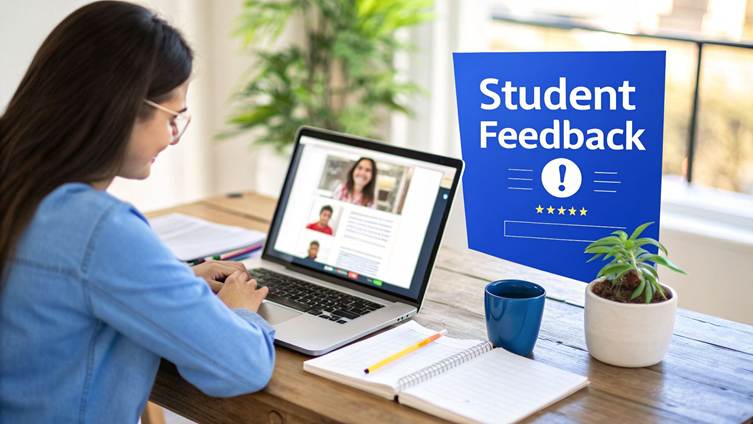
In a physical classroom, you can read the room. You see the nods of understanding, the confused frowns, and the moment a student starts to lose focus. Online, all those crucial non-verbal cues disappear. This is where listening to students becomes your superpower. With the massive growth of online coaching platforms, understanding the student feedback in online classes is no longer a nice-to-have; it's essential for survival and success.
How does feedback improve teaching quality? It bridges the digital divide. When you consistently ask for and act on feedback, you create a powerful cycle that benefits everyone:
For Students: They feel heard, respected, and more involved in their own learning. This improves their online learning experience.
For Teachers: You get a practical guide to improve your courses. You'll know precisely which parts are resonating and which need a rethink.
For Institutions: Happier students mean higher retention rates and a stronger reputation, which is crucial for improving online coaching services.
2. Why Online Classes Need Continuous Improvement
The online environment presents unique challenges that don't exist in a traditional classroom. This is why continuous improvement, driven by feedback, is critical.
Lack of physical interaction: Without face-to-face cues, it's hard for teachers to gauge student understanding and engagement.
Student attention challenges: Digital distractions are everywhere. Keeping students focused requires more than just a lecture.
Technology limitations: Issues like poor internet, audio/video problems, or confusing platforms can disrupt the learning process.
Different learning speeds: Students absorb information at different paces. A one-size-fits-all lecture can leave some behind and bore others.
Feedback is the best tool for improvement because it provides direct insight into these invisible problems. It’s the only way to know if your pacing is off, if a technical issue is hindering learning, or if your teaching style isn't connecting with a student.
3. Common Feedback Students Give About Online Classes
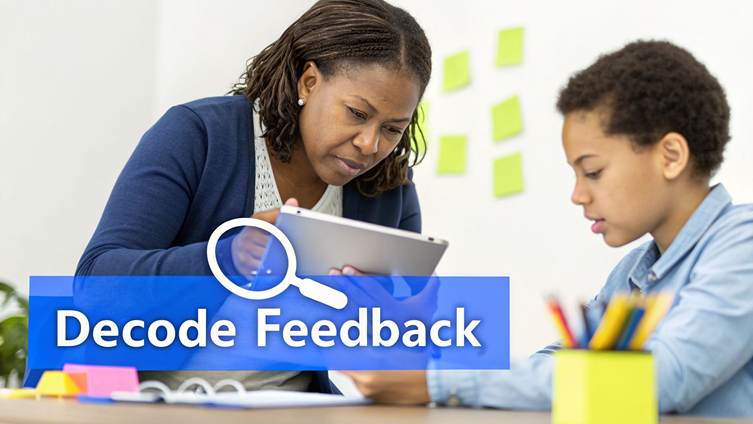
To make student feedback useful, you have to learn to translate it. Here are some of the most common issues students raise.
a. Class Engagement
Students often feel like passive observers rather than active participants.
What they say: "The class was boring," or "It felt one-sided."
What they mean: There was too much lecturing and not enough interaction to keep them engaged.
b. Teaching Style
The way content is delivered is a frequent point of feedback.
What they say: "You went too fast," or "I got confused."
What they mean: The explanations were too complex, there weren't enough examples, or they need simpler language to understand the concepts.
c. Technical Issues
Technology is the backbone of online learning, and when it fails, learning stops.
What they say: "I couldn't hear," or "The screen was frozen."
What they mean: They experienced audio/video issues, screen sharing problems, or internet lag that prevented them from following the lesson.
d. Doubt Clearing
Students often feel they don't have a proper opportunity to ask questions.
What they say: "I had a question but didn't ask."
What they mean: They want more time for questions, dedicated doubt sessions, and quick, accessible ways to get answers.
e. Class Duration
Online fatigue is real. Long, uninterrupted sessions can be counterproductive.
What they say: "The session was too long."
What they mean: The class dragged on without breaks, making it hard to stay focused.
4. What Students Actually Want from Online Coaching
So, if students are complaining about one-sided lectures and long sessions, what do they want instead? The data is clear. Students prefer:
Interactive sessions: They want to participate, not just listen.
Quizzes and polls: These break the monotony and help them check their own understanding.
Visual explanations: Diagrams, slides, and animations make complex topics easier to grasp.
Real-life examples: Connecting concepts to the real world makes learning more relevant and memorable.
Recorded classes: The ability to revisit lessons is one of the biggest advantages of online learning.
Focusing on these elements is key for anyone wondering how to improve online classes. Incorporating interactive online teaching methods directly addresses the most common student complaints.
5. Ways Teachers Can Improve Online Classes Using Student Feedback
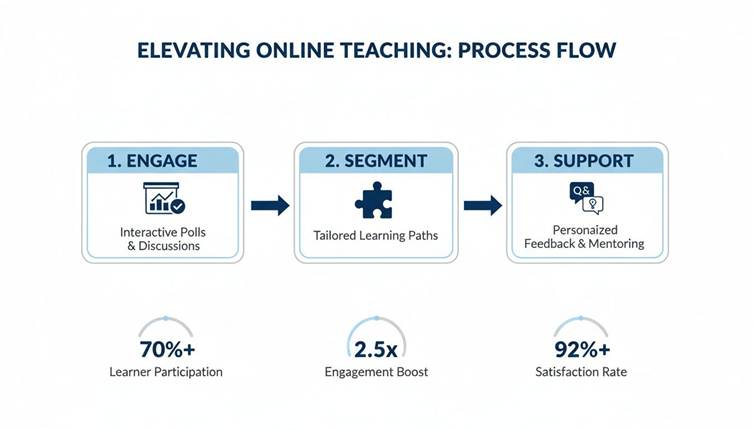
Hearing feedback is the first step. Acting on it is what makes a class great. Here are actionable improvements you can implement today.
Start Classes with Questions: Don't just dive into the lesson. Engage students early by asking a thought-provoking question related to the topic. This sets an interactive tone from the start.
Use Polls, Quizzes, and Chat: Encourage participation throughout the class. Use polls to check for understanding, low-stakes quizzes with tools like Kahoot! or Quizizz to make revision fun, and actively monitor the chat for questions.
Break the Lesson into Small Segments: Avoid long lectures. Structure your lesson into 15-20 minute "chunks," each focused on a single idea, with short 2-3 minute breaks in between.
Schedule Dedicated Doubt Sessions: Don't just ask "Any questions?" at the end. Block out a specific 10-15 minute slot labeled "Doubt Clearing" to show that questions are a priority.
Use Visual Learning: Explain complex topics with slides, diagrams, and animations. Visuals cater to different learning styles and improve information retention. For more ideas, check out our guide on other helpful online course creation tips.
Record Sessions for Revision: This is non-negotiable. Making recordings available allows students to review difficult topics at their own pace.
6. Tools That Help Collect Student Feedback
To get actionable feedback, you need the right tools and an environment where students feel safe to be honest.
Google Forms: Ideal for creating detailed, anonymous surveys that you can send out weekly or after a module.
LMS feedback tools: Many platforms, like Skolasti, have built-in features to prompt students for feedback automatically after a class. You can see how these integrated Skolasti features help streamline this process.
Polls during class: Use your teaching platform's polling feature for quick, real-time pulse checks on pace and clarity.
Anonymous surveys: This is the most crucial element. Anonymous feedback works better because it removes the fear of judgment. Students are far more likely to give you raw, constructive insights when their names aren't attached. Research offers some great design tips to boost honest responses that are highly applicable here.
7. Real Benefits of Listening to Student Feedback
When you create a system for listening to and acting on student feedback, the results are tangible and transformative.
Better engagement: Students who feel heard are more likely to participate actively.
Improved results: By addressing points of confusion, you help students learn more effectively, which leads to better academic outcomes.
Higher student satisfaction: Happy students are your best advocates and are more likely to continue with your courses.
Stronger teacher-student connection: Feedback opens a dialogue, building trust and rapport even in a virtual setting.
Data from the Skill India Mission revealed that when instructors started using student ratings to inform their teaching, their own performance scores jumped by 20% within just six months. That’s the power of listening.
8. Best Practices for Online Coaching Institutes
For institutes, a systematic approach to feedback is a competitive advantage.
Weekly feedback forms: Implement short, anonymous weekly surveys to catch issues early.
Monthly improvement review: Dedicate time each month for teachers and staff to review feedback trends and brainstorm solutions.
Student satisfaction surveys: Use comprehensive end-of-course surveys to measure overall satisfaction and gather testimonials.
Teacher training programs: Train your teachers not only on how to teach online but also on how to interpret and act on student feedback effectively. This turns feedback into a tool for professional development.
9. Future of Online Learning with Student Feedback
The future of student feedback is smarter, more personal, and automated. It’s moving beyond simple forms and into the realm of artificial intelligence.
AI-powered feedback systems: These tools can analyze thousands of comments, identify sentiment, and highlight recurring themes instantly, saving teachers hours of manual work. The goal is closing the feedback loop with AI and automation.
Personalized learning: AI can use feedback to tailor the learning path for each student. If a student is struggling, the system can automatically provide extra resources.
Adaptive learning platforms: These platforms adjust content in real-time based on student performance and feedback, creating a truly responsive educational experience.
This evolution is explored more deeply in our guide on AI in modern education. The future isn't about replacing teachers; it's about empowering them with intelligent tools to create better learning outcomes.
10. Conclusion
Student feedback is not criticism—it is a roadmap for better teaching. It's the most valuable resource you have for understanding what your students need to succeed in an online environment. Institutes that actively listen to students and empower their teachers to act on that feedback will create more engaging, effective, and successful online learning experiences. They are the ones who will lead the future of education.
FAQ Section
Why is student feedback important in online classes?
In online classes, teachers can't "read the room" to see if students are confused or disengaged. Student feedback is the only direct way to understand what's working and what isn't. It helps improve teaching quality, boosts student engagement, and turns a one-way lecture into an interactive, effective learning experience.
How can teachers improve online teaching?
Teachers can improve by acting on common feedback points. Key strategies include: breaking lessons into smaller segments, using interactive tools like polls and quizzes, scheduling dedicated time for doubt clearing, using more visuals and real-life examples, and always recording sessions for students to review later.
What problems do students face in online learning?
The biggest problems include digital fatigue from long, non-interactive lectures; technical issues like poor audio/video; a lack of personal connection and support; and difficulty asking questions in a live session. These issues lead to disengagement and frustration.
How do coaching institutes collect student feedback?
Effective institutes use a multi-pronged approach. This includes anonymous weekly surveys to catch issues early, in-class polls for real-time adjustments, and comprehensive end-of-course reviews for long-term improvements. Many use their Learning Management System (LMS) to automate the collection process.
Ready to stop guessing and start knowing what your students need? With Skolasti, you can build a powerful online academy that not only delivers amazing courses but also listens to your students. Use built-in analytics and the AI Coach to gather insights and provide 24/7 support automatically.
Teach smarter and deliver high-impact learning with Skolasti today.