Boost Training with learning management system for small business
Boost Training with learning management system for small business
Boost Training with learning management system for small business
Feb 11, 2026
Feb 11, 2026
Feb 11, 2026
For a small business, a learning management system isn't some corporate luxury—it's the engine that powers your growth. It's how you take all the brilliant stuff you know and turn it into a structured, scalable, and even sellable asset. For coaches, consultants, and creators, it’s mission control for training teams and onboarding clients without the chaos.
Why Your Small Business Needs an Education Strategy

Let's be honest. Your company's most valuable asset isn't just what you sell; it's the knowledge locked inside your head and your team's heads. In a growing business, that knowledge is usually scattered everywhere—living in random documents, old email threads, and the minds of a few key people.
An education strategy brings order to that chaos. And a Learning Management System (LMS) is the tool that makes it all happen.
Think of an LMS as your business's own private, branded library. It's a central hub where you can neatly organise, deliver, and track all your training materials. This isn't just about internal training; it's about creating a slick, consistent experience for every single person who interacts with your brand.
Beyond Simple File Sharing
You might be using Google Drive or a private video playlist right now, but that approach has its limits. It lacks structure, control, and any real sense of a learning journey.
An LMS is different. It’s purpose-built for education. It provides a framework that guides learners down a specific path, making sure they absorb key info and can prove they understand it. This organised approach is what separates someone just passively watching a video from truly effective learning.
An LMS transforms your intellectual property from a bunch of files into a polished educational product. It organises your expertise, protects its value, and creates a clear pathway for learners to get from A to B.
A solid learning management system for small business provides a powerful foundation to build on. It guarantees that every new hire, client, or student gets the same high-quality information, which strengthens your brand and keeps operations consistent. To really get the most from your training, it helps to connect it with a bigger strategy. Adopting good knowledge management best practices can seriously streamline how your whole team works.
Opening New Doors for Growth
Ultimately, getting serious about your education strategy with an LMS unlocks brand-new possibilities. It empowers you to:
Scale Your Impact: Train hundreds of clients or team members without adding more hours to your day. The system handles the delivery and tracking, so you can focus on making great content.
Protect Your IP: Your courses, guides, and training materials are incredibly valuable. An LMS secures this content, controlling exactly who can access it and stopping it from being shared without your permission.
Create New Revenue Streams: Package your expertise into premium courses and sell them directly from your own branded platform. You can turn what you already know into a reliable source of income.
By moving past informal, messy training methods, you're building a powerful, automated engine to educate your audience, empower your team, and grow your business.
What Exactly Is a Learning Management System
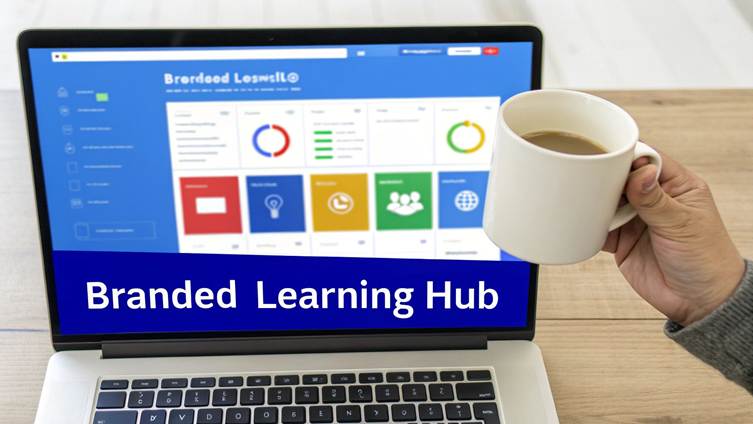
Let’s cut through the jargon. At its heart, a Learning Management System (LMS) is a dedicated software platform that acts as a central hub for all your training and educational content. Think of it like your own private, branded version of Netflix, but built specifically for structured, goal-driven learning.
You create the content—the courses, tutorials, videos, and quizzes—and your audience gets a personalised library to access it anytime, anywhere. This audience could be your internal team, new clients you're onboarding, or even paying students from across the globe.
A learning management system for small business isn’t just a place to dump files. It’s an active, intelligent environment designed to guide, track, and automate the entire learning journey.
More Than Just a Digital Filing Cabinet
Many small businesses start out by sharing training materials through Google Drive or Dropbox. And for a while, it works. But it quickly becomes chaotic. There's no way to track who has seen what, test their understanding, or provide a clear, step-by-step learning path.
This is where an LMS changes the game entirely. It’s built around the idea of structured learning. Instead of just sharing a folder of disconnected files, an LMS lets you build complete courses with modules, lessons, and specific requirements to move forward.
A true LMS is the difference between handing someone a stack of books and guiding them through a curated library with a clear curriculum. It provides the structure, tracking, and automation that turn random content into a powerful educational experience.
This structure is what makes all the difference, whether you're ensuring new hires complete mandatory onboarding or guiding a client through your signature coaching programme.
The Core Functions That Power Your Training
An LMS brings several critical functions together into one organised platform. For a small business, this is huge. It saves an incredible amount of time and stops you from juggling multiple, disconnected tools.
A modern LMS typically manages three key jobs:
Content Organisation and Delivery: It holds all your learning materials—videos, PDFs, presentations, and interactive quizzes—in one secure spot. This ensures everyone gets the most up-to-date information, delivered in a consistent, professional way.
Learner Progress and Engagement Tracking: The system keeps an eye on who is taking your courses, how far they've progressed, and how they're scoring on assessments. These analytics give you priceless feedback on how engaging your content really is.
Automation of Administrative Tasks: An LMS handles the repetitive stuff for you, like sending welcome emails, tracking course completions, and issuing certificates. This frees you from manual admin work so you can focus on what matters: creating great content and supporting your learners.
This combination of features completely changes how you deliver knowledge. The demand for these organised systems is exploding. In India's fast-growing digital education space, the LMS market was valued at USD 751.80 million in 2024 and is projected to hit USD 3,018.06 million by 2033. This growth shows just how vital these tools have become for businesses of all sizes. You can discover more about the Indian LMS market trends and what it means for your business.
Ultimately, getting an LMS is about building an asset. You're creating a scalable, automated system that not only educates your audience but also protects your intellectual property and can even open up new streams of revenue. It's a strategic move that gives your small business the tools to compete and grow.
The Real-World Benefits of an LMS for Your Business
Let's move past the theory. What does a learning management system actually do for a small business? The benefits are tangible and hit your bottom line, boost efficiency, and give you room to grow. It’s all about turning the way you share knowledge into a powerful business asset.
Right from the start, an LMS delivers serious cost savings. Just think about the money tied up in traditional, in-person training—venue hire, travel costs, printed handouts, and the hours spent repeating the same session for every new hire or client. A learning management system for small business digitises that entire headache.
You build your training materials just once, and they can be accessed by an unlimited number of people, anytime, anywhere. This isn't just about cutting direct costs; it’s about freeing up your most valuable resource: your time.
Ensure Perfect Consistency and Quality
One of the biggest struggles for a growing business is keeping quality control in check. How do you make sure every employee gets the exact same high-standard training? Or that every new client receives the identical, polished onboarding experience you’ve worked so hard to perfect?
An LMS is your secret weapon for brand consistency. It guarantees that everyone—from your newest team member in another city to a client on the other side of the world—gets the same core information, delivered in the same professional way.
By centralising your training, you kill the "game of telephone" where critical information gets watered down or twisted. An LMS becomes your single source of truth, strengthening your brand and operational excellence with every single lesson.
This kind of consistency builds trust and credibility, ensuring your brand's promise is kept, whether you're training a team of five or five hundred.
Monetise Your Expertise and Protect Your IP
If you're a coach, consultant, or creator, your knowledge is the product. An LMS gives you the perfect platform to package that expertise into premium online courses, creating a brand new, scalable revenue stream for your business.
Instead of just trading time for money in one-on-one sessions, you can sell your knowledge to a global audience, 24/7. But as you build this incredible asset, you have to protect it.
An LMS comes with built-in security features that simple file-sharing platforms just don't have. These tools are designed specifically to safeguard your intellectual property.
Controlled Access: You decide exactly who sees your content and for how long, stopping unauthorised sharing in its tracks.
Secure Delivery: Your videos and documents are streamed securely, making it much harder for users to download and illegally distribute them.
Watermarking: Some platforms can even add digital watermarks to your videos, discouraging screen recording and theft.
This level of control ensures your hard work stays yours, letting you monetise it with total confidence. The market for these platforms is exploding. For instance, India's LMS market is projected to generate USD 1,335.8 million in revenue by 2025, a figure expected to rocket to USD 8,915.6 million by 2033. This growth is being fuelled by small businesses in competitive fields like wellness and coaching who are using these platforms to get ahead. You can read the full research about the expanding LMS market to see just how big this trend is becoming.
Gain Actionable, Data-Driven Insights
How do you know if your training is actually connecting with people? With old-school methods, it’s mostly just guesswork. An LMS replaces all that uncertainty with cold, hard data.
Powerful analytics dashboards give you a crystal-clear picture of learner engagement and performance. You can easily track key metrics like:
Completion Rates: See which courses are a hit and where learners might be losing interest and dropping off.
Assessment Scores: Measure how well people are retaining knowledge and spot the exact areas where they're struggling.
Time Spent on Lessons: Understand which topics are grabbing the most attention and which ones might need a rethink.
These insights are gold. They let you fine-tune your content, improve learning outcomes, and make smarter, data-backed decisions about your entire educational strategy. You're no longer just throwing content out there; you're building an optimised learning experience that delivers real results for your business and your audience.
Must-Have Features in a Modern Small Business LMS
Picking the right learning management system for small business can feel like navigating a minefield. Dozens of platforms promise everything under the sun, but what do you actually need?
Let’s cut through the noise. This isn’t just a list of technical features; it’s a strategic guide to finding a platform that truly works for you—one that helps you grow, protects your work, and gives your learners a fantastic experience.
Brand Ownership and Customisation
Your brand is your most valuable asset. So why would you send your clients or team to a generic, third-party learning portal that screams "we're using someone else's software"? This is where a white-label, customisable interface becomes non-negotiable.
It means you can swap out the LMS provider’s logo for your own, tweak the colours to match your brand palette, and create a completely seamless, professional experience. When a customer logs in, they should feel like they're in your academy, not just another tool you're renting.
This small detail makes a huge difference. It builds trust and reinforces your credibility with every single login. It’s the difference between looking like a scrappy startup and presenting as a polished, established expert.
A Course Builder That's Actually Easy to Use
You’re an expert in your field—whether that's marketing, coaching, or software development—not necessarily a tech wizard. The best LMS for a small business understands this and provides an intuitive, drag-and-drop course builder.
This is huge. It lets you upload videos, create quizzes, add PDFs, and structure your lessons without touching a single line of code. A simple interface means you can get your courses built and launched fast, saving you a ton of time and frustration.
Built-In E-commerce to Sell Your Knowledge
If you plan on selling your expertise, you need an LMS that handles the money side of things. Integrated e-commerce tools are absolutely critical. A modern platform should manage the entire sales process for you, from creating slick sales pages to securely processing payments.
Don't settle for less than these core capabilities:
Integrated Payment Gateways: Simple connections to Stripe, PayPal, or other major processors so you can accept payments directly.
Flexible Pricing Models: The ability to offer courses as one-time buys, ongoing subscriptions, or even payment plans. This opens up your content to a much wider audience.
Sales Page Builders: Tools to create compelling, high-converting landing pages for your courses without needing a separate website builder like Wix or Squarespace.
This turns your LMS from a simple teaching tool into an all-in-one business engine.
Robust Content Protection and Learner Engagement
Your course content is your intellectual property—the result of countless hours of work. Protecting it is non-negotiable. Throwing your videos on a simple file-sharing service offers virtually no defence against unauthorised downloads and piracy. A proper LMS, on the other hand, comes with security baked in.
A great LMS doesn't just host your content; it builds a fortress around it. Features like secure video streaming, digital watermarking, and controlled access are your first line of defence in protecting your most valuable business asset.
But protection is only half the battle. You also need to keep your learners hooked. Just watching videos passively leads to terrible completion rates. A great LMS gives you tools to make learning active and rewarding.
This includes gamification elements—think points, badges, and leaderboards—and the ability to issue professional, branded certificates when someone finishes a course. These features not only motivate learners but also give them a real sense of accomplishment they can share.
Before we dive into the specifics, it's helpful to see how these features align with the core mission of any small business: sustainable growth. This table breaks down the essentials.
Essential LMS Features for Small Businesses
Feature | Why It's Critical for a Small Business | Example Application |
White-Label Branding | Builds brand trust and credibility. Creates a seamless, professional experience for your learners. | Replacing the LMS logo with your own and matching the platform's colours to your brand guide. |
Drag-and-Drop Course Builder | Lets you create high-quality courses quickly without needing any technical skills. | Easily structuring a course by dragging video lessons, quizzes, and PDF downloads into order. |
Integrated E-commerce | Turns your knowledge into revenue without needing separate tools for payments or sales pages. | Selling a coaching program with a three-month payment plan, all processed within the platform. |
Content Security | Protects your intellectual property from piracy and unauthorised sharing. | Using secure video streaming that prevents users from downloading your course videos. |
Gamification & Certificates | Increases learner motivation and course completion rates. Provides tangible rewards. | Awarding a "Module Master" badge for finishing a section and a branded PDF certificate at the end. |
Analytics & Reporting | Provides data on student progress and course performance to help you improve your offerings. | Seeing that 75% of students drop off at a specific lesson, signalling that it needs to be revised. |
Community & Engagement | Fosters a sense of belonging, encouraging discussion and peer-to-peer learning. | Creating a dedicated forum within the LMS for students in a specific cohort to ask questions. |
These features aren't just "nice-to-haves"; they are the engine that drives learner success and, ultimately, your business's bottom line.
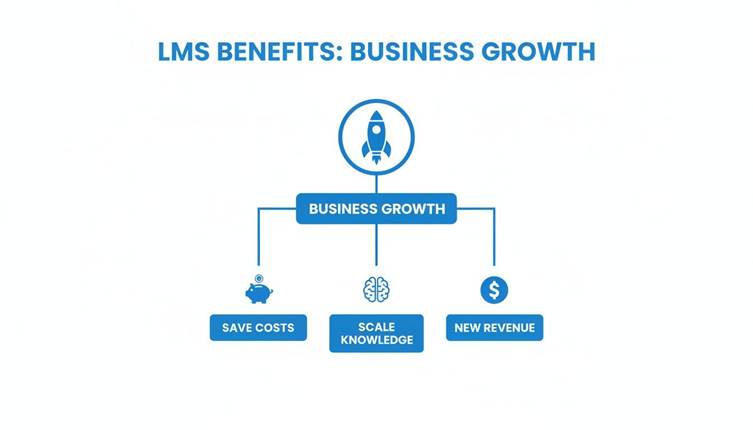
As you can see, the right features allow you to scale your knowledge and open up new revenue streams, all while saving costs. It’s a powerful combination that directly fuels business growth. You can see a full breakdown of the Skolasti platform features designed specifically to support this journey.
How to Successfully Launch Your First LMS
Launching your first learning management system for small business doesn’t have to feel like climbing a mountain. With the right roadmap, the process is actually straightforward and, dare I say, exciting. Think of it as building your own digital academy, brick by brick, laying a solid foundation for a launch that goes off without a hitch.
The journey from a simple idea to a fully functioning online school has a few key milestones. Nailing each one builds momentum and helps you dodge the common tripwires that can stop you before you even really start.
Let’s walk through a practical, five-step plan to get you from square one to a confident, successful launch.
Step 1: Define Clear Training Goals
Before you even glance at a single piece of software, you have to answer a simple question: "What are we actually trying to achieve here?"
Your goals are your north star. They guide every single decision you'll make, from the features you need to the content you create.
Are you trying to streamline your new hire onboarding? Maybe you want to slash customer support tickets by creating better product training. Or perhaps the goal is purely commercial—to open up a new revenue stream by selling your expertise.
Whatever it is, be specific. A goal like "improve employee skills" is far too fuzzy. Instead, aim for something you can measure, like, "Ensure every sales rep completes the new product certification within their first 30 days." That's a target you can hit.
Step 2: Choose the Right Platform
Once your goals are locked in, it’s time to pick your tools. Go back to the must-have features we talked about earlier and judge platforms based on what you actually need to accomplish your mission. Don’t get seduced by flashy bells and whistles you'll never touch.
Focus on the fundamentals that matter:
Branding and Customisation: Can you create a clean, white-label experience that looks and feels like your brand?
Ease of Use: Is the course builder intuitive? Can you create and manage everything yourself without calling in a tech wizard?
E-commerce and Security: If selling is the plan, does it have built-in payment processing and solid content protection?
Choosing the right partner from the start saves you the massive headache of having to migrate everything to a new system a year down the road.
Step 3: Prepare and Organise Your Content
Okay, time to gather your raw materials. Honestly, this is often the most time-consuming part, but good organisation here pays off massively. Round up all your existing training docs, videos, presentations, and PDFs that will become the building blocks of your first courses.
Then, think about structure. How can you break down big, complex topics into bite-sized modules and lessons? A logical flow is everything—it's the key to keeping learners engaged and not overwhelmed. This is also the perfect time to spot any content gaps and schedule what new materials you need to create. For more on this, check out our handy tips for creating a successful online course.
A well-organised content library is the backbone of a successful LMS launch. Taking the time to structure your materials logically before uploading will dramatically speed up the course creation process and result in a far better experience for your learners.
Step 4: Customise Branding and Run a Pilot Test
With your content prepped and ready, the fun part begins. Start building out your academy. Upload your logo, set your brand colours, and start slotting your content into courses. This is the moment your digital school starts to feel real.
But before you open the doors to everyone, run a small pilot test. Get a handful of trusted team members or loyal clients to take the course for a spin. Their feedback is pure gold for catching clunky instructions, broken links, or embarrassing typos. This "beta test" ensures you can smooth out all the rough edges for a polished final product.
Step 5: Launch and Market Your Courses
You’ve polished and tested your course—you're ready for the big day. But launching isn't the finish line. Now you have to get people in the door. For internal training, that means sending clear, compelling announcements to your team about the new platform and why it matters.
If you’re selling your courses, you need a marketing plan. Announce the launch to your email list, shout about it on social media, and maybe run an introductory offer to get those first enrolments. The digital learning space is absolutely booming. The LMS market in India was valued at USD 1,180 million in 2024 and is expected to hit USD 6,340 million by 2035, thanks to small businesses and incredible smartphone adoption. A strong launch helps you ride that wave from day one.
Understanding Pricing and Calculating Your ROI
Investing in a learning management system for small business can feel like a big step. But when you look past the price tag, you start to see the real picture. It's not about the cost; it's about the value you get back. Let's break down how these platforms are priced and, more importantly, how to see a real return on that investment.
Most platforms stick to one of a few common pricing models. Each has its place, depending on how big your business is and how predictable your needs are.
Common LMS Pricing Models
Per-User Pricing: You pay a fee for each active learner in your system, usually every month. This can look cheap when you're just starting out, but the costs can quickly climb as your business grows.
Subscription Tiers: This is a popular one. You pay a flat monthly or annual fee for a package that gives you a set number of users and features. It makes budgeting a breeze because your costs are predictable.
Pay-As-You-Go: Some platforms charge you based on how much you use the system—like the number of courses you sell or how many students enrol. It’s flexible, but it can also make your monthly bills a bit of a rollercoaster.
If you want to see how this plays out in a specialised field, looking at tutoring software pricing can be a useful comparison. Many platforms, including Skolasti, prefer clear subscription tiers designed to grow with you. You can explore the Skolasti pricing plans to see how this structure supports a business from its first course to a full-scale academy.
Calculating Your True Return on Investment
The real value of an LMS isn't just about the money you make from course sales. Your Return on Investment (ROI) is a mix of direct revenue, massive cost savings, and building a long-term asset. When you start factoring in these "hidden" returns, the decision shifts from being an expense to a powerful strategic investment.
Your LMS isn't just software; it's an automated engine for efficiency and growth. Calculating its ROI means looking past the monthly fee to see the time you reclaim, the brand you build, and the new opportunities you unlock.
Think about the tangible value it creates:
Time Saved Through Automation: First, do a quick calculation. How many hours are you and your team currently spending on manual training, onboarding new customers, or answering the same questions over and over? An LMS automates all of this, freeing you up to focus on the things that actually grow the business.
Increased Customer Lifetime Value: It's simple: a well-onboarded customer is a happy, loyal customer. When people understand your product or service better through great training, they stick around longer. This directly leads to higher retention and less churn.
Building a Sellable Asset: Every single course you create becomes a piece of your intellectual property, neatly organised on your own branded platform. You aren't just selling training; you're building a valuable, long-term business asset that can generate revenue for years.
Burning Questions About Your First Small Business LMS
Even after seeing all the benefits laid out, pulling the trigger on new software always brings up a few last-minute questions. It’s completely normal. When it comes to a learning management system for small business, most owners, coaches, and creators I talk to share the same handful of concerns.
Let’s tackle them head-on. Here are the practical, no-nonsense answers to the questions probably running through your mind right now.
How Much Technical Skill Do I Really Need?
This is easily the biggest worry for most small business owners. The good news? Modern LMS platforms are built for people who are experts in their field, not experts in code. If you can use social media or type up a document, you’re more than ready.
Most systems today use simple drag-and-drop course builders. That means you can assemble professional-looking courses without touching a single line of code. The platform’s job is to showcase your expertise, not to test your programming skills.
The best LMS platforms are designed to get out of your way. They let you focus on what you do best: creating great content. The technology should be a tool that helps you teach, not a barrier that stops you.
Can I Actually Afford an LMS on a Small Budget?
Absolutely. The days of clunky, enterprise-level systems costing a fortune are long gone. The market is now full of affordable options designed specifically for small businesses, often with simple, predictable subscription plans that make budgeting easy.
But here’s a better way to think about it: an LMS isn’t an expense, it’s an investment. When you calculate the time you’ll save on manual training, the new revenue you can generate by selling courses, and the value of keeping customers longer, an LMS often pays for itself surprisingly fast.
Is My Business Too Small for an LMS?
No business is too small to benefit from having its knowledge organised. In fact, for a solo operator or a tiny team, an LMS can be a game-changer. It helps you build systems that can grow with you, right from day one.
For solo coaches: It’s your ticket to stop trading time for money. You can move from 1-on-1 sessions to scalable group programmes and courses.
For small teams: It ensures every new person gets the same high-quality onboarding, creating a solid foundation as you expand.
An LMS gives a small, scrappy operation the structure and professionalism of a much larger company.
Ready to turn your expertise into a thriving online academy? Skolasti provides all the tools you need—from a simple course builder to a powerful AI Teaching Assistant—to launch, sell, and scale your educational content. Teach smarter and grow your business with Skolasti today.
For a small business, a learning management system isn't some corporate luxury—it's the engine that powers your growth. It's how you take all the brilliant stuff you know and turn it into a structured, scalable, and even sellable asset. For coaches, consultants, and creators, it’s mission control for training teams and onboarding clients without the chaos.
Why Your Small Business Needs an Education Strategy
Let's be honest. Your company's most valuable asset isn't just what you sell; it's the knowledge locked inside your head and your team's heads. In a growing business, that knowledge is usually scattered everywhere—living in random documents, old email threads, and the minds of a few key people.
An education strategy brings order to that chaos. And a Learning Management System (LMS) is the tool that makes it all happen.
Think of an LMS as your business's own private, branded library. It's a central hub where you can neatly organise, deliver, and track all your training materials. This isn't just about internal training; it's about creating a slick, consistent experience for every single person who interacts with your brand.
Beyond Simple File Sharing
You might be using Google Drive or a private video playlist right now, but that approach has its limits. It lacks structure, control, and any real sense of a learning journey.
An LMS is different. It’s purpose-built for education. It provides a framework that guides learners down a specific path, making sure they absorb key info and can prove they understand it. This organised approach is what separates someone just passively watching a video from truly effective learning.
An LMS transforms your intellectual property from a bunch of files into a polished educational product. It organises your expertise, protects its value, and creates a clear pathway for learners to get from A to B.
A solid learning management system for small business provides a powerful foundation to build on. It guarantees that every new hire, client, or student gets the same high-quality information, which strengthens your brand and keeps operations consistent. To really get the most from your training, it helps to connect it with a bigger strategy. Adopting good knowledge management best practices can seriously streamline how your whole team works.
Opening New Doors for Growth
Ultimately, getting serious about your education strategy with an LMS unlocks brand-new possibilities. It empowers you to:
Scale Your Impact: Train hundreds of clients or team members without adding more hours to your day. The system handles the delivery and tracking, so you can focus on making great content.
Protect Your IP: Your courses, guides, and training materials are incredibly valuable. An LMS secures this content, controlling exactly who can access it and stopping it from being shared without your permission.
Create New Revenue Streams: Package your expertise into premium courses and sell them directly from your own branded platform. You can turn what you already know into a reliable source of income.
By moving past informal, messy training methods, you're building a powerful, automated engine to educate your audience, empower your team, and grow your business.
What Exactly Is a Learning Management System
Let’s cut through the jargon. At its heart, a Learning Management System (LMS) is a dedicated software platform that acts as a central hub for all your training and educational content. Think of it like your own private, branded version of Netflix, but built specifically for structured, goal-driven learning.
You create the content—the courses, tutorials, videos, and quizzes—and your audience gets a personalised library to access it anytime, anywhere. This audience could be your internal team, new clients you're onboarding, or even paying students from across the globe.
A learning management system for small business isn’t just a place to dump files. It’s an active, intelligent environment designed to guide, track, and automate the entire learning journey.
More Than Just a Digital Filing Cabinet
Many small businesses start out by sharing training materials through Google Drive or Dropbox. And for a while, it works. But it quickly becomes chaotic. There's no way to track who has seen what, test their understanding, or provide a clear, step-by-step learning path.
This is where an LMS changes the game entirely. It’s built around the idea of structured learning. Instead of just sharing a folder of disconnected files, an LMS lets you build complete courses with modules, lessons, and specific requirements to move forward.
A true LMS is the difference between handing someone a stack of books and guiding them through a curated library with a clear curriculum. It provides the structure, tracking, and automation that turn random content into a powerful educational experience.
This structure is what makes all the difference, whether you're ensuring new hires complete mandatory onboarding or guiding a client through your signature coaching programme.
The Core Functions That Power Your Training
An LMS brings several critical functions together into one organised platform. For a small business, this is huge. It saves an incredible amount of time and stops you from juggling multiple, disconnected tools.
A modern LMS typically manages three key jobs:
Content Organisation and Delivery: It holds all your learning materials—videos, PDFs, presentations, and interactive quizzes—in one secure spot. This ensures everyone gets the most up-to-date information, delivered in a consistent, professional way.
Learner Progress and Engagement Tracking: The system keeps an eye on who is taking your courses, how far they've progressed, and how they're scoring on assessments. These analytics give you priceless feedback on how engaging your content really is.
Automation of Administrative Tasks: An LMS handles the repetitive stuff for you, like sending welcome emails, tracking course completions, and issuing certificates. This frees you from manual admin work so you can focus on what matters: creating great content and supporting your learners.
This combination of features completely changes how you deliver knowledge. The demand for these organised systems is exploding. In India's fast-growing digital education space, the LMS market was valued at USD 751.80 million in 2024 and is projected to hit USD 3,018.06 million by 2033. This growth shows just how vital these tools have become for businesses of all sizes. You can discover more about the Indian LMS market trends and what it means for your business.
Ultimately, getting an LMS is about building an asset. You're creating a scalable, automated system that not only educates your audience but also protects your intellectual property and can even open up new streams of revenue. It's a strategic move that gives your small business the tools to compete and grow.
The Real-World Benefits of an LMS for Your Business
Let's move past the theory. What does a learning management system actually do for a small business? The benefits are tangible and hit your bottom line, boost efficiency, and give you room to grow. It’s all about turning the way you share knowledge into a powerful business asset.
Right from the start, an LMS delivers serious cost savings. Just think about the money tied up in traditional, in-person training—venue hire, travel costs, printed handouts, and the hours spent repeating the same session for every new hire or client. A learning management system for small business digitises that entire headache.
You build your training materials just once, and they can be accessed by an unlimited number of people, anytime, anywhere. This isn't just about cutting direct costs; it’s about freeing up your most valuable resource: your time.
Ensure Perfect Consistency and Quality
One of the biggest struggles for a growing business is keeping quality control in check. How do you make sure every employee gets the exact same high-standard training? Or that every new client receives the identical, polished onboarding experience you’ve worked so hard to perfect?
An LMS is your secret weapon for brand consistency. It guarantees that everyone—from your newest team member in another city to a client on the other side of the world—gets the same core information, delivered in the same professional way.
By centralising your training, you kill the "game of telephone" where critical information gets watered down or twisted. An LMS becomes your single source of truth, strengthening your brand and operational excellence with every single lesson.
This kind of consistency builds trust and credibility, ensuring your brand's promise is kept, whether you're training a team of five or five hundred.
Monetise Your Expertise and Protect Your IP
If you're a coach, consultant, or creator, your knowledge is the product. An LMS gives you the perfect platform to package that expertise into premium online courses, creating a brand new, scalable revenue stream for your business.
Instead of just trading time for money in one-on-one sessions, you can sell your knowledge to a global audience, 24/7. But as you build this incredible asset, you have to protect it.
An LMS comes with built-in security features that simple file-sharing platforms just don't have. These tools are designed specifically to safeguard your intellectual property.
Controlled Access: You decide exactly who sees your content and for how long, stopping unauthorised sharing in its tracks.
Secure Delivery: Your videos and documents are streamed securely, making it much harder for users to download and illegally distribute them.
Watermarking: Some platforms can even add digital watermarks to your videos, discouraging screen recording and theft.
This level of control ensures your hard work stays yours, letting you monetise it with total confidence. The market for these platforms is exploding. For instance, India's LMS market is projected to generate USD 1,335.8 million in revenue by 2025, a figure expected to rocket to USD 8,915.6 million by 2033. This growth is being fuelled by small businesses in competitive fields like wellness and coaching who are using these platforms to get ahead. You can read the full research about the expanding LMS market to see just how big this trend is becoming.
Gain Actionable, Data-Driven Insights
How do you know if your training is actually connecting with people? With old-school methods, it’s mostly just guesswork. An LMS replaces all that uncertainty with cold, hard data.
Powerful analytics dashboards give you a crystal-clear picture of learner engagement and performance. You can easily track key metrics like:
Completion Rates: See which courses are a hit and where learners might be losing interest and dropping off.
Assessment Scores: Measure how well people are retaining knowledge and spot the exact areas where they're struggling.
Time Spent on Lessons: Understand which topics are grabbing the most attention and which ones might need a rethink.
These insights are gold. They let you fine-tune your content, improve learning outcomes, and make smarter, data-backed decisions about your entire educational strategy. You're no longer just throwing content out there; you're building an optimised learning experience that delivers real results for your business and your audience.
Must-Have Features in a Modern Small Business LMS
Picking the right learning management system for small business can feel like navigating a minefield. Dozens of platforms promise everything under the sun, but what do you actually need?
Let’s cut through the noise. This isn’t just a list of technical features; it’s a strategic guide to finding a platform that truly works for you—one that helps you grow, protects your work, and gives your learners a fantastic experience.
Brand Ownership and Customisation
Your brand is your most valuable asset. So why would you send your clients or team to a generic, third-party learning portal that screams "we're using someone else's software"? This is where a white-label, customisable interface becomes non-negotiable.
It means you can swap out the LMS provider’s logo for your own, tweak the colours to match your brand palette, and create a completely seamless, professional experience. When a customer logs in, they should feel like they're in your academy, not just another tool you're renting.
This small detail makes a huge difference. It builds trust and reinforces your credibility with every single login. It’s the difference between looking like a scrappy startup and presenting as a polished, established expert.
A Course Builder That's Actually Easy to Use
You’re an expert in your field—whether that's marketing, coaching, or software development—not necessarily a tech wizard. The best LMS for a small business understands this and provides an intuitive, drag-and-drop course builder.
This is huge. It lets you upload videos, create quizzes, add PDFs, and structure your lessons without touching a single line of code. A simple interface means you can get your courses built and launched fast, saving you a ton of time and frustration.
Built-In E-commerce to Sell Your Knowledge
If you plan on selling your expertise, you need an LMS that handles the money side of things. Integrated e-commerce tools are absolutely critical. A modern platform should manage the entire sales process for you, from creating slick sales pages to securely processing payments.
Don't settle for less than these core capabilities:
Integrated Payment Gateways: Simple connections to Stripe, PayPal, or other major processors so you can accept payments directly.
Flexible Pricing Models: The ability to offer courses as one-time buys, ongoing subscriptions, or even payment plans. This opens up your content to a much wider audience.
Sales Page Builders: Tools to create compelling, high-converting landing pages for your courses without needing a separate website builder like Wix or Squarespace.
This turns your LMS from a simple teaching tool into an all-in-one business engine.
Robust Content Protection and Learner Engagement
Your course content is your intellectual property—the result of countless hours of work. Protecting it is non-negotiable. Throwing your videos on a simple file-sharing service offers virtually no defence against unauthorised downloads and piracy. A proper LMS, on the other hand, comes with security baked in.
A great LMS doesn't just host your content; it builds a fortress around it. Features like secure video streaming, digital watermarking, and controlled access are your first line of defence in protecting your most valuable business asset.
But protection is only half the battle. You also need to keep your learners hooked. Just watching videos passively leads to terrible completion rates. A great LMS gives you tools to make learning active and rewarding.
This includes gamification elements—think points, badges, and leaderboards—and the ability to issue professional, branded certificates when someone finishes a course. These features not only motivate learners but also give them a real sense of accomplishment they can share.
Before we dive into the specifics, it's helpful to see how these features align with the core mission of any small business: sustainable growth. This table breaks down the essentials.
Essential LMS Features for Small Businesses
Feature | Why It's Critical for a Small Business | Example Application |
White-Label Branding | Builds brand trust and credibility. Creates a seamless, professional experience for your learners. | Replacing the LMS logo with your own and matching the platform's colours to your brand guide. |
Drag-and-Drop Course Builder | Lets you create high-quality courses quickly without needing any technical skills. | Easily structuring a course by dragging video lessons, quizzes, and PDF downloads into order. |
Integrated E-commerce | Turns your knowledge into revenue without needing separate tools for payments or sales pages. | Selling a coaching program with a three-month payment plan, all processed within the platform. |
Content Security | Protects your intellectual property from piracy and unauthorised sharing. | Using secure video streaming that prevents users from downloading your course videos. |
Gamification & Certificates | Increases learner motivation and course completion rates. Provides tangible rewards. | Awarding a "Module Master" badge for finishing a section and a branded PDF certificate at the end. |
Analytics & Reporting | Provides data on student progress and course performance to help you improve your offerings. | Seeing that 75% of students drop off at a specific lesson, signalling that it needs to be revised. |
Community & Engagement | Fosters a sense of belonging, encouraging discussion and peer-to-peer learning. | Creating a dedicated forum within the LMS for students in a specific cohort to ask questions. |
These features aren't just "nice-to-haves"; they are the engine that drives learner success and, ultimately, your business's bottom line.
As you can see, the right features allow you to scale your knowledge and open up new revenue streams, all while saving costs. It’s a powerful combination that directly fuels business growth. You can see a full breakdown of the Skolasti platform features designed specifically to support this journey.
How to Successfully Launch Your First LMS
Launching your first learning management system for small business doesn’t have to feel like climbing a mountain. With the right roadmap, the process is actually straightforward and, dare I say, exciting. Think of it as building your own digital academy, brick by brick, laying a solid foundation for a launch that goes off without a hitch.
The journey from a simple idea to a fully functioning online school has a few key milestones. Nailing each one builds momentum and helps you dodge the common tripwires that can stop you before you even really start.
Let’s walk through a practical, five-step plan to get you from square one to a confident, successful launch.
Step 1: Define Clear Training Goals
Before you even glance at a single piece of software, you have to answer a simple question: "What are we actually trying to achieve here?"
Your goals are your north star. They guide every single decision you'll make, from the features you need to the content you create.
Are you trying to streamline your new hire onboarding? Maybe you want to slash customer support tickets by creating better product training. Or perhaps the goal is purely commercial—to open up a new revenue stream by selling your expertise.
Whatever it is, be specific. A goal like "improve employee skills" is far too fuzzy. Instead, aim for something you can measure, like, "Ensure every sales rep completes the new product certification within their first 30 days." That's a target you can hit.
Step 2: Choose the Right Platform
Once your goals are locked in, it’s time to pick your tools. Go back to the must-have features we talked about earlier and judge platforms based on what you actually need to accomplish your mission. Don’t get seduced by flashy bells and whistles you'll never touch.
Focus on the fundamentals that matter:
Branding and Customisation: Can you create a clean, white-label experience that looks and feels like your brand?
Ease of Use: Is the course builder intuitive? Can you create and manage everything yourself without calling in a tech wizard?
E-commerce and Security: If selling is the plan, does it have built-in payment processing and solid content protection?
Choosing the right partner from the start saves you the massive headache of having to migrate everything to a new system a year down the road.
Step 3: Prepare and Organise Your Content
Okay, time to gather your raw materials. Honestly, this is often the most time-consuming part, but good organisation here pays off massively. Round up all your existing training docs, videos, presentations, and PDFs that will become the building blocks of your first courses.
Then, think about structure. How can you break down big, complex topics into bite-sized modules and lessons? A logical flow is everything—it's the key to keeping learners engaged and not overwhelmed. This is also the perfect time to spot any content gaps and schedule what new materials you need to create. For more on this, check out our handy tips for creating a successful online course.
A well-organised content library is the backbone of a successful LMS launch. Taking the time to structure your materials logically before uploading will dramatically speed up the course creation process and result in a far better experience for your learners.
Step 4: Customise Branding and Run a Pilot Test
With your content prepped and ready, the fun part begins. Start building out your academy. Upload your logo, set your brand colours, and start slotting your content into courses. This is the moment your digital school starts to feel real.
But before you open the doors to everyone, run a small pilot test. Get a handful of trusted team members or loyal clients to take the course for a spin. Their feedback is pure gold for catching clunky instructions, broken links, or embarrassing typos. This "beta test" ensures you can smooth out all the rough edges for a polished final product.
Step 5: Launch and Market Your Courses
You’ve polished and tested your course—you're ready for the big day. But launching isn't the finish line. Now you have to get people in the door. For internal training, that means sending clear, compelling announcements to your team about the new platform and why it matters.
If you’re selling your courses, you need a marketing plan. Announce the launch to your email list, shout about it on social media, and maybe run an introductory offer to get those first enrolments. The digital learning space is absolutely booming. The LMS market in India was valued at USD 1,180 million in 2024 and is expected to hit USD 6,340 million by 2035, thanks to small businesses and incredible smartphone adoption. A strong launch helps you ride that wave from day one.
Understanding Pricing and Calculating Your ROI
Investing in a learning management system for small business can feel like a big step. But when you look past the price tag, you start to see the real picture. It's not about the cost; it's about the value you get back. Let's break down how these platforms are priced and, more importantly, how to see a real return on that investment.
Most platforms stick to one of a few common pricing models. Each has its place, depending on how big your business is and how predictable your needs are.
Common LMS Pricing Models
Per-User Pricing: You pay a fee for each active learner in your system, usually every month. This can look cheap when you're just starting out, but the costs can quickly climb as your business grows.
Subscription Tiers: This is a popular one. You pay a flat monthly or annual fee for a package that gives you a set number of users and features. It makes budgeting a breeze because your costs are predictable.
Pay-As-You-Go: Some platforms charge you based on how much you use the system—like the number of courses you sell or how many students enrol. It’s flexible, but it can also make your monthly bills a bit of a rollercoaster.
If you want to see how this plays out in a specialised field, looking at tutoring software pricing can be a useful comparison. Many platforms, including Skolasti, prefer clear subscription tiers designed to grow with you. You can explore the Skolasti pricing plans to see how this structure supports a business from its first course to a full-scale academy.
Calculating Your True Return on Investment
The real value of an LMS isn't just about the money you make from course sales. Your Return on Investment (ROI) is a mix of direct revenue, massive cost savings, and building a long-term asset. When you start factoring in these "hidden" returns, the decision shifts from being an expense to a powerful strategic investment.
Your LMS isn't just software; it's an automated engine for efficiency and growth. Calculating its ROI means looking past the monthly fee to see the time you reclaim, the brand you build, and the new opportunities you unlock.
Think about the tangible value it creates:
Time Saved Through Automation: First, do a quick calculation. How many hours are you and your team currently spending on manual training, onboarding new customers, or answering the same questions over and over? An LMS automates all of this, freeing you up to focus on the things that actually grow the business.
Increased Customer Lifetime Value: It's simple: a well-onboarded customer is a happy, loyal customer. When people understand your product or service better through great training, they stick around longer. This directly leads to higher retention and less churn.
Building a Sellable Asset: Every single course you create becomes a piece of your intellectual property, neatly organised on your own branded platform. You aren't just selling training; you're building a valuable, long-term business asset that can generate revenue for years.
Burning Questions About Your First Small Business LMS
Even after seeing all the benefits laid out, pulling the trigger on new software always brings up a few last-minute questions. It’s completely normal. When it comes to a learning management system for small business, most owners, coaches, and creators I talk to share the same handful of concerns.
Let’s tackle them head-on. Here are the practical, no-nonsense answers to the questions probably running through your mind right now.
How Much Technical Skill Do I Really Need?
This is easily the biggest worry for most small business owners. The good news? Modern LMS platforms are built for people who are experts in their field, not experts in code. If you can use social media or type up a document, you’re more than ready.
Most systems today use simple drag-and-drop course builders. That means you can assemble professional-looking courses without touching a single line of code. The platform’s job is to showcase your expertise, not to test your programming skills.
The best LMS platforms are designed to get out of your way. They let you focus on what you do best: creating great content. The technology should be a tool that helps you teach, not a barrier that stops you.
Can I Actually Afford an LMS on a Small Budget?
Absolutely. The days of clunky, enterprise-level systems costing a fortune are long gone. The market is now full of affordable options designed specifically for small businesses, often with simple, predictable subscription plans that make budgeting easy.
But here’s a better way to think about it: an LMS isn’t an expense, it’s an investment. When you calculate the time you’ll save on manual training, the new revenue you can generate by selling courses, and the value of keeping customers longer, an LMS often pays for itself surprisingly fast.
Is My Business Too Small for an LMS?
No business is too small to benefit from having its knowledge organised. In fact, for a solo operator or a tiny team, an LMS can be a game-changer. It helps you build systems that can grow with you, right from day one.
For solo coaches: It’s your ticket to stop trading time for money. You can move from 1-on-1 sessions to scalable group programmes and courses.
For small teams: It ensures every new person gets the same high-quality onboarding, creating a solid foundation as you expand.
An LMS gives a small, scrappy operation the structure and professionalism of a much larger company.
Ready to turn your expertise into a thriving online academy? Skolasti provides all the tools you need—from a simple course builder to a powerful AI Teaching Assistant—to launch, sell, and scale your educational content. Teach smarter and grow your business with Skolasti today.
For a small business, a learning management system isn't some corporate luxury—it's the engine that powers your growth. It's how you take all the brilliant stuff you know and turn it into a structured, scalable, and even sellable asset. For coaches, consultants, and creators, it’s mission control for training teams and onboarding clients without the chaos.
Why Your Small Business Needs an Education Strategy
Let's be honest. Your company's most valuable asset isn't just what you sell; it's the knowledge locked inside your head and your team's heads. In a growing business, that knowledge is usually scattered everywhere—living in random documents, old email threads, and the minds of a few key people.
An education strategy brings order to that chaos. And a Learning Management System (LMS) is the tool that makes it all happen.
Think of an LMS as your business's own private, branded library. It's a central hub where you can neatly organise, deliver, and track all your training materials. This isn't just about internal training; it's about creating a slick, consistent experience for every single person who interacts with your brand.
Beyond Simple File Sharing
You might be using Google Drive or a private video playlist right now, but that approach has its limits. It lacks structure, control, and any real sense of a learning journey.
An LMS is different. It’s purpose-built for education. It provides a framework that guides learners down a specific path, making sure they absorb key info and can prove they understand it. This organised approach is what separates someone just passively watching a video from truly effective learning.
An LMS transforms your intellectual property from a bunch of files into a polished educational product. It organises your expertise, protects its value, and creates a clear pathway for learners to get from A to B.
A solid learning management system for small business provides a powerful foundation to build on. It guarantees that every new hire, client, or student gets the same high-quality information, which strengthens your brand and keeps operations consistent. To really get the most from your training, it helps to connect it with a bigger strategy. Adopting good knowledge management best practices can seriously streamline how your whole team works.
Opening New Doors for Growth
Ultimately, getting serious about your education strategy with an LMS unlocks brand-new possibilities. It empowers you to:
Scale Your Impact: Train hundreds of clients or team members without adding more hours to your day. The system handles the delivery and tracking, so you can focus on making great content.
Protect Your IP: Your courses, guides, and training materials are incredibly valuable. An LMS secures this content, controlling exactly who can access it and stopping it from being shared without your permission.
Create New Revenue Streams: Package your expertise into premium courses and sell them directly from your own branded platform. You can turn what you already know into a reliable source of income.
By moving past informal, messy training methods, you're building a powerful, automated engine to educate your audience, empower your team, and grow your business.
What Exactly Is a Learning Management System
Let’s cut through the jargon. At its heart, a Learning Management System (LMS) is a dedicated software platform that acts as a central hub for all your training and educational content. Think of it like your own private, branded version of Netflix, but built specifically for structured, goal-driven learning.
You create the content—the courses, tutorials, videos, and quizzes—and your audience gets a personalised library to access it anytime, anywhere. This audience could be your internal team, new clients you're onboarding, or even paying students from across the globe.
A learning management system for small business isn’t just a place to dump files. It’s an active, intelligent environment designed to guide, track, and automate the entire learning journey.
More Than Just a Digital Filing Cabinet
Many small businesses start out by sharing training materials through Google Drive or Dropbox. And for a while, it works. But it quickly becomes chaotic. There's no way to track who has seen what, test their understanding, or provide a clear, step-by-step learning path.
This is where an LMS changes the game entirely. It’s built around the idea of structured learning. Instead of just sharing a folder of disconnected files, an LMS lets you build complete courses with modules, lessons, and specific requirements to move forward.
A true LMS is the difference between handing someone a stack of books and guiding them through a curated library with a clear curriculum. It provides the structure, tracking, and automation that turn random content into a powerful educational experience.
This structure is what makes all the difference, whether you're ensuring new hires complete mandatory onboarding or guiding a client through your signature coaching programme.
The Core Functions That Power Your Training
An LMS brings several critical functions together into one organised platform. For a small business, this is huge. It saves an incredible amount of time and stops you from juggling multiple, disconnected tools.
A modern LMS typically manages three key jobs:
Content Organisation and Delivery: It holds all your learning materials—videos, PDFs, presentations, and interactive quizzes—in one secure spot. This ensures everyone gets the most up-to-date information, delivered in a consistent, professional way.
Learner Progress and Engagement Tracking: The system keeps an eye on who is taking your courses, how far they've progressed, and how they're scoring on assessments. These analytics give you priceless feedback on how engaging your content really is.
Automation of Administrative Tasks: An LMS handles the repetitive stuff for you, like sending welcome emails, tracking course completions, and issuing certificates. This frees you from manual admin work so you can focus on what matters: creating great content and supporting your learners.
This combination of features completely changes how you deliver knowledge. The demand for these organised systems is exploding. In India's fast-growing digital education space, the LMS market was valued at USD 751.80 million in 2024 and is projected to hit USD 3,018.06 million by 2033. This growth shows just how vital these tools have become for businesses of all sizes. You can discover more about the Indian LMS market trends and what it means for your business.
Ultimately, getting an LMS is about building an asset. You're creating a scalable, automated system that not only educates your audience but also protects your intellectual property and can even open up new streams of revenue. It's a strategic move that gives your small business the tools to compete and grow.
The Real-World Benefits of an LMS for Your Business
Let's move past the theory. What does a learning management system actually do for a small business? The benefits are tangible and hit your bottom line, boost efficiency, and give you room to grow. It’s all about turning the way you share knowledge into a powerful business asset.
Right from the start, an LMS delivers serious cost savings. Just think about the money tied up in traditional, in-person training—venue hire, travel costs, printed handouts, and the hours spent repeating the same session for every new hire or client. A learning management system for small business digitises that entire headache.
You build your training materials just once, and they can be accessed by an unlimited number of people, anytime, anywhere. This isn't just about cutting direct costs; it’s about freeing up your most valuable resource: your time.
Ensure Perfect Consistency and Quality
One of the biggest struggles for a growing business is keeping quality control in check. How do you make sure every employee gets the exact same high-standard training? Or that every new client receives the identical, polished onboarding experience you’ve worked so hard to perfect?
An LMS is your secret weapon for brand consistency. It guarantees that everyone—from your newest team member in another city to a client on the other side of the world—gets the same core information, delivered in the same professional way.
By centralising your training, you kill the "game of telephone" where critical information gets watered down or twisted. An LMS becomes your single source of truth, strengthening your brand and operational excellence with every single lesson.
This kind of consistency builds trust and credibility, ensuring your brand's promise is kept, whether you're training a team of five or five hundred.
Monetise Your Expertise and Protect Your IP
If you're a coach, consultant, or creator, your knowledge is the product. An LMS gives you the perfect platform to package that expertise into premium online courses, creating a brand new, scalable revenue stream for your business.
Instead of just trading time for money in one-on-one sessions, you can sell your knowledge to a global audience, 24/7. But as you build this incredible asset, you have to protect it.
An LMS comes with built-in security features that simple file-sharing platforms just don't have. These tools are designed specifically to safeguard your intellectual property.
Controlled Access: You decide exactly who sees your content and for how long, stopping unauthorised sharing in its tracks.
Secure Delivery: Your videos and documents are streamed securely, making it much harder for users to download and illegally distribute them.
Watermarking: Some platforms can even add digital watermarks to your videos, discouraging screen recording and theft.
This level of control ensures your hard work stays yours, letting you monetise it with total confidence. The market for these platforms is exploding. For instance, India's LMS market is projected to generate USD 1,335.8 million in revenue by 2025, a figure expected to rocket to USD 8,915.6 million by 2033. This growth is being fuelled by small businesses in competitive fields like wellness and coaching who are using these platforms to get ahead. You can read the full research about the expanding LMS market to see just how big this trend is becoming.
Gain Actionable, Data-Driven Insights
How do you know if your training is actually connecting with people? With old-school methods, it’s mostly just guesswork. An LMS replaces all that uncertainty with cold, hard data.
Powerful analytics dashboards give you a crystal-clear picture of learner engagement and performance. You can easily track key metrics like:
Completion Rates: See which courses are a hit and where learners might be losing interest and dropping off.
Assessment Scores: Measure how well people are retaining knowledge and spot the exact areas where they're struggling.
Time Spent on Lessons: Understand which topics are grabbing the most attention and which ones might need a rethink.
These insights are gold. They let you fine-tune your content, improve learning outcomes, and make smarter, data-backed decisions about your entire educational strategy. You're no longer just throwing content out there; you're building an optimised learning experience that delivers real results for your business and your audience.
Must-Have Features in a Modern Small Business LMS
Picking the right learning management system for small business can feel like navigating a minefield. Dozens of platforms promise everything under the sun, but what do you actually need?
Let’s cut through the noise. This isn’t just a list of technical features; it’s a strategic guide to finding a platform that truly works for you—one that helps you grow, protects your work, and gives your learners a fantastic experience.
Brand Ownership and Customisation
Your brand is your most valuable asset. So why would you send your clients or team to a generic, third-party learning portal that screams "we're using someone else's software"? This is where a white-label, customisable interface becomes non-negotiable.
It means you can swap out the LMS provider’s logo for your own, tweak the colours to match your brand palette, and create a completely seamless, professional experience. When a customer logs in, they should feel like they're in your academy, not just another tool you're renting.
This small detail makes a huge difference. It builds trust and reinforces your credibility with every single login. It’s the difference between looking like a scrappy startup and presenting as a polished, established expert.
A Course Builder That's Actually Easy to Use
You’re an expert in your field—whether that's marketing, coaching, or software development—not necessarily a tech wizard. The best LMS for a small business understands this and provides an intuitive, drag-and-drop course builder.
This is huge. It lets you upload videos, create quizzes, add PDFs, and structure your lessons without touching a single line of code. A simple interface means you can get your courses built and launched fast, saving you a ton of time and frustration.
Built-In E-commerce to Sell Your Knowledge
If you plan on selling your expertise, you need an LMS that handles the money side of things. Integrated e-commerce tools are absolutely critical. A modern platform should manage the entire sales process for you, from creating slick sales pages to securely processing payments.
Don't settle for less than these core capabilities:
Integrated Payment Gateways: Simple connections to Stripe, PayPal, or other major processors so you can accept payments directly.
Flexible Pricing Models: The ability to offer courses as one-time buys, ongoing subscriptions, or even payment plans. This opens up your content to a much wider audience.
Sales Page Builders: Tools to create compelling, high-converting landing pages for your courses without needing a separate website builder like Wix or Squarespace.
This turns your LMS from a simple teaching tool into an all-in-one business engine.
Robust Content Protection and Learner Engagement
Your course content is your intellectual property—the result of countless hours of work. Protecting it is non-negotiable. Throwing your videos on a simple file-sharing service offers virtually no defence against unauthorised downloads and piracy. A proper LMS, on the other hand, comes with security baked in.
A great LMS doesn't just host your content; it builds a fortress around it. Features like secure video streaming, digital watermarking, and controlled access are your first line of defence in protecting your most valuable business asset.
But protection is only half the battle. You also need to keep your learners hooked. Just watching videos passively leads to terrible completion rates. A great LMS gives you tools to make learning active and rewarding.
This includes gamification elements—think points, badges, and leaderboards—and the ability to issue professional, branded certificates when someone finishes a course. These features not only motivate learners but also give them a real sense of accomplishment they can share.
Before we dive into the specifics, it's helpful to see how these features align with the core mission of any small business: sustainable growth. This table breaks down the essentials.
Essential LMS Features for Small Businesses
Feature | Why It's Critical for a Small Business | Example Application |
White-Label Branding | Builds brand trust and credibility. Creates a seamless, professional experience for your learners. | Replacing the LMS logo with your own and matching the platform's colours to your brand guide. |
Drag-and-Drop Course Builder | Lets you create high-quality courses quickly without needing any technical skills. | Easily structuring a course by dragging video lessons, quizzes, and PDF downloads into order. |
Integrated E-commerce | Turns your knowledge into revenue without needing separate tools for payments or sales pages. | Selling a coaching program with a three-month payment plan, all processed within the platform. |
Content Security | Protects your intellectual property from piracy and unauthorised sharing. | Using secure video streaming that prevents users from downloading your course videos. |
Gamification & Certificates | Increases learner motivation and course completion rates. Provides tangible rewards. | Awarding a "Module Master" badge for finishing a section and a branded PDF certificate at the end. |
Analytics & Reporting | Provides data on student progress and course performance to help you improve your offerings. | Seeing that 75% of students drop off at a specific lesson, signalling that it needs to be revised. |
Community & Engagement | Fosters a sense of belonging, encouraging discussion and peer-to-peer learning. | Creating a dedicated forum within the LMS for students in a specific cohort to ask questions. |
These features aren't just "nice-to-haves"; they are the engine that drives learner success and, ultimately, your business's bottom line.
As you can see, the right features allow you to scale your knowledge and open up new revenue streams, all while saving costs. It’s a powerful combination that directly fuels business growth. You can see a full breakdown of the Skolasti platform features designed specifically to support this journey.
How to Successfully Launch Your First LMS
Launching your first learning management system for small business doesn’t have to feel like climbing a mountain. With the right roadmap, the process is actually straightforward and, dare I say, exciting. Think of it as building your own digital academy, brick by brick, laying a solid foundation for a launch that goes off without a hitch.
The journey from a simple idea to a fully functioning online school has a few key milestones. Nailing each one builds momentum and helps you dodge the common tripwires that can stop you before you even really start.
Let’s walk through a practical, five-step plan to get you from square one to a confident, successful launch.
Step 1: Define Clear Training Goals
Before you even glance at a single piece of software, you have to answer a simple question: "What are we actually trying to achieve here?"
Your goals are your north star. They guide every single decision you'll make, from the features you need to the content you create.
Are you trying to streamline your new hire onboarding? Maybe you want to slash customer support tickets by creating better product training. Or perhaps the goal is purely commercial—to open up a new revenue stream by selling your expertise.
Whatever it is, be specific. A goal like "improve employee skills" is far too fuzzy. Instead, aim for something you can measure, like, "Ensure every sales rep completes the new product certification within their first 30 days." That's a target you can hit.
Step 2: Choose the Right Platform
Once your goals are locked in, it’s time to pick your tools. Go back to the must-have features we talked about earlier and judge platforms based on what you actually need to accomplish your mission. Don’t get seduced by flashy bells and whistles you'll never touch.
Focus on the fundamentals that matter:
Branding and Customisation: Can you create a clean, white-label experience that looks and feels like your brand?
Ease of Use: Is the course builder intuitive? Can you create and manage everything yourself without calling in a tech wizard?
E-commerce and Security: If selling is the plan, does it have built-in payment processing and solid content protection?
Choosing the right partner from the start saves you the massive headache of having to migrate everything to a new system a year down the road.
Step 3: Prepare and Organise Your Content
Okay, time to gather your raw materials. Honestly, this is often the most time-consuming part, but good organisation here pays off massively. Round up all your existing training docs, videos, presentations, and PDFs that will become the building blocks of your first courses.
Then, think about structure. How can you break down big, complex topics into bite-sized modules and lessons? A logical flow is everything—it's the key to keeping learners engaged and not overwhelmed. This is also the perfect time to spot any content gaps and schedule what new materials you need to create. For more on this, check out our handy tips for creating a successful online course.
A well-organised content library is the backbone of a successful LMS launch. Taking the time to structure your materials logically before uploading will dramatically speed up the course creation process and result in a far better experience for your learners.
Step 4: Customise Branding and Run a Pilot Test
With your content prepped and ready, the fun part begins. Start building out your academy. Upload your logo, set your brand colours, and start slotting your content into courses. This is the moment your digital school starts to feel real.
But before you open the doors to everyone, run a small pilot test. Get a handful of trusted team members or loyal clients to take the course for a spin. Their feedback is pure gold for catching clunky instructions, broken links, or embarrassing typos. This "beta test" ensures you can smooth out all the rough edges for a polished final product.
Step 5: Launch and Market Your Courses
You’ve polished and tested your course—you're ready for the big day. But launching isn't the finish line. Now you have to get people in the door. For internal training, that means sending clear, compelling announcements to your team about the new platform and why it matters.
If you’re selling your courses, you need a marketing plan. Announce the launch to your email list, shout about it on social media, and maybe run an introductory offer to get those first enrolments. The digital learning space is absolutely booming. The LMS market in India was valued at USD 1,180 million in 2024 and is expected to hit USD 6,340 million by 2035, thanks to small businesses and incredible smartphone adoption. A strong launch helps you ride that wave from day one.
Understanding Pricing and Calculating Your ROI
Investing in a learning management system for small business can feel like a big step. But when you look past the price tag, you start to see the real picture. It's not about the cost; it's about the value you get back. Let's break down how these platforms are priced and, more importantly, how to see a real return on that investment.
Most platforms stick to one of a few common pricing models. Each has its place, depending on how big your business is and how predictable your needs are.
Common LMS Pricing Models
Per-User Pricing: You pay a fee for each active learner in your system, usually every month. This can look cheap when you're just starting out, but the costs can quickly climb as your business grows.
Subscription Tiers: This is a popular one. You pay a flat monthly or annual fee for a package that gives you a set number of users and features. It makes budgeting a breeze because your costs are predictable.
Pay-As-You-Go: Some platforms charge you based on how much you use the system—like the number of courses you sell or how many students enrol. It’s flexible, but it can also make your monthly bills a bit of a rollercoaster.
If you want to see how this plays out in a specialised field, looking at tutoring software pricing can be a useful comparison. Many platforms, including Skolasti, prefer clear subscription tiers designed to grow with you. You can explore the Skolasti pricing plans to see how this structure supports a business from its first course to a full-scale academy.
Calculating Your True Return on Investment
The real value of an LMS isn't just about the money you make from course sales. Your Return on Investment (ROI) is a mix of direct revenue, massive cost savings, and building a long-term asset. When you start factoring in these "hidden" returns, the decision shifts from being an expense to a powerful strategic investment.
Your LMS isn't just software; it's an automated engine for efficiency and growth. Calculating its ROI means looking past the monthly fee to see the time you reclaim, the brand you build, and the new opportunities you unlock.
Think about the tangible value it creates:
Time Saved Through Automation: First, do a quick calculation. How many hours are you and your team currently spending on manual training, onboarding new customers, or answering the same questions over and over? An LMS automates all of this, freeing you up to focus on the things that actually grow the business.
Increased Customer Lifetime Value: It's simple: a well-onboarded customer is a happy, loyal customer. When people understand your product or service better through great training, they stick around longer. This directly leads to higher retention and less churn.
Building a Sellable Asset: Every single course you create becomes a piece of your intellectual property, neatly organised on your own branded platform. You aren't just selling training; you're building a valuable, long-term business asset that can generate revenue for years.
Burning Questions About Your First Small Business LMS
Even after seeing all the benefits laid out, pulling the trigger on new software always brings up a few last-minute questions. It’s completely normal. When it comes to a learning management system for small business, most owners, coaches, and creators I talk to share the same handful of concerns.
Let’s tackle them head-on. Here are the practical, no-nonsense answers to the questions probably running through your mind right now.
How Much Technical Skill Do I Really Need?
This is easily the biggest worry for most small business owners. The good news? Modern LMS platforms are built for people who are experts in their field, not experts in code. If you can use social media or type up a document, you’re more than ready.
Most systems today use simple drag-and-drop course builders. That means you can assemble professional-looking courses without touching a single line of code. The platform’s job is to showcase your expertise, not to test your programming skills.
The best LMS platforms are designed to get out of your way. They let you focus on what you do best: creating great content. The technology should be a tool that helps you teach, not a barrier that stops you.
Can I Actually Afford an LMS on a Small Budget?
Absolutely. The days of clunky, enterprise-level systems costing a fortune are long gone. The market is now full of affordable options designed specifically for small businesses, often with simple, predictable subscription plans that make budgeting easy.
But here’s a better way to think about it: an LMS isn’t an expense, it’s an investment. When you calculate the time you’ll save on manual training, the new revenue you can generate by selling courses, and the value of keeping customers longer, an LMS often pays for itself surprisingly fast.
Is My Business Too Small for an LMS?
No business is too small to benefit from having its knowledge organised. In fact, for a solo operator or a tiny team, an LMS can be a game-changer. It helps you build systems that can grow with you, right from day one.
For solo coaches: It’s your ticket to stop trading time for money. You can move from 1-on-1 sessions to scalable group programmes and courses.
For small teams: It ensures every new person gets the same high-quality onboarding, creating a solid foundation as you expand.
An LMS gives a small, scrappy operation the structure and professionalism of a much larger company.
Ready to turn your expertise into a thriving online academy? Skolasti provides all the tools you need—from a simple course builder to a powerful AI Teaching Assistant—to launch, sell, and scale your educational content. Teach smarter and grow your business with Skolasti today.