Build Your Branded Academy with a White Label Learning Management System
Build Your Branded Academy with a White Label Learning Management System
Build Your Branded Academy with a White Label Learning Management System
Feb 10, 2026
Feb 10, 2026
Feb 10, 2026

So, what exactly is a white label learning management system?
Think of it as a ready-made, fully functional online academy that you can buy off the shelf and rebrand to make it completely your own. You get to swap out the vendor’s logo, colours, and even the website domain, making it look and feel like you built the entire system from the ground up.
This gives you a professional, fully branded learning experience without the eye-watering cost and endless timelines of custom software development.
Unlocking Your Brand with a White Label LMS
Let's use an analogy. Imagine you want to launch a new line of premium coffee. You could spend years (and a small fortune) buying land, designing a roasting facility, and building it all from scratch. It’s a complex, expensive, and risky path.
Or, you could partner with an expert roaster who provides you with world-class beans in unbranded packaging. You then put your own beautiful branding on it and sell it as your unique product.
A white label learning management system works exactly like that expert roaster. It gives you a robust, secure, and feature-rich foundation for your online academy. You get to skip all the messy technical hurdles and focus entirely on what you do best: creating exceptional courses and building a powerful brand.

The Power of Ownership Without the Hassle
This approach gives you total control over your learning environment. From the moment a student lands on your custom domain to the second they download a certificate with your logo on it, the entire experience reinforces your identity. It’s a seamless journey that builds instant credibility and trust.
A white label LMS lets you:
Establish a Professional Identity: Your learners interact with a platform that consistently reflects your brand, not some third-party vendor they’ve never heard of.
Launch at Lightning Speed: Forget waiting months or even years for custom development. You can get your branded academy up and running in a matter of days. In fact, industry analysis shows 73% of SaaS businesses use white label solutions to save time and resources.
Maintain Full Control: You own the student data. You dictate the user experience. You set your own pricing without being boxed in by a marketplace's restrictive rules.
By stripping away all vendor branding, a white label LMS allows you to present a unified and trustworthy educational platform. Learners feel they are in an environment created and managed directly by you, which dramatically strengthens their connection to your brand and your content.
In short, a white label platform handles all the heavy lifting behind the scenes—server maintenance, security updates, and new feature rollouts. This frees you from a huge administrative and technical burden. You get the polish of a sophisticated, enterprise-grade system while presenting a clean, cohesive, and fully owned brand to the world.
It’s simply the smarter way to scale your knowledge business.
Generic LMS vs White Label LMS at a Glance
To really see the difference, it helps to compare a standard, marketplace-style LMS with a fully brandable white label solution. The distinction is all about control, branding, and long-term business ownership.
Here's a quick breakdown:
Feature | Generic LMS (e.g., Udemy, Coursera) | White Label LMS (e.g., Skolasti) |
Branding | Co-branded or vendor-branded. Your brand is secondary. | Fully your brand. Your logo, your colours, your domain. |
Ownership | You rent space on their platform. You don't own the asset. | You own the platform and the entire student experience. |
Student Data | The platform owns the student data and relationship. | You own 100% of your student data and communication channels. |
Pricing Control | Limited control; often subject to marketplace rules and fees. | Complete control over pricing, plans, and promotions. |
Launch Speed | Fast, but with major brand compromises. | Extremely fast, with no brand compromise. |
Competition | Your courses are listed next to direct competitors. | No direct competition on your platform. It's your world. |
Ultimately, a generic LMS is like renting a stall in a crowded market, while a white label LMS is like building your own flagship store. Both can get you started, but only one gives you the foundation to build a lasting, valuable brand.
The Strategic Advantages of Owning Your Brand in E-Learning
Stepping away from a generic course marketplace isn't just about sticking your logo on a page. It’s about seizing total control of your business and how your students experience it. A white label learning management system is the tool that lets you build more than just a course—it helps you create an entire branded academy that learners trust, value, and keep coming back to.
This sense of ownership completely changes how learners see you. When they land on your own domain, see your brand colours, and get emails from your academy, it creates instant authority. There are no distracting third-party logos or clunky user experiences making you look like a small stall in a crowded bazaar.
Instead, you’re presenting a polished, professional front. This alone justifies premium pricing and builds unshakable learner confidence from the moment they sign up.
Build Unwavering Brand Trust and Authority
Think about a business coach who sells high-ticket corporate training. If they send their clients to a generic platform cluttered with competing courses, it immediately cheapens their premium offer. A white label LMS fixes this by creating a secure, exclusive space that mirrors the quality of their service.
The whole journey—from the login page right through to the final, branded certificate—feels like a natural extension of their brand. A huge part of this is the ability to establish a strong brand voice that stays consistent across every single student email and notification. That consistency is what builds a memorable and authoritative educational brand.
By owning the digital classroom, you control the narrative. Learners aren't just buying a course; they are investing in your unique methodology and expertise, presented in an environment that you have crafted specifically for them.
This controlled experience has a direct impact on engagement and completion rates. When the learning environment feels cohesive and professional, students are simply more likely to stay focused and motivated. This leads to better outcomes for them, and powerful testimonials for you.
Achieve Full Financial and Data Freedom
One of the most liberating benefits is gaining complete financial autonomy. On shared marketplaces, a hefty chunk of your revenue is sliced off as commission. With a white label learning management system, you keep 100% of your earnings. You set your prices, you run promotions, and you’re in full control of every transaction.
This financial freedom comes with another priceless asset: ownership of your student data. This is a strategic goldmine. You can see exactly how learners behave, which content is a hit, and where students are getting stuck. This data lets you fine-tune your courses and run targeted marketing campaigns to bring back past students or attract new ones with offers they can't refuse.
Scenario A: The Fitness Coach: A wellness expert can track student progress to offer personalised upsells, like an advanced nutrition plan or one-on-one coaching sessions, all under one unified brand.
Scenario B: The Course Creator: An edupreneur can see which modules get the most engagement and use those insights to develop follow-up courses they know their audience is already hungry for.
You just can't get this level of insight when you're effectively renting space on someone else's platform.
Capitalise on a Growing Digital Education Market
The appetite for custom learning platforms is growing fast. Take India, for example, where the learning management system market hit USD 751.80 million in 2024. A big driver for this was the National Education Policy (NEP) 2020, which actively encourages online learning. This boom is a massive opportunity for independent experts to use white-label solutions and meet the surging demand for specialised, branded education.
Ultimately, choosing a white label LMS isn’t just a technical decision; it's a strategic business move. It’s an investment in your long-term scalability, brand equity, and the direct relationship you have with your students—setting the foundation for sustainable growth for years to come.
Essential Features Your White Label LMS Must Have
Choosing a white-label LMS is a lot like picking the foundation for a house you're about to build. You need more than just a concrete slab; you need a rock-solid base with all the right connections—plumbing, electrical, and structural support—to build a successful business on top.
Not all platforms are built the same. The right set of features is what separates a thriving online academy from one that never quite gets off the ground. A truly powerful white-label LMS does more than just let you slap your logo on it; it gives you the tools to build a secure, engaging, and scalable learning business. It’s the very ground your e-learning vision is built on.
The diagram below shows you the core pillars a great platform should support, from building trust in your brand to securing your financial independence.
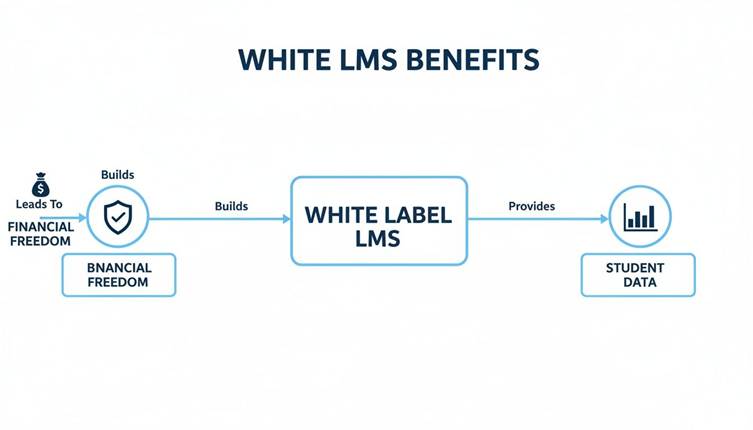
As you can see, owning your brand is directly linked to controlling your revenue and understanding your students. It's a powerful cycle of growth.
Seamless Brand Customisation
This is the absolute cornerstone of any white-label learning management system. But real customisation goes way beyond just uploading a logo. It’s about creating a totally immersive brand environment, one that feels like it was built from scratch by you, for your students.
Your platform must let you:
Use a Custom Domain: Your academy has to live at yourbrand.com, not yourbrand.vendor.com. This is non-negotiable for building credibility and trust.
Control the Look and Feel: You need total command over the colours, fonts, and layouts to make sure the platform is a perfect visual match for your brand.
Brand All Communications: Every single email, notification, and certificate needs to carry your branding. This reinforces your authority at every single touchpoint.
Flexible Course Delivery Modes
Learners today have wildly different schedules and needs. The old one-size-fits-all approach to delivering courses just doesn't cut it anymore. Your LMS has to be flexible enough to support various teaching styles, which lets you serve a much wider audience and create more valuable learning products.
Look for a platform that supports:
Self-Paced Learning: The classic on-demand model where students can learn whenever it suits them.
Live Cohorts: Instructor-led classes that happen in real-time, creating a much more interactive and community-focused experience.
Blended Learning: A hybrid model that mixes self-paced modules with live sessions, giving you the best of both worlds.
This kind of flexibility means you can offer everything from a simple introductory course to a high-ticket, premium coaching programme—all from the same platform. You can find more detail on how these features enhance the learning experience on our website.
Ironclad Content Protection
Let’s be clear: your course content is your most valuable asset. Protecting your intellectual property from being stolen or shared without permission is absolutely critical. A basic LMS might just offer a simple password, but a professional-grade platform provides layers of serious security.
Your content's security is directly tied to your revenue. A platform without robust protection tools leaves your business vulnerable to content theft, which can severely undermine your sales and brand value.
Essential security features should include:
Digital Rights Management (DRM): This technology encrypts your content, making it incredibly difficult for users to download or illegally distribute your videos.
Dynamic Watermarking: This subtly places the viewer's user ID or email on the video content, acting as a powerful deterrent against screen recording.
Domain and Access Restrictions: This ensures your content can only be viewed from your specified domain and only by users who have paid for it.
AI-Powered Support and Smart Integrations
Running an online academy involves a mountain of admin work. Modern white-label platforms use AI to automate routine tasks and provide smarter support, freeing you up to focus on what you do best: creating amazing content and engaging with your students. An AI Teaching Assistant, for example, can answer student questions 24/7 using your own course material, slashing your support workload.
On top of that, your LMS needs to connect seamlessly with the other tools you use to run your business. This creates an efficient workflow, saves you hours of manual work, and stops your data from being trapped in different places. Key integrations to look for include payment gateways like Stripe and various marketing tools.
This is especially vital in rapidly growing markets. For instance, some forecasts for white-label LMS adoption in India are staggering, with projections hitting USD 1,335.8 million in 2025 and rocketing to USD 8,915.6 million by 2033—a massive CAGR of 26.8%. This boom is driven by India's 1.4 billion-strong population demanding more accessible learning platforms. Read the full research about the Indian LMS market.
Your Step-by-Step Guide to Launching a Branded Academy
Taking the leap from a great idea to a fully-fledged branded academy can feel overwhelming. But it doesn't have to be a massive, complicated project.
By breaking it down into a clear, step-by-step roadmap, you can move from concept to launch with confidence. Think of this not as one giant task, but a series of manageable stages designed to get you up and running smoothly.
Step 1: Define Your Vision
Before you even start looking at platforms, you need to get crystal clear on what you're actually building. This first step is the foundation for everything that follows and ensures you choose a system that serves your long-term goals, not just one with flashy features.
Start by asking yourself a few simple but powerful questions:
Who am I actually teaching? Are you training internal corporate teams, helping individual creators, or guiding hobbyists? The answer directly shapes the kind of user experience you need to deliver.
How will I teach? Will you offer self-paced video courses, live group programmes, or a mix of both? Your platform must be built to support your specific teaching style.
What's the end goal here? Is this about generating direct revenue, upskilling your own staff, or building a powerful community? Knowing this will guide every single decision you make.
Step 2: Evaluate Your Platform Options
With your vision locked in, it’s time to find the perfect white label learning management system. This part is all about careful comparison, not getting distracted by clever marketing. Focus only on the features that directly map back to the goals you set in Step 1.
Look for platforms that offer a free trial—nothing beats getting your hands on the software. Create a simple checklist to compare your top choices on the things that matter: customisation options, security, integrations, and pricing. Reading user reviews on software comparison sites is also a great way to get honest, unbiased feedback.
Choosing a platform is a long-term relationship. Always prioritise providers who offer solid, responsive support. Great customer service can turn a launch-day disaster into a minor hiccup.
Step 3: Execute Your Implementation Checklist
Once you've picked your platform, the real work begins. This is where you transform a generic system into your branded academy. The best providers make this a simple, code-free process.
Your checklist for this stage should be short and sweet:
Set up your custom domain. This gives your academy a professional, trustworthy URL.
Apply your brand identity. Customise the logos, colour palette, and fonts to make it unmistakably yours.
Configure your payment gateway. Make sure you can accept payments smoothly and securely from day one.
Step 4: Prepare Your Content
Now for the fun part: filling your new academy with your amazing course content. Whether you’re moving existing materials over or building courses from the ground up, getting organised here is a game-changer. Make sure all your videos, documents, and quizzes are properly formatted for the new system.
This is also the perfect time to give your content a quick refresh. If you're looking for new ideas on how to make your lessons even more engaging, check out our guide on essential online course creation tips.
Step 5: Run a Pre-Launch Test
Before you swing the doors open to the public, you need to run a small-scale beta test. Invite a trusted group of learners to go through the experience first. This pilot phase is your secret weapon for catching technical bugs, fixing confusing navigation, and getting honest feedback on your courses.
Their insights are pure gold and will help you polish the entire experience for a flawless official launch. Don't forget to offer your beta testers a nice discount or a special bonus as a thank you for their help!
Step 6: Launch and Onboard Your Learners
The big day is here! With all the feedback from your test run incorporated, you’re ready to go live. Start promoting your new academy across all your channels and get ready to welcome your first students.
Make sure you have a simple, welcoming onboarding process that shows new learners exactly how to find their courses and where to go for help. As you grow, you might also find that integrating virtual event and office solutions can create incredibly dynamic and engaging environments for your live sessions.
How Experts Are Really Using a White Label LMS

Theory is one thing, but the real test is seeing how a white label learning management system actually works in the wild. Across all kinds of industries, smart creators aren't just building courses. They're building entire brand-led educational businesses where they own the student relationship from start to finish.
Let's dig into a few real-world examples. These stories show exactly how a white label platform can be used to hit specific business goals and unlock some serious potential for your own knowledge business.
The Corporate Trainer Landing High-Value Clients
Picture a corporate trainer who delivers leadership programs to big companies. Before, they were sending out materials using generic file-sharing links and unbranded video players. It completely undermined their premium image. Their main goal? Create a professional, exclusive, and secure space for their high-ticket onboarding programs.
Switching to a white label LMS was a game-changer.
Custom Domain and Branding: They now run their academy on a professional domain. Every single element, from the login page to the course player, is branded to either their client or themselves. It creates a seamless, high-end experience that screams value.
Ironclad Content Security: Using features like DRM and dynamic watermarking, they can share their proprietary training models without worrying about them getting passed around. This is non-negotiable for their corporate clients.
Scalable Group Management: The trainer can now spin up separate, secure portals for each client in minutes. This keeps everything confidential and allows for a totally personalised learning path for different teams.
The result? A polished, premium service that justifies a higher price tag and builds real client loyalty. They went from selling a simple training package to delivering a comprehensive, branded learning solution.
The Fitness Coach Building a Powerful Wellness Community
Now, think about a fitness coach ready to move beyond one-on-one sessions and build a scalable online business. Her goal was to create a single, unified brand experience with on-demand workouts, live challenges, and nutrition guides for a global audience. A generic course marketplace would have diluted her brand and taken a massive cut of her earnings.
A white label LMS gave her the perfect foundation to build her vision.
The platform became more than just a library for her videos; it became the central hub for her entire wellness brand. She could control the user experience from the moment they signed up, building a powerful sense of community and belonging.
This was all possible because she could lean on specific platform features:
Flexible Course Delivery: She offers self-paced workout libraries right alongside scheduled, live-streamed bootcamps. This caters to all her members, no matter their preference.
Integrated Community Features: Members chat in dedicated forums, share progress photos, and cheer each other on—all inside her branded environment.
Monetisation Control: She set up different subscription tiers (like Basic, Premium, and VIP Coaching) and keeps 100% of the revenue. This gives her total financial control.
The Language School Expanding Its Global Reach
A language school wanted to grow beyond its physical classrooms by launching interactive online courses. They needed a system that could handle complex lessons, support multiple languages, and offer automated help to students in different time zones.
Their white label solution was the key to this digital shift. They now offer tiered courses with interactive lessons and AI-powered practice tools. An AI Teaching Assistant, trained specifically on their curriculum, answers common grammar questions 24/7. This frees up instructors and gives learners instant support whenever they need it.
This strategy is especially smart in high-growth markets. The Asia-Pacific region boasts the fastest-growing EdTech scene, with a projected 22.5% CAGR through 2035. India is a major player here, where the LMS market hit USD 751.80 million in 2024 and is expected to quadruple by 2033, thanks to a young population and initiatives like Digital India. You can discover more insights about the Indian LMS market here.
Each of these stories points to the same truth: a white label LMS isn't just a piece of tech. It’s a strategic asset that gives experts the power to build a scalable, profitable, and respected brand in the crowded world of online education.
Choosing the Right Platform to Power Your Vision
Throughout this guide, one truth has become crystal clear: a white-label LMS gives you the ultimate combination of brand control, scalability, and financial freedom. It's the key to building a real e-learning business where you own the entire experience, from the first click to the final certificate.
This isn’t just about slapping your logo on a template; it’s about creating a cohesive, professional world for your students. When you own your platform, you control the narrative, you own the student data, and you keep 100% of your revenue. For any creator serious about long-term growth and establishing authority in their niche, this is the only logical next step.
The All-in-One Solution for Modern Creators
An all-in-one platform like Skolasti is built from the ground up to meet these exact needs. It’s designed not just as a place to host videos, but as a complete business engine for your expertise.
This means you get every essential tool under one roof:
Integrated Course Creation: Build engaging self-paced courses or live cohort-based programmes without needing any other software.
Advanced Content Protection: Secure your intellectual property with DRM and dynamic watermarking, ensuring your hard work stays yours.
AI Teaching Assistant: Automate student support with an AI that answers questions using your own course material, freeing you up for the work that matters most.
Flexible Monetisation Models: Sell courses, subscriptions, or bundles with full control over pricing and promotions.
Choosing the right platform is the final, crucial step in turning your knowledge into a scalable asset. It’s about investing in a system that works for you, automating the tedious work so you can focus on creating and connecting.
This isn't just about finding a piece of software. It’s about finding a partner for your growth. When you’re ready to see how simple it can be to launch a fully branded academy, explore our straightforward pricing plans and discover the right fit for your vision.
Take control of your brand and start building your e-learning empire today.
Frequently Asked Questions
Jumping into the world of white-label learning platforms can bring up a few questions. We've tackled the most common ones below to give you the clarity you need to make the right move for your business.
Do I Need Technical Skills to Set Up My Academy?
This is one of the biggest worries for creators, and the answer is a firm no. Modern white-label LMS platforms are built from the ground up to be no-code solutions. You absolutely do not need to be a developer or have a technical background to launch a professional-looking academy.
Think of it like using a simple drag-and-drop website builder. You can upload your logo, pick your brand colours, and organise your courses with an intuitive dashboard. All the heavy lifting—like server maintenance, security updates, and rolling out new features—is handled by the platform provider. This frees you up to focus on what you do best: creating amazing content.
How Do I Move Courses From Another Platform?
If you already have courses hosted somewhere else, the idea of moving everything can feel like a huge headache. But a good white-label LMS provider makes this migration process as painless as possible. Most systems are designed to handle bulk uploads of common file types like videos (MP4), documents (PDF), and audio files.
The process usually involves exporting your content from your old platform and then uploading it into the new system’s course builder. While it does take a bit of organisation, it’s a straightforward task. Many providers also offer dedicated support to walk you through the migration, making sure your content is transferred securely and is ready to go.
What Is the Real Cost Compared to Building My Own LMS?
Building a custom LMS from scratch might sound like the ultimate way to own your brand, but it comes with some serious hidden costs that can quickly spiral. You're not just paying for the initial development, which can easily run into tens of thousands of pounds. You're also on the hook for all the ongoing expenses:
Server hosting and maintenance
Constant security patches and updates
Hiring developers for bug fixes and new features
Long development times that delay your launch and your revenue
A white-label LMS flips this unpredictable capital expense into a simple, predictable operating expense. You pay a manageable monthly or annual subscription fee and get a powerful, secure, and constantly improving platform without any of the technical headaches or financial black holes.
How Does a White Label LMS Help Market My Courses?
Owning your platform is a marketing superpower. Simple as that. When you use a generic marketplace, you’re giving away your most valuable asset: your student data. The marketplace owns that relationship and can (and will) market competing courses to your audience.
With a white-label learning management system, you own 100% of your student data. This means you can integrate directly with your own marketing tools, track how learners behave, and build targeted email campaigns to upsell new courses or bring back past students. Your branded platform builds trust and authority, making it far easier to position your courses as premium offerings and build a loyal community that belongs entirely to you.
Ready to build a thriving, branded academy without the technical complexity? Skolasti provides all the tools you need—from an AI Teaching Assistant to ironclad content protection—to turn your expertise into a scalable business. Start your free trial today and experience the difference.
So, what exactly is a white label learning management system?
Think of it as a ready-made, fully functional online academy that you can buy off the shelf and rebrand to make it completely your own. You get to swap out the vendor’s logo, colours, and even the website domain, making it look and feel like you built the entire system from the ground up.
This gives you a professional, fully branded learning experience without the eye-watering cost and endless timelines of custom software development.
Unlocking Your Brand with a White Label LMS
Let's use an analogy. Imagine you want to launch a new line of premium coffee. You could spend years (and a small fortune) buying land, designing a roasting facility, and building it all from scratch. It’s a complex, expensive, and risky path.
Or, you could partner with an expert roaster who provides you with world-class beans in unbranded packaging. You then put your own beautiful branding on it and sell it as your unique product.
A white label learning management system works exactly like that expert roaster. It gives you a robust, secure, and feature-rich foundation for your online academy. You get to skip all the messy technical hurdles and focus entirely on what you do best: creating exceptional courses and building a powerful brand.
The Power of Ownership Without the Hassle
This approach gives you total control over your learning environment. From the moment a student lands on your custom domain to the second they download a certificate with your logo on it, the entire experience reinforces your identity. It’s a seamless journey that builds instant credibility and trust.
A white label LMS lets you:
Establish a Professional Identity: Your learners interact with a platform that consistently reflects your brand, not some third-party vendor they’ve never heard of.
Launch at Lightning Speed: Forget waiting months or even years for custom development. You can get your branded academy up and running in a matter of days. In fact, industry analysis shows 73% of SaaS businesses use white label solutions to save time and resources.
Maintain Full Control: You own the student data. You dictate the user experience. You set your own pricing without being boxed in by a marketplace's restrictive rules.
By stripping away all vendor branding, a white label LMS allows you to present a unified and trustworthy educational platform. Learners feel they are in an environment created and managed directly by you, which dramatically strengthens their connection to your brand and your content.
In short, a white label platform handles all the heavy lifting behind the scenes—server maintenance, security updates, and new feature rollouts. This frees you from a huge administrative and technical burden. You get the polish of a sophisticated, enterprise-grade system while presenting a clean, cohesive, and fully owned brand to the world.
It’s simply the smarter way to scale your knowledge business.
Generic LMS vs White Label LMS at a Glance
To really see the difference, it helps to compare a standard, marketplace-style LMS with a fully brandable white label solution. The distinction is all about control, branding, and long-term business ownership.
Here's a quick breakdown:
Feature | Generic LMS (e.g., Udemy, Coursera) | White Label LMS (e.g., Skolasti) |
Branding | Co-branded or vendor-branded. Your brand is secondary. | Fully your brand. Your logo, your colours, your domain. |
Ownership | You rent space on their platform. You don't own the asset. | You own the platform and the entire student experience. |
Student Data | The platform owns the student data and relationship. | You own 100% of your student data and communication channels. |
Pricing Control | Limited control; often subject to marketplace rules and fees. | Complete control over pricing, plans, and promotions. |
Launch Speed | Fast, but with major brand compromises. | Extremely fast, with no brand compromise. |
Competition | Your courses are listed next to direct competitors. | No direct competition on your platform. It's your world. |
Ultimately, a generic LMS is like renting a stall in a crowded market, while a white label LMS is like building your own flagship store. Both can get you started, but only one gives you the foundation to build a lasting, valuable brand.
The Strategic Advantages of Owning Your Brand in E-Learning
Stepping away from a generic course marketplace isn't just about sticking your logo on a page. It’s about seizing total control of your business and how your students experience it. A white label learning management system is the tool that lets you build more than just a course—it helps you create an entire branded academy that learners trust, value, and keep coming back to.
This sense of ownership completely changes how learners see you. When they land on your own domain, see your brand colours, and get emails from your academy, it creates instant authority. There are no distracting third-party logos or clunky user experiences making you look like a small stall in a crowded bazaar.
Instead, you’re presenting a polished, professional front. This alone justifies premium pricing and builds unshakable learner confidence from the moment they sign up.
Build Unwavering Brand Trust and Authority
Think about a business coach who sells high-ticket corporate training. If they send their clients to a generic platform cluttered with competing courses, it immediately cheapens their premium offer. A white label LMS fixes this by creating a secure, exclusive space that mirrors the quality of their service.
The whole journey—from the login page right through to the final, branded certificate—feels like a natural extension of their brand. A huge part of this is the ability to establish a strong brand voice that stays consistent across every single student email and notification. That consistency is what builds a memorable and authoritative educational brand.
By owning the digital classroom, you control the narrative. Learners aren't just buying a course; they are investing in your unique methodology and expertise, presented in an environment that you have crafted specifically for them.
This controlled experience has a direct impact on engagement and completion rates. When the learning environment feels cohesive and professional, students are simply more likely to stay focused and motivated. This leads to better outcomes for them, and powerful testimonials for you.
Achieve Full Financial and Data Freedom
One of the most liberating benefits is gaining complete financial autonomy. On shared marketplaces, a hefty chunk of your revenue is sliced off as commission. With a white label learning management system, you keep 100% of your earnings. You set your prices, you run promotions, and you’re in full control of every transaction.
This financial freedom comes with another priceless asset: ownership of your student data. This is a strategic goldmine. You can see exactly how learners behave, which content is a hit, and where students are getting stuck. This data lets you fine-tune your courses and run targeted marketing campaigns to bring back past students or attract new ones with offers they can't refuse.
Scenario A: The Fitness Coach: A wellness expert can track student progress to offer personalised upsells, like an advanced nutrition plan or one-on-one coaching sessions, all under one unified brand.
Scenario B: The Course Creator: An edupreneur can see which modules get the most engagement and use those insights to develop follow-up courses they know their audience is already hungry for.
You just can't get this level of insight when you're effectively renting space on someone else's platform.
Capitalise on a Growing Digital Education Market
The appetite for custom learning platforms is growing fast. Take India, for example, where the learning management system market hit USD 751.80 million in 2024. A big driver for this was the National Education Policy (NEP) 2020, which actively encourages online learning. This boom is a massive opportunity for independent experts to use white-label solutions and meet the surging demand for specialised, branded education.
Ultimately, choosing a white label LMS isn’t just a technical decision; it's a strategic business move. It’s an investment in your long-term scalability, brand equity, and the direct relationship you have with your students—setting the foundation for sustainable growth for years to come.
Essential Features Your White Label LMS Must Have
Choosing a white-label LMS is a lot like picking the foundation for a house you're about to build. You need more than just a concrete slab; you need a rock-solid base with all the right connections—plumbing, electrical, and structural support—to build a successful business on top.
Not all platforms are built the same. The right set of features is what separates a thriving online academy from one that never quite gets off the ground. A truly powerful white-label LMS does more than just let you slap your logo on it; it gives you the tools to build a secure, engaging, and scalable learning business. It’s the very ground your e-learning vision is built on.
The diagram below shows you the core pillars a great platform should support, from building trust in your brand to securing your financial independence.
As you can see, owning your brand is directly linked to controlling your revenue and understanding your students. It's a powerful cycle of growth.
Seamless Brand Customisation
This is the absolute cornerstone of any white-label learning management system. But real customisation goes way beyond just uploading a logo. It’s about creating a totally immersive brand environment, one that feels like it was built from scratch by you, for your students.
Your platform must let you:
Use a Custom Domain: Your academy has to live at yourbrand.com, not yourbrand.vendor.com. This is non-negotiable for building credibility and trust.
Control the Look and Feel: You need total command over the colours, fonts, and layouts to make sure the platform is a perfect visual match for your brand.
Brand All Communications: Every single email, notification, and certificate needs to carry your branding. This reinforces your authority at every single touchpoint.
Flexible Course Delivery Modes
Learners today have wildly different schedules and needs. The old one-size-fits-all approach to delivering courses just doesn't cut it anymore. Your LMS has to be flexible enough to support various teaching styles, which lets you serve a much wider audience and create more valuable learning products.
Look for a platform that supports:
Self-Paced Learning: The classic on-demand model where students can learn whenever it suits them.
Live Cohorts: Instructor-led classes that happen in real-time, creating a much more interactive and community-focused experience.
Blended Learning: A hybrid model that mixes self-paced modules with live sessions, giving you the best of both worlds.
This kind of flexibility means you can offer everything from a simple introductory course to a high-ticket, premium coaching programme—all from the same platform. You can find more detail on how these features enhance the learning experience on our website.
Ironclad Content Protection
Let’s be clear: your course content is your most valuable asset. Protecting your intellectual property from being stolen or shared without permission is absolutely critical. A basic LMS might just offer a simple password, but a professional-grade platform provides layers of serious security.
Your content's security is directly tied to your revenue. A platform without robust protection tools leaves your business vulnerable to content theft, which can severely undermine your sales and brand value.
Essential security features should include:
Digital Rights Management (DRM): This technology encrypts your content, making it incredibly difficult for users to download or illegally distribute your videos.
Dynamic Watermarking: This subtly places the viewer's user ID or email on the video content, acting as a powerful deterrent against screen recording.
Domain and Access Restrictions: This ensures your content can only be viewed from your specified domain and only by users who have paid for it.
AI-Powered Support and Smart Integrations
Running an online academy involves a mountain of admin work. Modern white-label platforms use AI to automate routine tasks and provide smarter support, freeing you up to focus on what you do best: creating amazing content and engaging with your students. An AI Teaching Assistant, for example, can answer student questions 24/7 using your own course material, slashing your support workload.
On top of that, your LMS needs to connect seamlessly with the other tools you use to run your business. This creates an efficient workflow, saves you hours of manual work, and stops your data from being trapped in different places. Key integrations to look for include payment gateways like Stripe and various marketing tools.
This is especially vital in rapidly growing markets. For instance, some forecasts for white-label LMS adoption in India are staggering, with projections hitting USD 1,335.8 million in 2025 and rocketing to USD 8,915.6 million by 2033—a massive CAGR of 26.8%. This boom is driven by India's 1.4 billion-strong population demanding more accessible learning platforms. Read the full research about the Indian LMS market.
Your Step-by-Step Guide to Launching a Branded Academy
Taking the leap from a great idea to a fully-fledged branded academy can feel overwhelming. But it doesn't have to be a massive, complicated project.
By breaking it down into a clear, step-by-step roadmap, you can move from concept to launch with confidence. Think of this not as one giant task, but a series of manageable stages designed to get you up and running smoothly.
Step 1: Define Your Vision
Before you even start looking at platforms, you need to get crystal clear on what you're actually building. This first step is the foundation for everything that follows and ensures you choose a system that serves your long-term goals, not just one with flashy features.
Start by asking yourself a few simple but powerful questions:
Who am I actually teaching? Are you training internal corporate teams, helping individual creators, or guiding hobbyists? The answer directly shapes the kind of user experience you need to deliver.
How will I teach? Will you offer self-paced video courses, live group programmes, or a mix of both? Your platform must be built to support your specific teaching style.
What's the end goal here? Is this about generating direct revenue, upskilling your own staff, or building a powerful community? Knowing this will guide every single decision you make.
Step 2: Evaluate Your Platform Options
With your vision locked in, it’s time to find the perfect white label learning management system. This part is all about careful comparison, not getting distracted by clever marketing. Focus only on the features that directly map back to the goals you set in Step 1.
Look for platforms that offer a free trial—nothing beats getting your hands on the software. Create a simple checklist to compare your top choices on the things that matter: customisation options, security, integrations, and pricing. Reading user reviews on software comparison sites is also a great way to get honest, unbiased feedback.
Choosing a platform is a long-term relationship. Always prioritise providers who offer solid, responsive support. Great customer service can turn a launch-day disaster into a minor hiccup.
Step 3: Execute Your Implementation Checklist
Once you've picked your platform, the real work begins. This is where you transform a generic system into your branded academy. The best providers make this a simple, code-free process.
Your checklist for this stage should be short and sweet:
Set up your custom domain. This gives your academy a professional, trustworthy URL.
Apply your brand identity. Customise the logos, colour palette, and fonts to make it unmistakably yours.
Configure your payment gateway. Make sure you can accept payments smoothly and securely from day one.
Step 4: Prepare Your Content
Now for the fun part: filling your new academy with your amazing course content. Whether you’re moving existing materials over or building courses from the ground up, getting organised here is a game-changer. Make sure all your videos, documents, and quizzes are properly formatted for the new system.
This is also the perfect time to give your content a quick refresh. If you're looking for new ideas on how to make your lessons even more engaging, check out our guide on essential online course creation tips.
Step 5: Run a Pre-Launch Test
Before you swing the doors open to the public, you need to run a small-scale beta test. Invite a trusted group of learners to go through the experience first. This pilot phase is your secret weapon for catching technical bugs, fixing confusing navigation, and getting honest feedback on your courses.
Their insights are pure gold and will help you polish the entire experience for a flawless official launch. Don't forget to offer your beta testers a nice discount or a special bonus as a thank you for their help!
Step 6: Launch and Onboard Your Learners
The big day is here! With all the feedback from your test run incorporated, you’re ready to go live. Start promoting your new academy across all your channels and get ready to welcome your first students.
Make sure you have a simple, welcoming onboarding process that shows new learners exactly how to find their courses and where to go for help. As you grow, you might also find that integrating virtual event and office solutions can create incredibly dynamic and engaging environments for your live sessions.
How Experts Are Really Using a White Label LMS
Theory is one thing, but the real test is seeing how a white label learning management system actually works in the wild. Across all kinds of industries, smart creators aren't just building courses. They're building entire brand-led educational businesses where they own the student relationship from start to finish.
Let's dig into a few real-world examples. These stories show exactly how a white label platform can be used to hit specific business goals and unlock some serious potential for your own knowledge business.
The Corporate Trainer Landing High-Value Clients
Picture a corporate trainer who delivers leadership programs to big companies. Before, they were sending out materials using generic file-sharing links and unbranded video players. It completely undermined their premium image. Their main goal? Create a professional, exclusive, and secure space for their high-ticket onboarding programs.
Switching to a white label LMS was a game-changer.
Custom Domain and Branding: They now run their academy on a professional domain. Every single element, from the login page to the course player, is branded to either their client or themselves. It creates a seamless, high-end experience that screams value.
Ironclad Content Security: Using features like DRM and dynamic watermarking, they can share their proprietary training models without worrying about them getting passed around. This is non-negotiable for their corporate clients.
Scalable Group Management: The trainer can now spin up separate, secure portals for each client in minutes. This keeps everything confidential and allows for a totally personalised learning path for different teams.
The result? A polished, premium service that justifies a higher price tag and builds real client loyalty. They went from selling a simple training package to delivering a comprehensive, branded learning solution.
The Fitness Coach Building a Powerful Wellness Community
Now, think about a fitness coach ready to move beyond one-on-one sessions and build a scalable online business. Her goal was to create a single, unified brand experience with on-demand workouts, live challenges, and nutrition guides for a global audience. A generic course marketplace would have diluted her brand and taken a massive cut of her earnings.
A white label LMS gave her the perfect foundation to build her vision.
The platform became more than just a library for her videos; it became the central hub for her entire wellness brand. She could control the user experience from the moment they signed up, building a powerful sense of community and belonging.
This was all possible because she could lean on specific platform features:
Flexible Course Delivery: She offers self-paced workout libraries right alongside scheduled, live-streamed bootcamps. This caters to all her members, no matter their preference.
Integrated Community Features: Members chat in dedicated forums, share progress photos, and cheer each other on—all inside her branded environment.
Monetisation Control: She set up different subscription tiers (like Basic, Premium, and VIP Coaching) and keeps 100% of the revenue. This gives her total financial control.
The Language School Expanding Its Global Reach
A language school wanted to grow beyond its physical classrooms by launching interactive online courses. They needed a system that could handle complex lessons, support multiple languages, and offer automated help to students in different time zones.
Their white label solution was the key to this digital shift. They now offer tiered courses with interactive lessons and AI-powered practice tools. An AI Teaching Assistant, trained specifically on their curriculum, answers common grammar questions 24/7. This frees up instructors and gives learners instant support whenever they need it.
This strategy is especially smart in high-growth markets. The Asia-Pacific region boasts the fastest-growing EdTech scene, with a projected 22.5% CAGR through 2035. India is a major player here, where the LMS market hit USD 751.80 million in 2024 and is expected to quadruple by 2033, thanks to a young population and initiatives like Digital India. You can discover more insights about the Indian LMS market here.
Each of these stories points to the same truth: a white label LMS isn't just a piece of tech. It’s a strategic asset that gives experts the power to build a scalable, profitable, and respected brand in the crowded world of online education.
Choosing the Right Platform to Power Your Vision
Throughout this guide, one truth has become crystal clear: a white-label LMS gives you the ultimate combination of brand control, scalability, and financial freedom. It's the key to building a real e-learning business where you own the entire experience, from the first click to the final certificate.
This isn’t just about slapping your logo on a template; it’s about creating a cohesive, professional world for your students. When you own your platform, you control the narrative, you own the student data, and you keep 100% of your revenue. For any creator serious about long-term growth and establishing authority in their niche, this is the only logical next step.
The All-in-One Solution for Modern Creators
An all-in-one platform like Skolasti is built from the ground up to meet these exact needs. It’s designed not just as a place to host videos, but as a complete business engine for your expertise.
This means you get every essential tool under one roof:
Integrated Course Creation: Build engaging self-paced courses or live cohort-based programmes without needing any other software.
Advanced Content Protection: Secure your intellectual property with DRM and dynamic watermarking, ensuring your hard work stays yours.
AI Teaching Assistant: Automate student support with an AI that answers questions using your own course material, freeing you up for the work that matters most.
Flexible Monetisation Models: Sell courses, subscriptions, or bundles with full control over pricing and promotions.
Choosing the right platform is the final, crucial step in turning your knowledge into a scalable asset. It’s about investing in a system that works for you, automating the tedious work so you can focus on creating and connecting.
This isn't just about finding a piece of software. It’s about finding a partner for your growth. When you’re ready to see how simple it can be to launch a fully branded academy, explore our straightforward pricing plans and discover the right fit for your vision.
Take control of your brand and start building your e-learning empire today.
Frequently Asked Questions
Jumping into the world of white-label learning platforms can bring up a few questions. We've tackled the most common ones below to give you the clarity you need to make the right move for your business.
Do I Need Technical Skills to Set Up My Academy?
This is one of the biggest worries for creators, and the answer is a firm no. Modern white-label LMS platforms are built from the ground up to be no-code solutions. You absolutely do not need to be a developer or have a technical background to launch a professional-looking academy.
Think of it like using a simple drag-and-drop website builder. You can upload your logo, pick your brand colours, and organise your courses with an intuitive dashboard. All the heavy lifting—like server maintenance, security updates, and rolling out new features—is handled by the platform provider. This frees you up to focus on what you do best: creating amazing content.
How Do I Move Courses From Another Platform?
If you already have courses hosted somewhere else, the idea of moving everything can feel like a huge headache. But a good white-label LMS provider makes this migration process as painless as possible. Most systems are designed to handle bulk uploads of common file types like videos (MP4), documents (PDF), and audio files.
The process usually involves exporting your content from your old platform and then uploading it into the new system’s course builder. While it does take a bit of organisation, it’s a straightforward task. Many providers also offer dedicated support to walk you through the migration, making sure your content is transferred securely and is ready to go.
What Is the Real Cost Compared to Building My Own LMS?
Building a custom LMS from scratch might sound like the ultimate way to own your brand, but it comes with some serious hidden costs that can quickly spiral. You're not just paying for the initial development, which can easily run into tens of thousands of pounds. You're also on the hook for all the ongoing expenses:
Server hosting and maintenance
Constant security patches and updates
Hiring developers for bug fixes and new features
Long development times that delay your launch and your revenue
A white-label LMS flips this unpredictable capital expense into a simple, predictable operating expense. You pay a manageable monthly or annual subscription fee and get a powerful, secure, and constantly improving platform without any of the technical headaches or financial black holes.
How Does a White Label LMS Help Market My Courses?
Owning your platform is a marketing superpower. Simple as that. When you use a generic marketplace, you’re giving away your most valuable asset: your student data. The marketplace owns that relationship and can (and will) market competing courses to your audience.
With a white-label learning management system, you own 100% of your student data. This means you can integrate directly with your own marketing tools, track how learners behave, and build targeted email campaigns to upsell new courses or bring back past students. Your branded platform builds trust and authority, making it far easier to position your courses as premium offerings and build a loyal community that belongs entirely to you.
Ready to build a thriving, branded academy without the technical complexity? Skolasti provides all the tools you need—from an AI Teaching Assistant to ironclad content protection—to turn your expertise into a scalable business. Start your free trial today and experience the difference.
So, what exactly is a white label learning management system?
Think of it as a ready-made, fully functional online academy that you can buy off the shelf and rebrand to make it completely your own. You get to swap out the vendor’s logo, colours, and even the website domain, making it look and feel like you built the entire system from the ground up.
This gives you a professional, fully branded learning experience without the eye-watering cost and endless timelines of custom software development.
Unlocking Your Brand with a White Label LMS
Let's use an analogy. Imagine you want to launch a new line of premium coffee. You could spend years (and a small fortune) buying land, designing a roasting facility, and building it all from scratch. It’s a complex, expensive, and risky path.
Or, you could partner with an expert roaster who provides you with world-class beans in unbranded packaging. You then put your own beautiful branding on it and sell it as your unique product.
A white label learning management system works exactly like that expert roaster. It gives you a robust, secure, and feature-rich foundation for your online academy. You get to skip all the messy technical hurdles and focus entirely on what you do best: creating exceptional courses and building a powerful brand.
The Power of Ownership Without the Hassle
This approach gives you total control over your learning environment. From the moment a student lands on your custom domain to the second they download a certificate with your logo on it, the entire experience reinforces your identity. It’s a seamless journey that builds instant credibility and trust.
A white label LMS lets you:
Establish a Professional Identity: Your learners interact with a platform that consistently reflects your brand, not some third-party vendor they’ve never heard of.
Launch at Lightning Speed: Forget waiting months or even years for custom development. You can get your branded academy up and running in a matter of days. In fact, industry analysis shows 73% of SaaS businesses use white label solutions to save time and resources.
Maintain Full Control: You own the student data. You dictate the user experience. You set your own pricing without being boxed in by a marketplace's restrictive rules.
By stripping away all vendor branding, a white label LMS allows you to present a unified and trustworthy educational platform. Learners feel they are in an environment created and managed directly by you, which dramatically strengthens their connection to your brand and your content.
In short, a white label platform handles all the heavy lifting behind the scenes—server maintenance, security updates, and new feature rollouts. This frees you from a huge administrative and technical burden. You get the polish of a sophisticated, enterprise-grade system while presenting a clean, cohesive, and fully owned brand to the world.
It’s simply the smarter way to scale your knowledge business.
Generic LMS vs White Label LMS at a Glance
To really see the difference, it helps to compare a standard, marketplace-style LMS with a fully brandable white label solution. The distinction is all about control, branding, and long-term business ownership.
Here's a quick breakdown:
Feature | Generic LMS (e.g., Udemy, Coursera) | White Label LMS (e.g., Skolasti) |
Branding | Co-branded or vendor-branded. Your brand is secondary. | Fully your brand. Your logo, your colours, your domain. |
Ownership | You rent space on their platform. You don't own the asset. | You own the platform and the entire student experience. |
Student Data | The platform owns the student data and relationship. | You own 100% of your student data and communication channels. |
Pricing Control | Limited control; often subject to marketplace rules and fees. | Complete control over pricing, plans, and promotions. |
Launch Speed | Fast, but with major brand compromises. | Extremely fast, with no brand compromise. |
Competition | Your courses are listed next to direct competitors. | No direct competition on your platform. It's your world. |
Ultimately, a generic LMS is like renting a stall in a crowded market, while a white label LMS is like building your own flagship store. Both can get you started, but only one gives you the foundation to build a lasting, valuable brand.
The Strategic Advantages of Owning Your Brand in E-Learning
Stepping away from a generic course marketplace isn't just about sticking your logo on a page. It’s about seizing total control of your business and how your students experience it. A white label learning management system is the tool that lets you build more than just a course—it helps you create an entire branded academy that learners trust, value, and keep coming back to.
This sense of ownership completely changes how learners see you. When they land on your own domain, see your brand colours, and get emails from your academy, it creates instant authority. There are no distracting third-party logos or clunky user experiences making you look like a small stall in a crowded bazaar.
Instead, you’re presenting a polished, professional front. This alone justifies premium pricing and builds unshakable learner confidence from the moment they sign up.
Build Unwavering Brand Trust and Authority
Think about a business coach who sells high-ticket corporate training. If they send their clients to a generic platform cluttered with competing courses, it immediately cheapens their premium offer. A white label LMS fixes this by creating a secure, exclusive space that mirrors the quality of their service.
The whole journey—from the login page right through to the final, branded certificate—feels like a natural extension of their brand. A huge part of this is the ability to establish a strong brand voice that stays consistent across every single student email and notification. That consistency is what builds a memorable and authoritative educational brand.
By owning the digital classroom, you control the narrative. Learners aren't just buying a course; they are investing in your unique methodology and expertise, presented in an environment that you have crafted specifically for them.
This controlled experience has a direct impact on engagement and completion rates. When the learning environment feels cohesive and professional, students are simply more likely to stay focused and motivated. This leads to better outcomes for them, and powerful testimonials for you.
Achieve Full Financial and Data Freedom
One of the most liberating benefits is gaining complete financial autonomy. On shared marketplaces, a hefty chunk of your revenue is sliced off as commission. With a white label learning management system, you keep 100% of your earnings. You set your prices, you run promotions, and you’re in full control of every transaction.
This financial freedom comes with another priceless asset: ownership of your student data. This is a strategic goldmine. You can see exactly how learners behave, which content is a hit, and where students are getting stuck. This data lets you fine-tune your courses and run targeted marketing campaigns to bring back past students or attract new ones with offers they can't refuse.
Scenario A: The Fitness Coach: A wellness expert can track student progress to offer personalised upsells, like an advanced nutrition plan or one-on-one coaching sessions, all under one unified brand.
Scenario B: The Course Creator: An edupreneur can see which modules get the most engagement and use those insights to develop follow-up courses they know their audience is already hungry for.
You just can't get this level of insight when you're effectively renting space on someone else's platform.
Capitalise on a Growing Digital Education Market
The appetite for custom learning platforms is growing fast. Take India, for example, where the learning management system market hit USD 751.80 million in 2024. A big driver for this was the National Education Policy (NEP) 2020, which actively encourages online learning. This boom is a massive opportunity for independent experts to use white-label solutions and meet the surging demand for specialised, branded education.
Ultimately, choosing a white label LMS isn’t just a technical decision; it's a strategic business move. It’s an investment in your long-term scalability, brand equity, and the direct relationship you have with your students—setting the foundation for sustainable growth for years to come.
Essential Features Your White Label LMS Must Have
Choosing a white-label LMS is a lot like picking the foundation for a house you're about to build. You need more than just a concrete slab; you need a rock-solid base with all the right connections—plumbing, electrical, and structural support—to build a successful business on top.
Not all platforms are built the same. The right set of features is what separates a thriving online academy from one that never quite gets off the ground. A truly powerful white-label LMS does more than just let you slap your logo on it; it gives you the tools to build a secure, engaging, and scalable learning business. It’s the very ground your e-learning vision is built on.
The diagram below shows you the core pillars a great platform should support, from building trust in your brand to securing your financial independence.
As you can see, owning your brand is directly linked to controlling your revenue and understanding your students. It's a powerful cycle of growth.
Seamless Brand Customisation
This is the absolute cornerstone of any white-label learning management system. But real customisation goes way beyond just uploading a logo. It’s about creating a totally immersive brand environment, one that feels like it was built from scratch by you, for your students.
Your platform must let you:
Use a Custom Domain: Your academy has to live at yourbrand.com, not yourbrand.vendor.com. This is non-negotiable for building credibility and trust.
Control the Look and Feel: You need total command over the colours, fonts, and layouts to make sure the platform is a perfect visual match for your brand.
Brand All Communications: Every single email, notification, and certificate needs to carry your branding. This reinforces your authority at every single touchpoint.
Flexible Course Delivery Modes
Learners today have wildly different schedules and needs. The old one-size-fits-all approach to delivering courses just doesn't cut it anymore. Your LMS has to be flexible enough to support various teaching styles, which lets you serve a much wider audience and create more valuable learning products.
Look for a platform that supports:
Self-Paced Learning: The classic on-demand model where students can learn whenever it suits them.
Live Cohorts: Instructor-led classes that happen in real-time, creating a much more interactive and community-focused experience.
Blended Learning: A hybrid model that mixes self-paced modules with live sessions, giving you the best of both worlds.
This kind of flexibility means you can offer everything from a simple introductory course to a high-ticket, premium coaching programme—all from the same platform. You can find more detail on how these features enhance the learning experience on our website.
Ironclad Content Protection
Let’s be clear: your course content is your most valuable asset. Protecting your intellectual property from being stolen or shared without permission is absolutely critical. A basic LMS might just offer a simple password, but a professional-grade platform provides layers of serious security.
Your content's security is directly tied to your revenue. A platform without robust protection tools leaves your business vulnerable to content theft, which can severely undermine your sales and brand value.
Essential security features should include:
Digital Rights Management (DRM): This technology encrypts your content, making it incredibly difficult for users to download or illegally distribute your videos.
Dynamic Watermarking: This subtly places the viewer's user ID or email on the video content, acting as a powerful deterrent against screen recording.
Domain and Access Restrictions: This ensures your content can only be viewed from your specified domain and only by users who have paid for it.
AI-Powered Support and Smart Integrations
Running an online academy involves a mountain of admin work. Modern white-label platforms use AI to automate routine tasks and provide smarter support, freeing you up to focus on what you do best: creating amazing content and engaging with your students. An AI Teaching Assistant, for example, can answer student questions 24/7 using your own course material, slashing your support workload.
On top of that, your LMS needs to connect seamlessly with the other tools you use to run your business. This creates an efficient workflow, saves you hours of manual work, and stops your data from being trapped in different places. Key integrations to look for include payment gateways like Stripe and various marketing tools.
This is especially vital in rapidly growing markets. For instance, some forecasts for white-label LMS adoption in India are staggering, with projections hitting USD 1,335.8 million in 2025 and rocketing to USD 8,915.6 million by 2033—a massive CAGR of 26.8%. This boom is driven by India's 1.4 billion-strong population demanding more accessible learning platforms. Read the full research about the Indian LMS market.
Your Step-by-Step Guide to Launching a Branded Academy
Taking the leap from a great idea to a fully-fledged branded academy can feel overwhelming. But it doesn't have to be a massive, complicated project.
By breaking it down into a clear, step-by-step roadmap, you can move from concept to launch with confidence. Think of this not as one giant task, but a series of manageable stages designed to get you up and running smoothly.
Step 1: Define Your Vision
Before you even start looking at platforms, you need to get crystal clear on what you're actually building. This first step is the foundation for everything that follows and ensures you choose a system that serves your long-term goals, not just one with flashy features.
Start by asking yourself a few simple but powerful questions:
Who am I actually teaching? Are you training internal corporate teams, helping individual creators, or guiding hobbyists? The answer directly shapes the kind of user experience you need to deliver.
How will I teach? Will you offer self-paced video courses, live group programmes, or a mix of both? Your platform must be built to support your specific teaching style.
What's the end goal here? Is this about generating direct revenue, upskilling your own staff, or building a powerful community? Knowing this will guide every single decision you make.
Step 2: Evaluate Your Platform Options
With your vision locked in, it’s time to find the perfect white label learning management system. This part is all about careful comparison, not getting distracted by clever marketing. Focus only on the features that directly map back to the goals you set in Step 1.
Look for platforms that offer a free trial—nothing beats getting your hands on the software. Create a simple checklist to compare your top choices on the things that matter: customisation options, security, integrations, and pricing. Reading user reviews on software comparison sites is also a great way to get honest, unbiased feedback.
Choosing a platform is a long-term relationship. Always prioritise providers who offer solid, responsive support. Great customer service can turn a launch-day disaster into a minor hiccup.
Step 3: Execute Your Implementation Checklist
Once you've picked your platform, the real work begins. This is where you transform a generic system into your branded academy. The best providers make this a simple, code-free process.
Your checklist for this stage should be short and sweet:
Set up your custom domain. This gives your academy a professional, trustworthy URL.
Apply your brand identity. Customise the logos, colour palette, and fonts to make it unmistakably yours.
Configure your payment gateway. Make sure you can accept payments smoothly and securely from day one.
Step 4: Prepare Your Content
Now for the fun part: filling your new academy with your amazing course content. Whether you’re moving existing materials over or building courses from the ground up, getting organised here is a game-changer. Make sure all your videos, documents, and quizzes are properly formatted for the new system.
This is also the perfect time to give your content a quick refresh. If you're looking for new ideas on how to make your lessons even more engaging, check out our guide on essential online course creation tips.
Step 5: Run a Pre-Launch Test
Before you swing the doors open to the public, you need to run a small-scale beta test. Invite a trusted group of learners to go through the experience first. This pilot phase is your secret weapon for catching technical bugs, fixing confusing navigation, and getting honest feedback on your courses.
Their insights are pure gold and will help you polish the entire experience for a flawless official launch. Don't forget to offer your beta testers a nice discount or a special bonus as a thank you for their help!
Step 6: Launch and Onboard Your Learners
The big day is here! With all the feedback from your test run incorporated, you’re ready to go live. Start promoting your new academy across all your channels and get ready to welcome your first students.
Make sure you have a simple, welcoming onboarding process that shows new learners exactly how to find their courses and where to go for help. As you grow, you might also find that integrating virtual event and office solutions can create incredibly dynamic and engaging environments for your live sessions.
How Experts Are Really Using a White Label LMS
Theory is one thing, but the real test is seeing how a white label learning management system actually works in the wild. Across all kinds of industries, smart creators aren't just building courses. They're building entire brand-led educational businesses where they own the student relationship from start to finish.
Let's dig into a few real-world examples. These stories show exactly how a white label platform can be used to hit specific business goals and unlock some serious potential for your own knowledge business.
The Corporate Trainer Landing High-Value Clients
Picture a corporate trainer who delivers leadership programs to big companies. Before, they were sending out materials using generic file-sharing links and unbranded video players. It completely undermined their premium image. Their main goal? Create a professional, exclusive, and secure space for their high-ticket onboarding programs.
Switching to a white label LMS was a game-changer.
Custom Domain and Branding: They now run their academy on a professional domain. Every single element, from the login page to the course player, is branded to either their client or themselves. It creates a seamless, high-end experience that screams value.
Ironclad Content Security: Using features like DRM and dynamic watermarking, they can share their proprietary training models without worrying about them getting passed around. This is non-negotiable for their corporate clients.
Scalable Group Management: The trainer can now spin up separate, secure portals for each client in minutes. This keeps everything confidential and allows for a totally personalised learning path for different teams.
The result? A polished, premium service that justifies a higher price tag and builds real client loyalty. They went from selling a simple training package to delivering a comprehensive, branded learning solution.
The Fitness Coach Building a Powerful Wellness Community
Now, think about a fitness coach ready to move beyond one-on-one sessions and build a scalable online business. Her goal was to create a single, unified brand experience with on-demand workouts, live challenges, and nutrition guides for a global audience. A generic course marketplace would have diluted her brand and taken a massive cut of her earnings.
A white label LMS gave her the perfect foundation to build her vision.
The platform became more than just a library for her videos; it became the central hub for her entire wellness brand. She could control the user experience from the moment they signed up, building a powerful sense of community and belonging.
This was all possible because she could lean on specific platform features:
Flexible Course Delivery: She offers self-paced workout libraries right alongside scheduled, live-streamed bootcamps. This caters to all her members, no matter their preference.
Integrated Community Features: Members chat in dedicated forums, share progress photos, and cheer each other on—all inside her branded environment.
Monetisation Control: She set up different subscription tiers (like Basic, Premium, and VIP Coaching) and keeps 100% of the revenue. This gives her total financial control.
The Language School Expanding Its Global Reach
A language school wanted to grow beyond its physical classrooms by launching interactive online courses. They needed a system that could handle complex lessons, support multiple languages, and offer automated help to students in different time zones.
Their white label solution was the key to this digital shift. They now offer tiered courses with interactive lessons and AI-powered practice tools. An AI Teaching Assistant, trained specifically on their curriculum, answers common grammar questions 24/7. This frees up instructors and gives learners instant support whenever they need it.
This strategy is especially smart in high-growth markets. The Asia-Pacific region boasts the fastest-growing EdTech scene, with a projected 22.5% CAGR through 2035. India is a major player here, where the LMS market hit USD 751.80 million in 2024 and is expected to quadruple by 2033, thanks to a young population and initiatives like Digital India. You can discover more insights about the Indian LMS market here.
Each of these stories points to the same truth: a white label LMS isn't just a piece of tech. It’s a strategic asset that gives experts the power to build a scalable, profitable, and respected brand in the crowded world of online education.
Choosing the Right Platform to Power Your Vision
Throughout this guide, one truth has become crystal clear: a white-label LMS gives you the ultimate combination of brand control, scalability, and financial freedom. It's the key to building a real e-learning business where you own the entire experience, from the first click to the final certificate.
This isn’t just about slapping your logo on a template; it’s about creating a cohesive, professional world for your students. When you own your platform, you control the narrative, you own the student data, and you keep 100% of your revenue. For any creator serious about long-term growth and establishing authority in their niche, this is the only logical next step.
The All-in-One Solution for Modern Creators
An all-in-one platform like Skolasti is built from the ground up to meet these exact needs. It’s designed not just as a place to host videos, but as a complete business engine for your expertise.
This means you get every essential tool under one roof:
Integrated Course Creation: Build engaging self-paced courses or live cohort-based programmes without needing any other software.
Advanced Content Protection: Secure your intellectual property with DRM and dynamic watermarking, ensuring your hard work stays yours.
AI Teaching Assistant: Automate student support with an AI that answers questions using your own course material, freeing you up for the work that matters most.
Flexible Monetisation Models: Sell courses, subscriptions, or bundles with full control over pricing and promotions.
Choosing the right platform is the final, crucial step in turning your knowledge into a scalable asset. It’s about investing in a system that works for you, automating the tedious work so you can focus on creating and connecting.
This isn't just about finding a piece of software. It’s about finding a partner for your growth. When you’re ready to see how simple it can be to launch a fully branded academy, explore our straightforward pricing plans and discover the right fit for your vision.
Take control of your brand and start building your e-learning empire today.
Frequently Asked Questions
Jumping into the world of white-label learning platforms can bring up a few questions. We've tackled the most common ones below to give you the clarity you need to make the right move for your business.
Do I Need Technical Skills to Set Up My Academy?
This is one of the biggest worries for creators, and the answer is a firm no. Modern white-label LMS platforms are built from the ground up to be no-code solutions. You absolutely do not need to be a developer or have a technical background to launch a professional-looking academy.
Think of it like using a simple drag-and-drop website builder. You can upload your logo, pick your brand colours, and organise your courses with an intuitive dashboard. All the heavy lifting—like server maintenance, security updates, and rolling out new features—is handled by the platform provider. This frees you up to focus on what you do best: creating amazing content.
How Do I Move Courses From Another Platform?
If you already have courses hosted somewhere else, the idea of moving everything can feel like a huge headache. But a good white-label LMS provider makes this migration process as painless as possible. Most systems are designed to handle bulk uploads of common file types like videos (MP4), documents (PDF), and audio files.
The process usually involves exporting your content from your old platform and then uploading it into the new system’s course builder. While it does take a bit of organisation, it’s a straightforward task. Many providers also offer dedicated support to walk you through the migration, making sure your content is transferred securely and is ready to go.
What Is the Real Cost Compared to Building My Own LMS?
Building a custom LMS from scratch might sound like the ultimate way to own your brand, but it comes with some serious hidden costs that can quickly spiral. You're not just paying for the initial development, which can easily run into tens of thousands of pounds. You're also on the hook for all the ongoing expenses:
Server hosting and maintenance
Constant security patches and updates
Hiring developers for bug fixes and new features
Long development times that delay your launch and your revenue
A white-label LMS flips this unpredictable capital expense into a simple, predictable operating expense. You pay a manageable monthly or annual subscription fee and get a powerful, secure, and constantly improving platform without any of the technical headaches or financial black holes.
How Does a White Label LMS Help Market My Courses?
Owning your platform is a marketing superpower. Simple as that. When you use a generic marketplace, you’re giving away your most valuable asset: your student data. The marketplace owns that relationship and can (and will) market competing courses to your audience.
With a white-label learning management system, you own 100% of your student data. This means you can integrate directly with your own marketing tools, track how learners behave, and build targeted email campaigns to upsell new courses or bring back past students. Your branded platform builds trust and authority, making it far easier to position your courses as premium offerings and build a loyal community that belongs entirely to you.
Ready to build a thriving, branded academy without the technical complexity? Skolasti provides all the tools you need—from an AI Teaching Assistant to ironclad content protection—to turn your expertise into a scalable business. Start your free trial today and experience the difference.