The 12 Best Platforms to Sell Online Courses in 2026
The 12 Best Platforms to Sell Online Courses in 2026
The 12 Best Platforms to Sell Online Courses in 2026
Feb 13, 2026
Feb 13, 2026
Feb 13, 2026

The online education market is booming, presenting a massive opportunity for experts like you to share your knowledge and build a sustainable business. However, selecting the right digital foundation is crucial. The platform you choose impacts everything from student engagement and brand perception to your revenue and intellectual property protection. This guide moves beyond surface-level feature lists to provide a deep, practical comparison of the best platforms to sell online courses. We'll analyze their core strengths, hidden limitations, and ideal use cases, helping you identify the perfect partner for your teaching goals.
This resource is designed for a diverse range of creators: from a solo coach launching their first course to an established institution scaling its academy. Understanding your technical foundation is just one part of the equation. As you choose your digital classroom, understanding the best practices for online teaching is also fundamental to creating impactful courses that keep students coming back for more.
Our goal is to cut through the marketing noise and deliver straightforward, actionable insights. We have meticulously evaluated each option, from all-in-one solutions like Kajabi and Skolasti to specialized WordPress plugins like LearnDash and creator-friendly storefronts like Gumroad. Each entry includes detailed analysis, clear pros and cons, pricing breakdowns, and direct links with screenshots to give you a genuine feel for the user experience. By the end of this guide, you will have the clarity needed to confidently select a platform that not only hosts your content but also helps your online teaching business thrive.
1. Skolasti
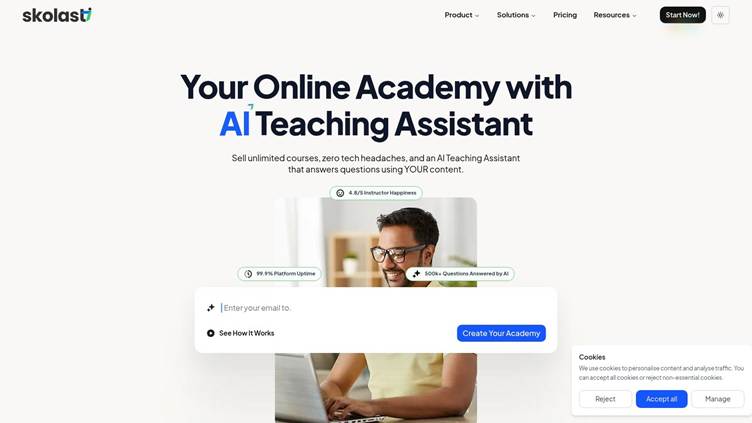
Skolasti emerges as a powerful, all-in-one solution for course creators seeking to build a premium, white-label online academy with intelligent automation. It's meticulously designed for edupreneurs, coaches, and organizations that prioritise brand ownership, intellectual property protection, and scalable student support. The platform uniquely combines robust course-building features with a groundbreaking AI Teaching Assistant, making it one of the best platforms to sell online courses for those who want to teach smarter, not just harder.
The standout feature is its AI Teaching Assistant, which is trained exclusively on your proprietary course content. This AI Coach operates 24/7, instantly answering student questions with information drawn directly from your videos, documents, and other materials. This dramatically reduces instructor response times (users report saving up to 15 hours per week) and slashes support tickets, allowing you to focus on creating high-value content instead of answering repetitive queries. This targeted AI support improves learner satisfaction and boosts engagement, directly contributing to higher completion rates.
Key Strengths & Use Cases
Skolasti provides a complete toolkit for building and scaling a sophisticated learning business. The platform supports diverse teaching models, including self-paced, live cohort-based, and blended learning programs.
Total Brand Control: Full white-label capabilities mean your brand is always front and Centre. You can customize themes, domains, and certificates, ensuring a seamless and professional user experience that builds brand loyalty.
Enterprise-Grade Security: For creators concerned about protecting their valuable content, Skolasti offers enterprise-grade DRM, dynamic watermarking, domain restrictions, and granular access controls to prevent unauthorized sharing and piracy.
Built for Engagement & Growth: Integrated gamification, quizzes, assignments, and detailed analytics provide deep insights into learner behavior. These tools empower you to identify what drives success and optimize your courses for better outcomes, a critical step explored in many online course tips.
Pricing & Considerations
Skolasti’s pricing is structured per coach, making it accessible for solo creators while scaling for larger teams.
Basic: $49/coach per month
Pro: $69/coach per month
Growth: $149/coach per month
A generous 30-day free trial is available for the Pro and Growth plans without requiring a credit card. While the per-coach model can become costly for very large teams, it ensures that pricing scales directly with your teaching capacity. It’s also important to note that the AI’s effectiveness is directly tied to how well your content is organized; a well-structured course will yield the most accurate and helpful AI responses.
Feature | Skolasti |
Best For | Creators, coaches, and organizations wanting to scale with AI-powered support. |
Standout Feature | AI Teaching Assistant trained on your own content. |
Content Protection | Enterprise-grade DRM, watermarking, domain restrictions. |
White-Labelling | Yes, full custom branding and domain mapping. |
Pricing Model | Per-coach subscription tiers. |
Free Trial | 30 days for Pro & Growth plans. |
Learn more at Skolasti.com
2. Teachable
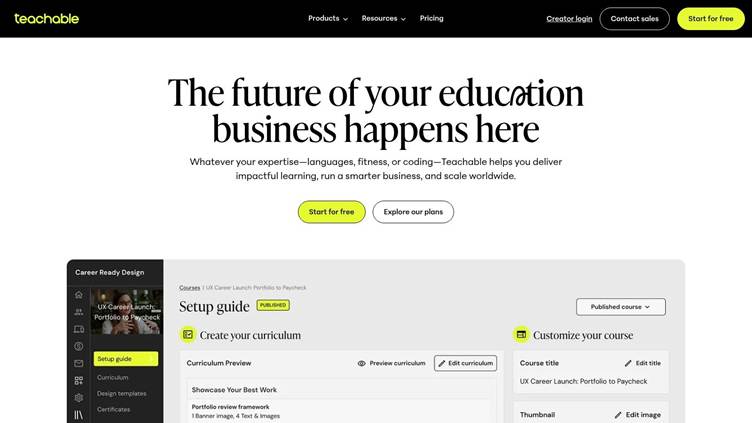
Teachable is a powerful all-in-one hosted platform, making it one of the best platforms to sell online courses for solo creators and small businesses. It simplifies the entire process, from creation to sales, by bundling essential features like a course builder, payment processing, and marketing tools into a single, user-friendly interface. Its focus on providing a seamless experience for both the creator and the student sets it apart.
The platform includes AI-assisted tools to help you outline and generate course content, which can significantly speed up your development process. Additionally, it offers built-in checkout and handles complex tax calculations, relieving a major administrative burden. For creators looking to incentivize others to promote their work, Teachable provides a native affiliate program.
Key Features & Considerations
Teachable’s pricing structure is tiered, starting with a Free plan (10% transaction fee), a Basic plan at ₹2,499/month (5% fee), and Pro and Business plans with 0% transaction fees when using their native payment gateway, Teachable Pay. This transparent model allows creators to scale their business effectively.
Best For: Solo creators, coaches, and small businesses wanting an integrated solution without needing deep technical expertise.
Pros: Clear plan tiers, includes completion certificates and course translations on paid plans, and offers 0% transaction fees on higher tiers (via Teachable Pay).
Cons: The Basic plan's 5% transaction fee can be a drawback for those starting out. Deeper customization and advanced automation features are reserved for the more expensive plans.
Website: https://www.teachable.com
Practical Tip: When starting, leverage Teachable's built-in sales tools like order bumps, upsells, and payment plans directly within the checkout process to maximize your average order value from day one. This is a simple yet effective way to boost revenue without increasing marketing spend.
3. Thinkific
Thinkific is a comprehensive hosted platform designed for creators and businesses that prioritise a robust learning experience and want to avoid platform transaction fees. It offers a powerful combination of course creation, community management, and e-commerce tools, making it one of the best platforms to sell online courses for those scaling their educational business. The platform empowers users to build a complete learning hub with courses, memberships, and digital product bundles.
A key differentiator for Thinkific is its commitment to giving creators more control over their revenue. It charges zero platform transaction fees on all paid plans, which is a significant advantage for businesses with growing sales volume. The platform also offers advanced course-building features like assignments, quizzes, and completion certificates, alongside options for private or hidden courses, which are ideal for corporate training or exclusive content offerings.
Key Features & Considerations
Thinkific’s pricing begins with a Free plan to test the core features. Paid plans like Basic, Start, and Grow offer progressively advanced features, such as unlimited courses, memberships, and priority support. An optional Branded Mobile App add-on allows creators to provide a native mobile experience for their students on iOS and Android.
Best For: Edupreneurs, small to medium-sized businesses, and creators wanting to build a scalable learning community without incurring platform transaction fees.
Pros: 0% transaction fees on all paid plans, strong course compliance and student engagement tools, and a good mid-market feature set for selling memberships and subscriptions.
Cons: Advanced features like the branded mobile app are add-ons, and some advanced commerce options are reserved for higher-tier plans. Third-party gateway fees still apply.
Website: https://www.thinkific.com
Practical Tip: Use Thinkific’s ‘Groups’ feature to sell bulk course enrolments to corporate clients or organizations. You can assign a Group Analyst to track student progress, making it a powerful B2B sales tool that adds a valuable revenue stream beyond individual course sales.
4. Kajabi
Kajabi positions itself as a premium, all-in-one platform for established knowledge entrepreneurs who want to run their entire business from a single dashboard. It goes beyond simple course hosting, integrating a powerful website builder, sophisticated marketing automation, email campaigns, sales funnels, and community features. This unified approach eliminates the need for multiple third-party tools, making it one of the best platforms to sell online courses for those seeking a comprehensive, integrated solution.
The platform is designed to handle every aspect of your online business, from lead generation with its landing page builder to post-purchase engagement via its community and automation tools. Features like cohort courses, a branded mobile app on higher tiers, and generous product limits allow your business to scale significantly without outgrowing the ecosystem. Kajabi Payments simplifies transactions, although it's important to note its specific gateway requirements.

Key Features & Considerations
Kajabi’s pricing reflects its all-in-one nature, starting with the Basic plan at $149/month, Growth at $199/month, and Pro at $399/month when paid annually. While there are no transaction fees, an additional fee applies if you opt out of Kajabi Payments. The plans differ primarily by the number of products, funnels, contacts, and active customers you can manage.
Best For: Serious course creators, established coaches, and knowledge-based businesses looking for a single, powerful platform to manage marketing, sales, and delivery.
Pros: Deep marketing automation with native websites and funnels, scales product and contact limits effectively across tiers, and includes a branded mobile app on the Pro plan.
Cons: Higher entry price compared to many creator-focused tools. An extra fee is charged if not using Kajabi Payments, which currently does not support PayPal.
Website: https://www.kajabi.com
Practical Tip: Use Kajabi's "Pipelines" (pre-built marketing funnels) to quickly launch your marketing campaigns. Instead of building from scratch, select a proven template for a product launch or lead magnet, customize it with your content, and activate it to start generating leads and sales efficiently.
5. LearnWorlds
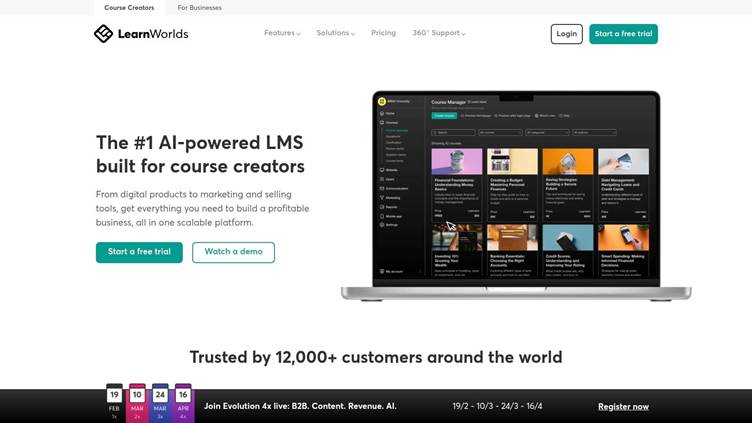
LearnWorlds is a feature-rich and powerful platform designed for creators who want to deliver highly interactive and engaging learning experiences. It excels at providing robust tools that go beyond simple video hosting, making it one of the best platforms to sell online courses for those focused on student interaction and assessment. The platform is particularly strong for creating dynamic content, running cohort-based courses, and managing corporate training programs.
Its standout feature is the interactive video player, which allows you to add quizzes, buttons, and other elements directly into your videos to keep learners engaged. LearnWorlds also supports SCORM and HTML5 content, catering to professional instructional designers. Combined with a powerful assessment engine and the ability to build a thriving community, it provides a comprehensive learning ecosystem.
Key Features & Considerations
LearnWorlds' pricing begins with a Starter plan at $29/month, which includes a $5 fee per course sale. The Pro Trainer ($99/month) and Learning Centre ($299/month) plans remove transaction fees and unlock more advanced features like subscriptions, affiliate management, and full white-label options. This structure is designed to support creators as their business scales.
Best For: Professional trainers, corporate educators, and established course creators who require advanced features like SCORM compliance, interactive video, and in-depth assessments.
Pros: Exceptional learning experience tools, including an advanced assessment engine and interactive video. Supports a wide range of content types and offers broad integration capabilities.
Cons: The starter plan's $5 per-course fee can be costly for low-priced courses. Key features like the full white-label mobile app are reserved for expensive higher-tier plans.
Website: https://www.learnworlds.com
Practical Tip: Use the interactive video editor to create non-linear learning paths. By adding clickable buttons within a video, you can guide students to different content based on their answers or interests, creating a personalized and more effective learning journey.
6. Udemy
Udemy operates differently from all-in-one platforms by being a large, consumer-facing marketplace. Instead of building your own branded school, you list courses on their site, gaining access to a massive existing student base. This makes it one of the best platforms to sell online courses for instructors prioritizing reach and discoverability over brand control and higher revenue margins. The platform handles the marketing, sales, and hosting, allowing you to focus purely on creating high-quality content.
The core trade-off with Udemy is control versus visibility. While you get your course in front of millions of potential learners, you give up significant control over pricing, as Udemy frequently runs site-wide promotional campaigns. The revenue share model is also distinct; you earn a high percentage (97%) from sales made through your own referral links or coupons but a much lower share (37%) for sales driven by Udemy's marketing efforts.
Key Features & Considerations
Publishing a course on Udemy is free, making it a zero-risk entry point for new creators. Payouts are made monthly via PayPal or Payoneer after a standard 30-day refund period. Instructors can also be included in subscription programs like Udemy Business, which offers an evolving revenue share based on student engagement.
Best For: New instructors looking to validate a course idea, build a reputation, and reach a wide audience without initial marketing investment.
Pros: Massive built-in audience and powerful marketing engine, no upfront hosting or publishing fees, and a simple way to get started.
Cons: Low revenue share on organic sales, limited control over pricing and branding, and direct communication with students is restricted.
Website: https://www.udemy.com
Practical Tip: Use your high-revenue-share instructor coupons strategically. Promote these links heavily on your own social media, blog, or email list to drive traffic you control, ensuring you maximize your earnings for every sale you generate yourself. This balances the lower margin from Udemy's organic sales.
7. Podia
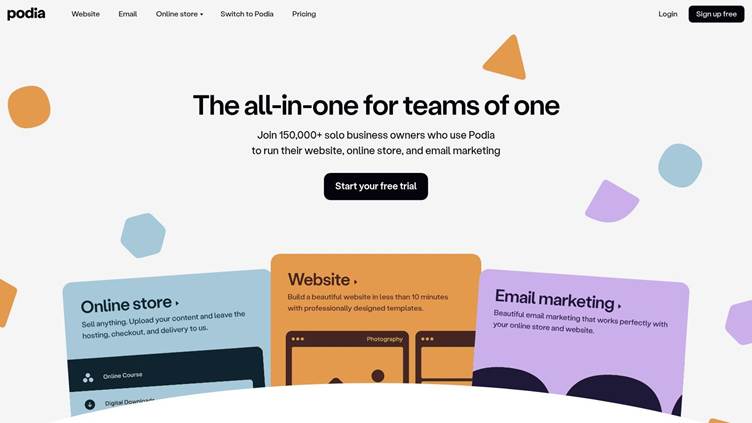
Podia is a simple, creator-friendly all-in-one platform designed for those who want to launch their digital business quickly. It excels at providing a cohesive ecosystem where your website, online courses, digital downloads, community, and email marketing are all managed from one dashboard. This unified approach makes it one of the best platforms to sell online courses for creators who value simplicity and speed over complex customization.
The platform streamlines the process of building a digital storefront, allowing you to sell courses, coaching sessions, webinars, and memberships without needing to integrate multiple tools. Its built-in email marketing and landing page features mean you can manage your entire sales funnel from a single login, which is a significant advantage for solo entrepreneurs and small teams wanting to avoid technical headaches.
Key Features & Considerations
Podia offers a free plan with an 8% transaction fee, making it accessible to start with. Paid plans like Mover and Shaker remove this fee and unlock more advanced features. The platform supports both Stripe and PayPal, giving your customers flexible payment options, and offers a 30-day trial to test out its premium features.
Best For: Creators and solo entrepreneurs who need a simple, fast-to-launch platform that combines website, products, community, and email marketing.
Pros: Extremely fast setup with a cohesive user experience, offers a free plan and a generous 30-day trial to evaluate paid features.
Cons: The lower-tier plan includes a notable transaction fee. Advanced functionality like affiliates and embedded checkouts are reserved for higher-priced plans.
Website: https://www.podia.com
Practical Tip: Use Podia's built-in community feature to create a dedicated space for your students. This can increase engagement, provide added value to your course, and build a loyal audience that is more likely to purchase future products or memberships from you.
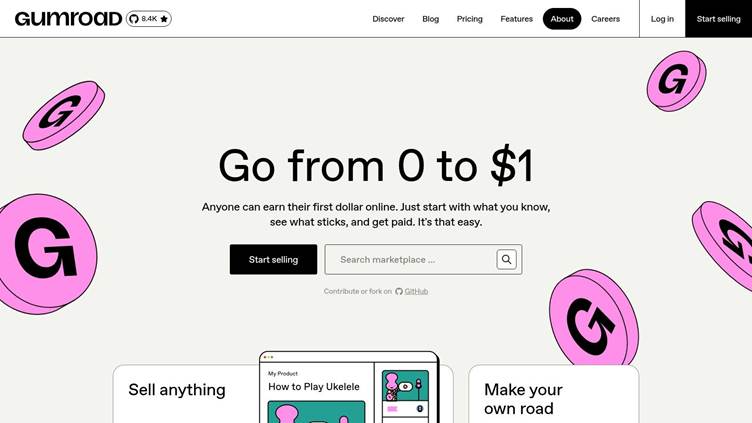
8. Gumroad
Gumroad is a streamlined and creator-friendly platform designed for selling digital products directly to an audience. While not a traditional learning management system (LMS), it has become one of the best platforms to sell online courses for creators seeking simplicity and speed. It allows you to package videos, PDFs, and other files as a "course" and sell it through a simple link or a minimalist storefront, making it perfect for validating a course idea without committing to a monthly subscription.
The platform's main appeal is its accessibility and its role as a merchant-of-record, which means it handles complex global sales tax and VAT/GST compliance on your behalf. This significantly lowers the administrative barrier for individual creators selling internationally. You can get a product live in minutes, making it an excellent choice for a quick launch or for supplementing your main offerings.
Key Features & Considerations
Gumroad operates on a simple transaction-based pricing model with no monthly fees. It charges a flat 10% fee per sale, which decreases with lifetime earnings. This straightforward approach is ideal for those who prefer to avoid recurring costs. Additionally, sales driven by Gumroad's "Discover" marketplace feature incur an additional 30% fee, but this is an optional channel for new customer acquisition.
Best For: Creators, artists, and educators wanting a fast, no-frills way to sell simple courses or digital downloads without a monthly fee.
Pros: Zero monthly platform cost makes it risk-free to start, very quick to launch a product, and global tax handling simplifies international sales compliance.
Cons: The percentage-based fee can become expensive at higher sales volumes. It lacks advanced LMS features like quizzes, certificates, and student progress tracking.
Website: https://www.gumroad.com
Practical Tip: Use Gumroad to test the market for a new course idea. You can quickly create a "presale" product page to gauge interest and collect payments before investing time and resources into building the full course content. This is a low-risk way to validate demand.
9. Payhip
Payhip is an e-commerce platform designed for creators selling digital products, including online courses, memberships, and coaching. It functions as a versatile storefront and checkout system, positioning itself as an excellent alternative for creators who prioritize control over their branding and want a simple, scalable pricing model. Unlike dedicated learning management systems, Payhip focuses on providing the essential tools to sell and deliver content without overwhelming complexity.
The platform's strength lies in its accessibility and transparency. It handles critical back-end tasks like EU/UK VAT collection and remittance, which is a significant advantage for international sellers. It also integrates core marketing features like an affiliate program, coupons, and upsells directly into its system, making it one of the best platforms to sell online courses for those who need powerful sales tools without a steep learning curve or high monthly costs.
Key Features & Considerations
Payhip’s pricing is designed to grow with your business. It offers a Free plan with a 5% transaction fee, a Plus plan at $29/month with a 2% fee, and a Pro plan at $99/month with 0% transaction fees. Crucially, all core features are available on every plan, so you aren't forced to upgrade to access essential sales functionality. Payments are processed via Stripe or PayPal, with instant payouts.
Best For: Creators, bloggers, and entrepreneurs who already have an audience and need a straightforward, low-cost way to sell digital products and courses.
Pros: Very flexible fee model that scales with sales volume, all features are available on every plan, and payouts are instant.
Cons: Course delivery features are simpler compared to full LMS platforms. There's no marketplace, so creators are entirely responsible for driving their own traffic.
Website: https://www.payhip.com
Practical Tip: Use Payhip’s “Social Discounts” feature to encourage sharing. You can offer customers a unique discount if they share your course on platforms like X (formerly Twitter) or Facebook, turning your buyers into an organic marketing force and expanding your reach with minimal effort.
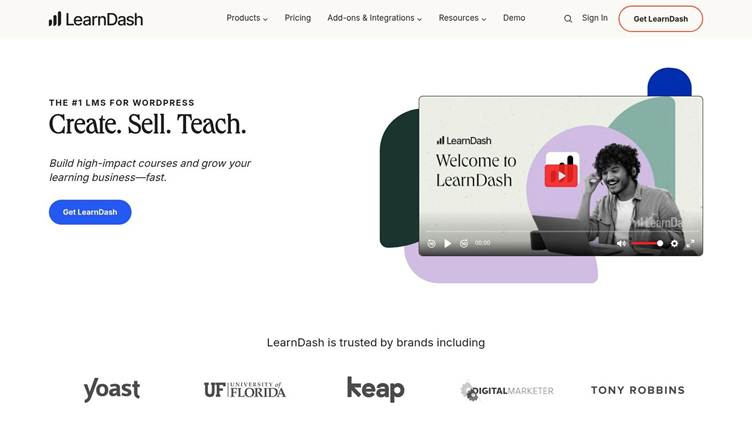
10. LearnDash
LearnDash stands out as a premium WordPress Learning Management System (LMS) plugin, positioning itself as one of the best platforms to sell online courses for those who value complete control and ownership. Rather than a hosted all-in-one solution, it integrates directly into your self-hosted WordPress site, giving you unparalleled flexibility to customize the entire learning experience. This approach is ideal for creators who want to build a unique brand identity and avoid platform-imposed limitations.
For those less comfortable with the technical aspects of self-hosting, LearnDash also offers 'Stellar' sites, a hosted solution that bundles the plugin with a managed WordPress environment, including security and performance optimizations. This hybrid offering provides a powerful middle ground, combining the customization of WordPress with the convenience of a managed service. Its drag-and-drop course builder, AI-powered content tools, and robust monetization options make it a comprehensive choice.
Key Features & Considerations
LearnDash operates on an annual license model, starting at $199/year for a single site, with no transaction fees on your sales (standard payment processor fees apply). This model can be more cost-effective in the long run compared to platforms charging monthly fees and a percentage of revenue. It supports one-time sales, subscriptions, and course bundles natively, integrating with Stripe and PayPal.
Best For: WordPress users, educational institutions, and entrepreneurs who need deep customization and full data ownership.
Pros: Complete control over branding and functionality through the WordPress ecosystem, extensive integration possibilities with thousands of plugins, and a scalable, no-commission pricing model.
Cons: The self-hosted version requires you to manage your own hosting, security, and plugin updates. The initial setup can be more complex, and costs can increase with premium add-ons and hosting fees.
Website: https://www.learndash.com
Practical Tip: To enhance student engagement, use LearnDash's "drip-feed" content feature. Schedule your lessons to be released over time (e.g., one module per week) to prevent students from feeling overwhelmed and to keep them coming back to your course platform consistently.
11. Graphy (by Unacademy)
Graphy, part of the Unacademy family, has established itself as one of the best platforms to sell online courses, especially for creators in India and expanding globally. It provides a comprehensive suite of tools for building courses, managing communities, and selling digital products. Its standout feature is the strong emphasis on mobile learning, offering creators the ability to launch their own branded Android and iOS applications on higher-tier plans.
The platform is designed to be an all-in-one solution, integrating marketing automation, an AI-powered website builder, and even AI sales and support agents to streamline operations. It supports India-friendly payment gateways, making it highly accessible for the local market, and offers 0% transaction fees on all its plans, a significant competitive advantage for creators looking to maximise their revenue from the start.

Key Features & Considerations
Graphy’s pricing tiers are structured to scale with your audience, with contact limits and live class minutes increasing on higher plans. While all plans offer unlimited courses and 0% transaction fees, advanced functionalities like white-labelling, branded mobile apps, DRM protection, and priority support are reserved for the more expensive Rise and Scale tiers, making them essential for established businesses.
Best For: Indian creators, influencers, and educators looking for a mobile-first platform with robust local payment support and competitive pricing.
Pros: Branded mobile app capabilities, 0% transaction fees on all plans, and excellent support for Indian payment gateways.
Cons: Key features like removing Graphy branding, accessing API/SSO, and getting priority support are gated behind the higher-cost plans.
Website: https://www.graphy.com
Practical Tip: If your target audience is primarily mobile-based, consider starting with the Rise plan. The investment in a branded app can significantly improve student engagement, accessibility, and brand loyalty, creating a more professional and seamless learning experience that sets you apart from competitors.
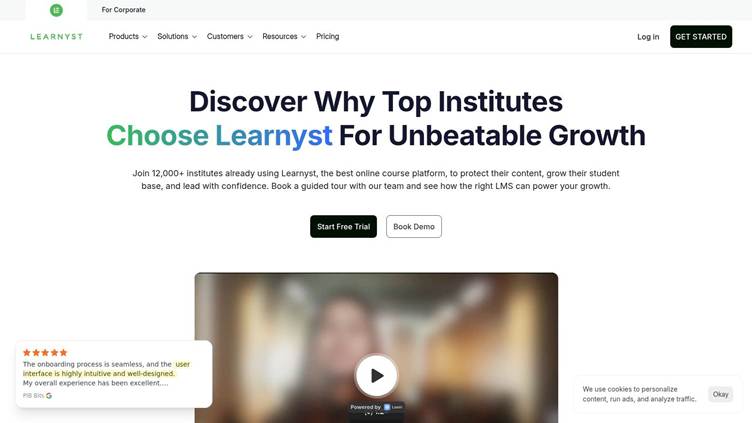
12. Learnyst
Learnyst is a white-label LMS designed specifically for the Indian market, empowering coaching institutes and established academies to launch their own branded online platforms. It stands out by focusing on robust content security with DRM protection and features tailored for competitive exam preparation, such as test series and cohort-based learning. This makes it one of the best platforms to sell online courses for institutions that require strong IP protection and student management.
The platform allows you to create a completely branded experience, from a custom domain to optional Android and iOS mobile apps, ensuring your brand remains front and centre. It integrates seamlessly with Indian payment gateways and supports UPI Autopay, simplifying transactions for a local audience. This focus on regional needs, combined with scalable infrastructure, makes it a powerful choice for educators transitioning from offline to online models.
Key Features & Considerations
Learnyst offers transparent pricing in INR and USD, with all paid plans including 0% transaction fees, a significant advantage for maximizing revenue. Plans are structured to scale, offering more sub-admin seats and advanced features like SCORM/xAPI support and dedicated apps on higher tiers.
Best For: Indian coaching centres, test-prep institutes, and academies needing strong content protection and branded mobile apps.
Pros: India-centric features like UPI Autopay and INR pricing, excellent DRM content protection, and useful cohort/batch features for structured learning.
Cons: The user interface can have a steeper learning curve than simpler creator platforms. Branded apps typically require a higher-tier plan and an annual commitment.
Website: https://www.learnyst.com
Practical Tip: Utilise Learnyst's cohort or batch feature to manage different student groups effectively. You can create separate batches for different courses or intake periods, assign specific instructors, and track progress at a group level, which is ideal for recreating a traditional classroom structure online.
Top 12 Platforms to Sell Online Courses — Comparison
Platform | Core features | AI & support / Quality ★ | Price & value 💰 | Target audience 👥 | Unique selling points ✨ |
Skolasti 🏆 | White‑label academy; self‑paced, cohort & blended; DRM & access controls | ★★★★★ — AI Teaching Assistant (24/7, context‑aware); ~67% faster replies; 500k+ Qs answered | 💰 Per‑coach: Basic $49 / Pro $69 / Growth $149; 30‑day Pro/Growth trial | 👥 Creators, coaches, tutors, fitness & edupreneurs | ✨ AI uses YOUR content; enterprise‑grade content protection; advanced analytics |
Teachable | Hosted courses, checkout, certificates, tax handling | ★★★★ — AI‑assisted creation; mobile apps | 💰 Starter has 7.5% fee; Builder+ removes transaction fees (Teachable Pay) | 👥 Solo creators & small businesses | ✨ Built‑in checkout/tax handling; affiliate & upsell tools |
Thinkific | Hosted LMS: quizzes, assignments, certificates, mobile app add‑on | ★★★★ — Strong course/compliance tools | 💰 No platform transaction fees (processing fees apply) | 👥 Creators & mid‑market businesses | ✨ Robust course tools; branded mobile app option |
Kajabi | All‑in‑one: websites, funnels, email, automations, cohorts | ★★★★ — Deep marketing automation & funnels | 💰 Higher entry price; plans scale with features | 👥 Knowledge businesses wanting marketing stack | ✨ Native funnel/website builder + powerful automations |
LearnWorlds | Interactive video, quizzes, SCORM, assessments | ★★★★ — AI subtitles; strong assessment UX | 💰 Starter charges $5/enrollment; higher tiers remove fees | 👥 Instructional designers & interactive‑content creators | ✨ Interactive video with in‑video quizzes & watermarks |
Udemy | Large marketplace, built‑in discoverability & promotions | ★★★ — Marketplace support; variable instructor share | 💰 No hosting fee to publish; revenue share varies | 👥 Instructors seeking reach/validation | ✨ Massive built‑in student traffic & promo engine |
Podia | Simple site + courses + email, webinars, memberships | ★★★★ — Easy UX; built‑in email & landing pages | 💰 Free 30‑day trial; lower tiers may have fees | 👥 Creators wanting fast, cohesive launches | ✨ All‑in‑one site + email + products for quick setup |
Gumroad | Lightweight storefronts, direct links, digital delivery | ★★★ — No monthly cost; flat transaction fees | 💰 No monthly fee; percentage + fixed fee per sale | 👥 Creators validating products without monthly costs | ✨ Zero monthly platform cost; instant storefront launch |
Payhip | Storefront + checkout; transparent tiered fees | ★★★★ — Simple delivery; instant payouts | 💰 Free (5%) / Plus $29 (2%) / Pro $99 (0%) | 👥 Creators scaling sales and wanting lower fees | ✨ Scalable fee model; built‑in coupons, affiliates, instant payouts |
LearnDash | Premium WordPress LMS plugin; drag‑drop builder, add‑ons | ★★★★ — Full ownership & deep customization | 💰 Annual license; extra for hosting/add‑ons | 👥 WordPress‑savvy creators & enterprises | ✨ Full WordPress control + optional hosted 'Stellar' sites |
Graphy (Unacademy) | Creator stack with branded apps, AI agents, live classes | ★★★★ — AI sales/support agents; app focus | 💰 Competitive pricing; 0% txn on some plans | 👥 India & global creators needing app & payments support | ✨ India‑friendly payments, branded Android/iOS apps |
Learnyst | White‑label LMS for Indian academies; DRM & cohorts | ★★★ — Cohorts, UPI Autopay, analytics | 💰 0% transaction fees; INR & USD pricing | 👥 Indian coaching institutes & exam‑prep academies | ✨ UPI Autopay, DRM protection, cohort/batch features |
Making Your Final Choice and Launching Your Academy
We have navigated the diverse landscape of the best platforms to sell online courses, from sophisticated all-in-one solutions to specialized plugins and open marketplaces. The journey from initial idea to a thriving online academy is unique for every creator, and the platform you choose is your foundational partner in that journey. There is no single "best" platform, only the one that is best for you.
Your final decision hinges on a clear understanding of your present needs and future aspirations. The ideal choice is not just about features; it’s about alignment. It’s about finding a technological partner that mirrors your business philosophy, supports your teaching style, and provides a runway for your growth.
A Framework for Your Final Decision
To move from analysis to action, let's crystallise the decision-making process. Re-evaluate the platforms we’ve covered through the lens of these core strategic pillars:
Business Model Alignment: Are you building a premium, brand-centric academy? A solution like Skolasti, Kajabi, or Thinkific offers deep customization and brand control. Are you focused on selling a high volume of lower-priced courses? A marketplace like Udemy might offer the initial audience you need. For creators selling digital products alongside courses, Podia or Gumroad present a simplified, unified storefront.
Technical Proficiency and Control: Your comfort with technology is a critical factor. WordPress experts will find LearnDash offers unparalleled flexibility. Conversely, creators who want to avoid technical overhead entirely should lean towards fully hosted platforms like Teachable or Payhip, which manage all the backend infrastructure for you.
Student Experience and Engagement: How do you want your students to learn? For a highly interactive, community-driven experience, platforms like LearnWorlds and Graphy excel with their social learning features. If you are pioneering a new way of teaching with AI-powered support, Skolasti’s innovative features provide a distinct advantage in delivering personalized student assistance at scale.
Scalability and Long-Term Vision: Consider where you want your business to be in three to five years. If your plan involves complex sales funnels, advanced marketing automation, and a full suite of products, an all-in-one platform is a wise investment. If you are starting lean and prefer to integrate best-in-class tools as you grow, a more modular platform may be more suitable.
Your Actionable Next Steps
Information without action is just noise. It’s time to take decisive steps towards launching your course.
Short-list Your Top 3: Based on the pillars above, select two or three platforms that seem like the best fit. Don't overthink it; go with your gut instinct based on our detailed comparisons.
Activate Free Trials: This is non-negotiable. Sign up for the free trials or free plans for each of your short-listed options. Real-world experience trumps any review.
Run a "Student Experience" Test: Upload one sample video and a short PDF. Create a simple quiz. Then, sign up as a "test student" and go through the entire process. How does it feel? Is the interface intuitive? Is the video player smooth? This simple test reveals more than a feature list ever could.
Evaluate the Creator Dashboard: Spend time in the admin area. Is it easy to find what you need? How straightforward is it to build a new lesson or view analytics? The platform should empower you, not frustrate you.
Remember, the platform is the vehicle, but you are the driver. Your success ultimately depends on the quality of your content and your ability to connect with your audience. Beyond the technology, focus on nurturing your community. A crucial part of this is understanding how to build an email list that actually grows, as this will be your most valuable marketing asset, independent of any platform you choose.
Your choice of platform is a significant one, but it is also a starting point. The digital education space is dynamic, and the perfect platform is one that not only serves you today but also has the vision and flexibility to support you as you evolve. Trust your research, test your top contenders, and then commit. The world is waiting for what you have to teach.
Ready to build an online academy that combines cutting-edge technology with an exceptional student experience? Skolasti leverages AI to help you create, market, and scale your courses with powerful automation and unparalleled support. Explore how our intelligent platform can become your partner in growth by visiting Skolasti to start your free trial today.
The online education market is booming, presenting a massive opportunity for experts like you to share your knowledge and build a sustainable business. However, selecting the right digital foundation is crucial. The platform you choose impacts everything from student engagement and brand perception to your revenue and intellectual property protection. This guide moves beyond surface-level feature lists to provide a deep, practical comparison of the best platforms to sell online courses. We'll analyze their core strengths, hidden limitations, and ideal use cases, helping you identify the perfect partner for your teaching goals.
This resource is designed for a diverse range of creators: from a solo coach launching their first course to an established institution scaling its academy. Understanding your technical foundation is just one part of the equation. As you choose your digital classroom, understanding the best practices for online teaching is also fundamental to creating impactful courses that keep students coming back for more.
Our goal is to cut through the marketing noise and deliver straightforward, actionable insights. We have meticulously evaluated each option, from all-in-one solutions like Kajabi and Skolasti to specialized WordPress plugins like LearnDash and creator-friendly storefronts like Gumroad. Each entry includes detailed analysis, clear pros and cons, pricing breakdowns, and direct links with screenshots to give you a genuine feel for the user experience. By the end of this guide, you will have the clarity needed to confidently select a platform that not only hosts your content but also helps your online teaching business thrive.
1. Skolasti
Skolasti emerges as a powerful, all-in-one solution for course creators seeking to build a premium, white-label online academy with intelligent automation. It's meticulously designed for edupreneurs, coaches, and organizations that prioritise brand ownership, intellectual property protection, and scalable student support. The platform uniquely combines robust course-building features with a groundbreaking AI Teaching Assistant, making it one of the best platforms to sell online courses for those who want to teach smarter, not just harder.
The standout feature is its AI Teaching Assistant, which is trained exclusively on your proprietary course content. This AI Coach operates 24/7, instantly answering student questions with information drawn directly from your videos, documents, and other materials. This dramatically reduces instructor response times (users report saving up to 15 hours per week) and slashes support tickets, allowing you to focus on creating high-value content instead of answering repetitive queries. This targeted AI support improves learner satisfaction and boosts engagement, directly contributing to higher completion rates.
Key Strengths & Use Cases
Skolasti provides a complete toolkit for building and scaling a sophisticated learning business. The platform supports diverse teaching models, including self-paced, live cohort-based, and blended learning programs.
Total Brand Control: Full white-label capabilities mean your brand is always front and Centre. You can customize themes, domains, and certificates, ensuring a seamless and professional user experience that builds brand loyalty.
Enterprise-Grade Security: For creators concerned about protecting their valuable content, Skolasti offers enterprise-grade DRM, dynamic watermarking, domain restrictions, and granular access controls to prevent unauthorized sharing and piracy.
Built for Engagement & Growth: Integrated gamification, quizzes, assignments, and detailed analytics provide deep insights into learner behavior. These tools empower you to identify what drives success and optimize your courses for better outcomes, a critical step explored in many online course tips.
Pricing & Considerations
Skolasti’s pricing is structured per coach, making it accessible for solo creators while scaling for larger teams.
Basic: $49/coach per month
Pro: $69/coach per month
Growth: $149/coach per month
A generous 30-day free trial is available for the Pro and Growth plans without requiring a credit card. While the per-coach model can become costly for very large teams, it ensures that pricing scales directly with your teaching capacity. It’s also important to note that the AI’s effectiveness is directly tied to how well your content is organized; a well-structured course will yield the most accurate and helpful AI responses.
Feature | Skolasti |
Best For | Creators, coaches, and organizations wanting to scale with AI-powered support. |
Standout Feature | AI Teaching Assistant trained on your own content. |
Content Protection | Enterprise-grade DRM, watermarking, domain restrictions. |
White-Labelling | Yes, full custom branding and domain mapping. |
Pricing Model | Per-coach subscription tiers. |
Free Trial | 30 days for Pro & Growth plans. |
Learn more at Skolasti.com
2. Teachable
Teachable is a powerful all-in-one hosted platform, making it one of the best platforms to sell online courses for solo creators and small businesses. It simplifies the entire process, from creation to sales, by bundling essential features like a course builder, payment processing, and marketing tools into a single, user-friendly interface. Its focus on providing a seamless experience for both the creator and the student sets it apart.
The platform includes AI-assisted tools to help you outline and generate course content, which can significantly speed up your development process. Additionally, it offers built-in checkout and handles complex tax calculations, relieving a major administrative burden. For creators looking to incentivize others to promote their work, Teachable provides a native affiliate program.
Key Features & Considerations
Teachable’s pricing structure is tiered, starting with a Free plan (10% transaction fee), a Basic plan at ₹2,499/month (5% fee), and Pro and Business plans with 0% transaction fees when using their native payment gateway, Teachable Pay. This transparent model allows creators to scale their business effectively.
Best For: Solo creators, coaches, and small businesses wanting an integrated solution without needing deep technical expertise.
Pros: Clear plan tiers, includes completion certificates and course translations on paid plans, and offers 0% transaction fees on higher tiers (via Teachable Pay).
Cons: The Basic plan's 5% transaction fee can be a drawback for those starting out. Deeper customization and advanced automation features are reserved for the more expensive plans.
Website: https://www.teachable.com
Practical Tip: When starting, leverage Teachable's built-in sales tools like order bumps, upsells, and payment plans directly within the checkout process to maximize your average order value from day one. This is a simple yet effective way to boost revenue without increasing marketing spend.
3. Thinkific
Thinkific is a comprehensive hosted platform designed for creators and businesses that prioritise a robust learning experience and want to avoid platform transaction fees. It offers a powerful combination of course creation, community management, and e-commerce tools, making it one of the best platforms to sell online courses for those scaling their educational business. The platform empowers users to build a complete learning hub with courses, memberships, and digital product bundles.
A key differentiator for Thinkific is its commitment to giving creators more control over their revenue. It charges zero platform transaction fees on all paid plans, which is a significant advantage for businesses with growing sales volume. The platform also offers advanced course-building features like assignments, quizzes, and completion certificates, alongside options for private or hidden courses, which are ideal for corporate training or exclusive content offerings.
Key Features & Considerations
Thinkific’s pricing begins with a Free plan to test the core features. Paid plans like Basic, Start, and Grow offer progressively advanced features, such as unlimited courses, memberships, and priority support. An optional Branded Mobile App add-on allows creators to provide a native mobile experience for their students on iOS and Android.
Best For: Edupreneurs, small to medium-sized businesses, and creators wanting to build a scalable learning community without incurring platform transaction fees.
Pros: 0% transaction fees on all paid plans, strong course compliance and student engagement tools, and a good mid-market feature set for selling memberships and subscriptions.
Cons: Advanced features like the branded mobile app are add-ons, and some advanced commerce options are reserved for higher-tier plans. Third-party gateway fees still apply.
Website: https://www.thinkific.com
Practical Tip: Use Thinkific’s ‘Groups’ feature to sell bulk course enrolments to corporate clients or organizations. You can assign a Group Analyst to track student progress, making it a powerful B2B sales tool that adds a valuable revenue stream beyond individual course sales.
4. Kajabi
Kajabi positions itself as a premium, all-in-one platform for established knowledge entrepreneurs who want to run their entire business from a single dashboard. It goes beyond simple course hosting, integrating a powerful website builder, sophisticated marketing automation, email campaigns, sales funnels, and community features. This unified approach eliminates the need for multiple third-party tools, making it one of the best platforms to sell online courses for those seeking a comprehensive, integrated solution.
The platform is designed to handle every aspect of your online business, from lead generation with its landing page builder to post-purchase engagement via its community and automation tools. Features like cohort courses, a branded mobile app on higher tiers, and generous product limits allow your business to scale significantly without outgrowing the ecosystem. Kajabi Payments simplifies transactions, although it's important to note its specific gateway requirements.
Key Features & Considerations
Kajabi’s pricing reflects its all-in-one nature, starting with the Basic plan at $149/month, Growth at $199/month, and Pro at $399/month when paid annually. While there are no transaction fees, an additional fee applies if you opt out of Kajabi Payments. The plans differ primarily by the number of products, funnels, contacts, and active customers you can manage.
Best For: Serious course creators, established coaches, and knowledge-based businesses looking for a single, powerful platform to manage marketing, sales, and delivery.
Pros: Deep marketing automation with native websites and funnels, scales product and contact limits effectively across tiers, and includes a branded mobile app on the Pro plan.
Cons: Higher entry price compared to many creator-focused tools. An extra fee is charged if not using Kajabi Payments, which currently does not support PayPal.
Website: https://www.kajabi.com
Practical Tip: Use Kajabi's "Pipelines" (pre-built marketing funnels) to quickly launch your marketing campaigns. Instead of building from scratch, select a proven template for a product launch or lead magnet, customize it with your content, and activate it to start generating leads and sales efficiently.
5. LearnWorlds
LearnWorlds is a feature-rich and powerful platform designed for creators who want to deliver highly interactive and engaging learning experiences. It excels at providing robust tools that go beyond simple video hosting, making it one of the best platforms to sell online courses for those focused on student interaction and assessment. The platform is particularly strong for creating dynamic content, running cohort-based courses, and managing corporate training programs.
Its standout feature is the interactive video player, which allows you to add quizzes, buttons, and other elements directly into your videos to keep learners engaged. LearnWorlds also supports SCORM and HTML5 content, catering to professional instructional designers. Combined with a powerful assessment engine and the ability to build a thriving community, it provides a comprehensive learning ecosystem.
Key Features & Considerations
LearnWorlds' pricing begins with a Starter plan at $29/month, which includes a $5 fee per course sale. The Pro Trainer ($99/month) and Learning Centre ($299/month) plans remove transaction fees and unlock more advanced features like subscriptions, affiliate management, and full white-label options. This structure is designed to support creators as their business scales.
Best For: Professional trainers, corporate educators, and established course creators who require advanced features like SCORM compliance, interactive video, and in-depth assessments.
Pros: Exceptional learning experience tools, including an advanced assessment engine and interactive video. Supports a wide range of content types and offers broad integration capabilities.
Cons: The starter plan's $5 per-course fee can be costly for low-priced courses. Key features like the full white-label mobile app are reserved for expensive higher-tier plans.
Website: https://www.learnworlds.com
Practical Tip: Use the interactive video editor to create non-linear learning paths. By adding clickable buttons within a video, you can guide students to different content based on their answers or interests, creating a personalized and more effective learning journey.
6. Udemy
Udemy operates differently from all-in-one platforms by being a large, consumer-facing marketplace. Instead of building your own branded school, you list courses on their site, gaining access to a massive existing student base. This makes it one of the best platforms to sell online courses for instructors prioritizing reach and discoverability over brand control and higher revenue margins. The platform handles the marketing, sales, and hosting, allowing you to focus purely on creating high-quality content.
The core trade-off with Udemy is control versus visibility. While you get your course in front of millions of potential learners, you give up significant control over pricing, as Udemy frequently runs site-wide promotional campaigns. The revenue share model is also distinct; you earn a high percentage (97%) from sales made through your own referral links or coupons but a much lower share (37%) for sales driven by Udemy's marketing efforts.
Key Features & Considerations
Publishing a course on Udemy is free, making it a zero-risk entry point for new creators. Payouts are made monthly via PayPal or Payoneer after a standard 30-day refund period. Instructors can also be included in subscription programs like Udemy Business, which offers an evolving revenue share based on student engagement.
Best For: New instructors looking to validate a course idea, build a reputation, and reach a wide audience without initial marketing investment.
Pros: Massive built-in audience and powerful marketing engine, no upfront hosting or publishing fees, and a simple way to get started.
Cons: Low revenue share on organic sales, limited control over pricing and branding, and direct communication with students is restricted.
Website: https://www.udemy.com
Practical Tip: Use your high-revenue-share instructor coupons strategically. Promote these links heavily on your own social media, blog, or email list to drive traffic you control, ensuring you maximize your earnings for every sale you generate yourself. This balances the lower margin from Udemy's organic sales.
7. Podia
Podia is a simple, creator-friendly all-in-one platform designed for those who want to launch their digital business quickly. It excels at providing a cohesive ecosystem where your website, online courses, digital downloads, community, and email marketing are all managed from one dashboard. This unified approach makes it one of the best platforms to sell online courses for creators who value simplicity and speed over complex customization.
The platform streamlines the process of building a digital storefront, allowing you to sell courses, coaching sessions, webinars, and memberships without needing to integrate multiple tools. Its built-in email marketing and landing page features mean you can manage your entire sales funnel from a single login, which is a significant advantage for solo entrepreneurs and small teams wanting to avoid technical headaches.
Key Features & Considerations
Podia offers a free plan with an 8% transaction fee, making it accessible to start with. Paid plans like Mover and Shaker remove this fee and unlock more advanced features. The platform supports both Stripe and PayPal, giving your customers flexible payment options, and offers a 30-day trial to test out its premium features.
Best For: Creators and solo entrepreneurs who need a simple, fast-to-launch platform that combines website, products, community, and email marketing.
Pros: Extremely fast setup with a cohesive user experience, offers a free plan and a generous 30-day trial to evaluate paid features.
Cons: The lower-tier plan includes a notable transaction fee. Advanced functionality like affiliates and embedded checkouts are reserved for higher-priced plans.
Website: https://www.podia.com
Practical Tip: Use Podia's built-in community feature to create a dedicated space for your students. This can increase engagement, provide added value to your course, and build a loyal audience that is more likely to purchase future products or memberships from you.
8. Gumroad
Gumroad is a streamlined and creator-friendly platform designed for selling digital products directly to an audience. While not a traditional learning management system (LMS), it has become one of the best platforms to sell online courses for creators seeking simplicity and speed. It allows you to package videos, PDFs, and other files as a "course" and sell it through a simple link or a minimalist storefront, making it perfect for validating a course idea without committing to a monthly subscription.
The platform's main appeal is its accessibility and its role as a merchant-of-record, which means it handles complex global sales tax and VAT/GST compliance on your behalf. This significantly lowers the administrative barrier for individual creators selling internationally. You can get a product live in minutes, making it an excellent choice for a quick launch or for supplementing your main offerings.
Key Features & Considerations
Gumroad operates on a simple transaction-based pricing model with no monthly fees. It charges a flat 10% fee per sale, which decreases with lifetime earnings. This straightforward approach is ideal for those who prefer to avoid recurring costs. Additionally, sales driven by Gumroad's "Discover" marketplace feature incur an additional 30% fee, but this is an optional channel for new customer acquisition.
Best For: Creators, artists, and educators wanting a fast, no-frills way to sell simple courses or digital downloads without a monthly fee.
Pros: Zero monthly platform cost makes it risk-free to start, very quick to launch a product, and global tax handling simplifies international sales compliance.
Cons: The percentage-based fee can become expensive at higher sales volumes. It lacks advanced LMS features like quizzes, certificates, and student progress tracking.
Website: https://www.gumroad.com
Practical Tip: Use Gumroad to test the market for a new course idea. You can quickly create a "presale" product page to gauge interest and collect payments before investing time and resources into building the full course content. This is a low-risk way to validate demand.
9. Payhip
Payhip is an e-commerce platform designed for creators selling digital products, including online courses, memberships, and coaching. It functions as a versatile storefront and checkout system, positioning itself as an excellent alternative for creators who prioritize control over their branding and want a simple, scalable pricing model. Unlike dedicated learning management systems, Payhip focuses on providing the essential tools to sell and deliver content without overwhelming complexity.
The platform's strength lies in its accessibility and transparency. It handles critical back-end tasks like EU/UK VAT collection and remittance, which is a significant advantage for international sellers. It also integrates core marketing features like an affiliate program, coupons, and upsells directly into its system, making it one of the best platforms to sell online courses for those who need powerful sales tools without a steep learning curve or high monthly costs.
Key Features & Considerations
Payhip’s pricing is designed to grow with your business. It offers a Free plan with a 5% transaction fee, a Plus plan at $29/month with a 2% fee, and a Pro plan at $99/month with 0% transaction fees. Crucially, all core features are available on every plan, so you aren't forced to upgrade to access essential sales functionality. Payments are processed via Stripe or PayPal, with instant payouts.
Best For: Creators, bloggers, and entrepreneurs who already have an audience and need a straightforward, low-cost way to sell digital products and courses.
Pros: Very flexible fee model that scales with sales volume, all features are available on every plan, and payouts are instant.
Cons: Course delivery features are simpler compared to full LMS platforms. There's no marketplace, so creators are entirely responsible for driving their own traffic.
Website: https://www.payhip.com
Practical Tip: Use Payhip’s “Social Discounts” feature to encourage sharing. You can offer customers a unique discount if they share your course on platforms like X (formerly Twitter) or Facebook, turning your buyers into an organic marketing force and expanding your reach with minimal effort.
10. LearnDash
LearnDash stands out as a premium WordPress Learning Management System (LMS) plugin, positioning itself as one of the best platforms to sell online courses for those who value complete control and ownership. Rather than a hosted all-in-one solution, it integrates directly into your self-hosted WordPress site, giving you unparalleled flexibility to customize the entire learning experience. This approach is ideal for creators who want to build a unique brand identity and avoid platform-imposed limitations.
For those less comfortable with the technical aspects of self-hosting, LearnDash also offers 'Stellar' sites, a hosted solution that bundles the plugin with a managed WordPress environment, including security and performance optimizations. This hybrid offering provides a powerful middle ground, combining the customization of WordPress with the convenience of a managed service. Its drag-and-drop course builder, AI-powered content tools, and robust monetization options make it a comprehensive choice.
Key Features & Considerations
LearnDash operates on an annual license model, starting at $199/year for a single site, with no transaction fees on your sales (standard payment processor fees apply). This model can be more cost-effective in the long run compared to platforms charging monthly fees and a percentage of revenue. It supports one-time sales, subscriptions, and course bundles natively, integrating with Stripe and PayPal.
Best For: WordPress users, educational institutions, and entrepreneurs who need deep customization and full data ownership.
Pros: Complete control over branding and functionality through the WordPress ecosystem, extensive integration possibilities with thousands of plugins, and a scalable, no-commission pricing model.
Cons: The self-hosted version requires you to manage your own hosting, security, and plugin updates. The initial setup can be more complex, and costs can increase with premium add-ons and hosting fees.
Website: https://www.learndash.com
Practical Tip: To enhance student engagement, use LearnDash's "drip-feed" content feature. Schedule your lessons to be released over time (e.g., one module per week) to prevent students from feeling overwhelmed and to keep them coming back to your course platform consistently.
11. Graphy (by Unacademy)
Graphy, part of the Unacademy family, has established itself as one of the best platforms to sell online courses, especially for creators in India and expanding globally. It provides a comprehensive suite of tools for building courses, managing communities, and selling digital products. Its standout feature is the strong emphasis on mobile learning, offering creators the ability to launch their own branded Android and iOS applications on higher-tier plans.
The platform is designed to be an all-in-one solution, integrating marketing automation, an AI-powered website builder, and even AI sales and support agents to streamline operations. It supports India-friendly payment gateways, making it highly accessible for the local market, and offers 0% transaction fees on all its plans, a significant competitive advantage for creators looking to maximise their revenue from the start.
Key Features & Considerations
Graphy’s pricing tiers are structured to scale with your audience, with contact limits and live class minutes increasing on higher plans. While all plans offer unlimited courses and 0% transaction fees, advanced functionalities like white-labelling, branded mobile apps, DRM protection, and priority support are reserved for the more expensive Rise and Scale tiers, making them essential for established businesses.
Best For: Indian creators, influencers, and educators looking for a mobile-first platform with robust local payment support and competitive pricing.
Pros: Branded mobile app capabilities, 0% transaction fees on all plans, and excellent support for Indian payment gateways.
Cons: Key features like removing Graphy branding, accessing API/SSO, and getting priority support are gated behind the higher-cost plans.
Website: https://www.graphy.com
Practical Tip: If your target audience is primarily mobile-based, consider starting with the Rise plan. The investment in a branded app can significantly improve student engagement, accessibility, and brand loyalty, creating a more professional and seamless learning experience that sets you apart from competitors.
12. Learnyst
Learnyst is a white-label LMS designed specifically for the Indian market, empowering coaching institutes and established academies to launch their own branded online platforms. It stands out by focusing on robust content security with DRM protection and features tailored for competitive exam preparation, such as test series and cohort-based learning. This makes it one of the best platforms to sell online courses for institutions that require strong IP protection and student management.
The platform allows you to create a completely branded experience, from a custom domain to optional Android and iOS mobile apps, ensuring your brand remains front and centre. It integrates seamlessly with Indian payment gateways and supports UPI Autopay, simplifying transactions for a local audience. This focus on regional needs, combined with scalable infrastructure, makes it a powerful choice for educators transitioning from offline to online models.
Key Features & Considerations
Learnyst offers transparent pricing in INR and USD, with all paid plans including 0% transaction fees, a significant advantage for maximizing revenue. Plans are structured to scale, offering more sub-admin seats and advanced features like SCORM/xAPI support and dedicated apps on higher tiers.
Best For: Indian coaching centres, test-prep institutes, and academies needing strong content protection and branded mobile apps.
Pros: India-centric features like UPI Autopay and INR pricing, excellent DRM content protection, and useful cohort/batch features for structured learning.
Cons: The user interface can have a steeper learning curve than simpler creator platforms. Branded apps typically require a higher-tier plan and an annual commitment.
Website: https://www.learnyst.com
Practical Tip: Utilise Learnyst's cohort or batch feature to manage different student groups effectively. You can create separate batches for different courses or intake periods, assign specific instructors, and track progress at a group level, which is ideal for recreating a traditional classroom structure online.
Top 12 Platforms to Sell Online Courses — Comparison
Platform | Core features | AI & support / Quality ★ | Price & value 💰 | Target audience 👥 | Unique selling points ✨ |
Skolasti 🏆 | White‑label academy; self‑paced, cohort & blended; DRM & access controls | ★★★★★ — AI Teaching Assistant (24/7, context‑aware); ~67% faster replies; 500k+ Qs answered | 💰 Per‑coach: Basic $49 / Pro $69 / Growth $149; 30‑day Pro/Growth trial | 👥 Creators, coaches, tutors, fitness & edupreneurs | ✨ AI uses YOUR content; enterprise‑grade content protection; advanced analytics |
Teachable | Hosted courses, checkout, certificates, tax handling | ★★★★ — AI‑assisted creation; mobile apps | 💰 Starter has 7.5% fee; Builder+ removes transaction fees (Teachable Pay) | 👥 Solo creators & small businesses | ✨ Built‑in checkout/tax handling; affiliate & upsell tools |
Thinkific | Hosted LMS: quizzes, assignments, certificates, mobile app add‑on | ★★★★ — Strong course/compliance tools | 💰 No platform transaction fees (processing fees apply) | 👥 Creators & mid‑market businesses | ✨ Robust course tools; branded mobile app option |
Kajabi | All‑in‑one: websites, funnels, email, automations, cohorts | ★★★★ — Deep marketing automation & funnels | 💰 Higher entry price; plans scale with features | 👥 Knowledge businesses wanting marketing stack | ✨ Native funnel/website builder + powerful automations |
LearnWorlds | Interactive video, quizzes, SCORM, assessments | ★★★★ — AI subtitles; strong assessment UX | 💰 Starter charges $5/enrollment; higher tiers remove fees | 👥 Instructional designers & interactive‑content creators | ✨ Interactive video with in‑video quizzes & watermarks |
Udemy | Large marketplace, built‑in discoverability & promotions | ★★★ — Marketplace support; variable instructor share | 💰 No hosting fee to publish; revenue share varies | 👥 Instructors seeking reach/validation | ✨ Massive built‑in student traffic & promo engine |
Podia | Simple site + courses + email, webinars, memberships | ★★★★ — Easy UX; built‑in email & landing pages | 💰 Free 30‑day trial; lower tiers may have fees | 👥 Creators wanting fast, cohesive launches | ✨ All‑in‑one site + email + products for quick setup |
Gumroad | Lightweight storefronts, direct links, digital delivery | ★★★ — No monthly cost; flat transaction fees | 💰 No monthly fee; percentage + fixed fee per sale | 👥 Creators validating products without monthly costs | ✨ Zero monthly platform cost; instant storefront launch |
Payhip | Storefront + checkout; transparent tiered fees | ★★★★ — Simple delivery; instant payouts | 💰 Free (5%) / Plus $29 (2%) / Pro $99 (0%) | 👥 Creators scaling sales and wanting lower fees | ✨ Scalable fee model; built‑in coupons, affiliates, instant payouts |
LearnDash | Premium WordPress LMS plugin; drag‑drop builder, add‑ons | ★★★★ — Full ownership & deep customization | 💰 Annual license; extra for hosting/add‑ons | 👥 WordPress‑savvy creators & enterprises | ✨ Full WordPress control + optional hosted 'Stellar' sites |
Graphy (Unacademy) | Creator stack with branded apps, AI agents, live classes | ★★★★ — AI sales/support agents; app focus | 💰 Competitive pricing; 0% txn on some plans | 👥 India & global creators needing app & payments support | ✨ India‑friendly payments, branded Android/iOS apps |
Learnyst | White‑label LMS for Indian academies; DRM & cohorts | ★★★ — Cohorts, UPI Autopay, analytics | 💰 0% transaction fees; INR & USD pricing | 👥 Indian coaching institutes & exam‑prep academies | ✨ UPI Autopay, DRM protection, cohort/batch features |
Making Your Final Choice and Launching Your Academy
We have navigated the diverse landscape of the best platforms to sell online courses, from sophisticated all-in-one solutions to specialized plugins and open marketplaces. The journey from initial idea to a thriving online academy is unique for every creator, and the platform you choose is your foundational partner in that journey. There is no single "best" platform, only the one that is best for you.
Your final decision hinges on a clear understanding of your present needs and future aspirations. The ideal choice is not just about features; it’s about alignment. It’s about finding a technological partner that mirrors your business philosophy, supports your teaching style, and provides a runway for your growth.
A Framework for Your Final Decision
To move from analysis to action, let's crystallise the decision-making process. Re-evaluate the platforms we’ve covered through the lens of these core strategic pillars:
Business Model Alignment: Are you building a premium, brand-centric academy? A solution like Skolasti, Kajabi, or Thinkific offers deep customization and brand control. Are you focused on selling a high volume of lower-priced courses? A marketplace like Udemy might offer the initial audience you need. For creators selling digital products alongside courses, Podia or Gumroad present a simplified, unified storefront.
Technical Proficiency and Control: Your comfort with technology is a critical factor. WordPress experts will find LearnDash offers unparalleled flexibility. Conversely, creators who want to avoid technical overhead entirely should lean towards fully hosted platforms like Teachable or Payhip, which manage all the backend infrastructure for you.
Student Experience and Engagement: How do you want your students to learn? For a highly interactive, community-driven experience, platforms like LearnWorlds and Graphy excel with their social learning features. If you are pioneering a new way of teaching with AI-powered support, Skolasti’s innovative features provide a distinct advantage in delivering personalized student assistance at scale.
Scalability and Long-Term Vision: Consider where you want your business to be in three to five years. If your plan involves complex sales funnels, advanced marketing automation, and a full suite of products, an all-in-one platform is a wise investment. If you are starting lean and prefer to integrate best-in-class tools as you grow, a more modular platform may be more suitable.
Your Actionable Next Steps
Information without action is just noise. It’s time to take decisive steps towards launching your course.
Short-list Your Top 3: Based on the pillars above, select two or three platforms that seem like the best fit. Don't overthink it; go with your gut instinct based on our detailed comparisons.
Activate Free Trials: This is non-negotiable. Sign up for the free trials or free plans for each of your short-listed options. Real-world experience trumps any review.
Run a "Student Experience" Test: Upload one sample video and a short PDF. Create a simple quiz. Then, sign up as a "test student" and go through the entire process. How does it feel? Is the interface intuitive? Is the video player smooth? This simple test reveals more than a feature list ever could.
Evaluate the Creator Dashboard: Spend time in the admin area. Is it easy to find what you need? How straightforward is it to build a new lesson or view analytics? The platform should empower you, not frustrate you.
Remember, the platform is the vehicle, but you are the driver. Your success ultimately depends on the quality of your content and your ability to connect with your audience. Beyond the technology, focus on nurturing your community. A crucial part of this is understanding how to build an email list that actually grows, as this will be your most valuable marketing asset, independent of any platform you choose.
Your choice of platform is a significant one, but it is also a starting point. The digital education space is dynamic, and the perfect platform is one that not only serves you today but also has the vision and flexibility to support you as you evolve. Trust your research, test your top contenders, and then commit. The world is waiting for what you have to teach.
Ready to build an online academy that combines cutting-edge technology with an exceptional student experience? Skolasti leverages AI to help you create, market, and scale your courses with powerful automation and unparalleled support. Explore how our intelligent platform can become your partner in growth by visiting Skolasti to start your free trial today.